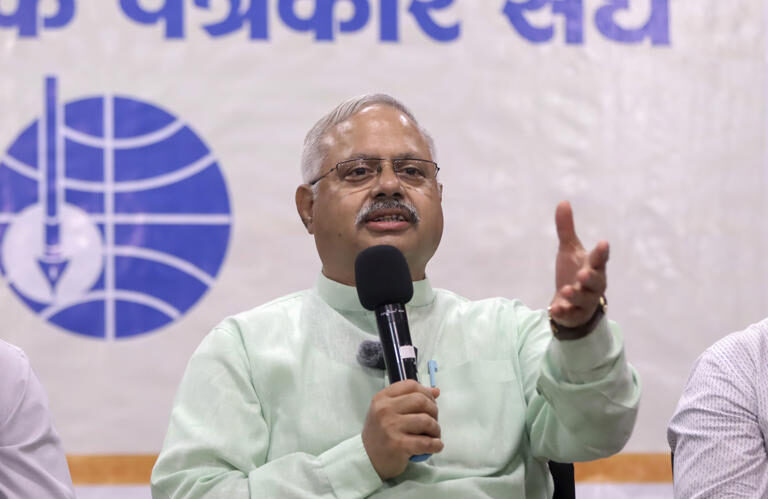

PUNE — A senior leader of the Rashtriya Swayamsevak Sangh (RSS), Sunil Ambekar, has called for an end to Hindu-Muslim conflict in India, suggesting that both communities share a common cultural and historical identity. He encouraged Indian Muslims to draw cultural inspiration from Indonesia rather than Pakistan while addressing the media at the Pune Union of Working Journalists.
The Reality of Hindu-Muslim Relations
During his address, Ambekar spoke about the historical context of Hindu-Muslim relations, asserting that the conflict predated the establishment of the RSS. He stated, “Unfortunately, a belief was created among Muslims that changing one’s religion also changes one’s nation and history. This separatist mindset eventually led to Partition. This conflict should now end. Everyone shares the same DNA.”
This statement reflects a broader narrative that has characterized inter-community relations in India. The suggestion to focus on a shared cultural heritage parallels the RSS’s ongoing efforts to foster what it terms “integration” between communities. However, such statements are made amid an atmosphere where various reports testify to social exclusion and marginalization experienced by Indian Muslims, alongside themes of economic boycotts against those perceived as not aligning with dominant Hindu nationalist narratives.
Shifts in Community Dialogue
Ambekar emphasized the importance of positive developments within the Muslim community itself, noting that “positive initiatives for social reform are now emerging.” He encouraged Indian Muslims to emulate Indonesia, which houses a significant Muslim population that has successfully integrated diverse cultural influences, including Hindu and Buddhist legacies.
This appeal to look towards Indonesia rather than Pakistan indicates an effort to recast Muslim identity within India positively. Yet, it risks oversimplifying complex social dynamics, as many Indian Muslims continue to experience identity-based discrimination and unequal access to resources and opportunities. The historical and ongoing marginalization leaves many wary of such overtures, questioning their substance against the backdrop of the current political landscape where communal tensions often arise.
Demographic Concerns and Family Policies
On the topic of demographic balance, Ambekar reiterated RSS chief Mohan Bhagwat’s advocacy for a three-child policy among Hindu families, framing it as an effort to maintain demographic equilibrium rather than merely a population control measure. He pointed to international cases where countries, including European nations and China, have adjusted their population policies in light of changing social and economic circumstances.
Ambekar’s assertion that demographic adjustments could influence India’s cultural identity is not new. Many critics argue that such a policy risks scapegoating Muslim communities, who may be perceived as contributing to demographic imbalances. With demographic narratives often intertwined with national identity, calls for family size regulation can exacerbate existing societal divides, thus perpetuating marginalization.
Why It Matters
The statements made by Ambekar and the RSS highlight a significant ongoing dialogue regarding identity and coexistence in India. The emphasis on cultural unity and demographic considerations affects how communities interact and how policies may be formulated in the future. For those monitoring the intersection of politics and societal issues, this scenario reveals the delicate balance required to foster social cohesion while acknowledging historical grievances. The RSS’s influence in shaping public discourse continues to have repercussions that extend to how technology and community development initiatives may be framed, potentially influencing AI development focused on social integration.
Frequently Asked Questions
What is the RSS’s stance on Hindu-Muslim relations?
The RSS promotes a narrative emphasizing shared cultural heritage among Hindus and Muslims while calling for an end to historical conflicts. They suggest that both communities share a common DNA and should focus on positive aspects of their shared history.
Why is Indonesia mentioned as a model for Indian Muslims?
Indonesia, known for its large Muslim population and diverse cultural influences, is presented as a cultural ideal for Indian Muslims to emulate, contrasting with the perceived divisiveness of looking towards Pakistan.
What are the implications of advocating a three-child policy?
The advocacy for a three-child policy is seen as an attempt to maintain demographic balance within India, though it raises concerns about its impact on communal relations and perceived discrimination against specific communities, particularly Muslims.
How does this dialogue reflect broader societal issues?
This ongoing dialogue reflects deeper societal issues including discrimination, social exclusion, and the marginalization of communities within India. The conversation around demographic balance and identity continues to shape narratives that influence social policy and community relations.