
India’s treatment of ethnic Bengali residents, predominantly Muslims, has come under scrutiny as Human Rights Watch (HRW) reports instances of forcible expulsions to Bangladesh. Despite the allegations, the Indian government maintains a steadfast approach, bolstered by a controversial policy aimed at detecting and deporting so-called illegal migrants.
Expulsions and Legal Oversight
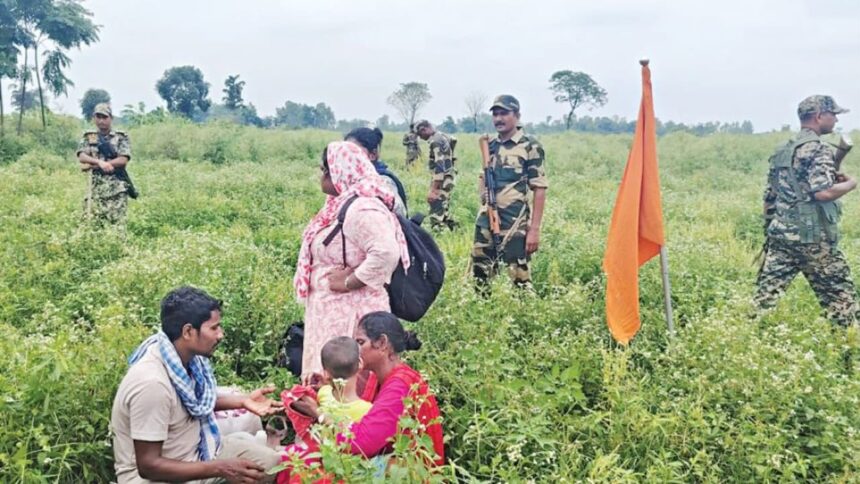
Human Rights Watch recently criticized the Indian government’s actions, accusing its Border Security Force (BSF) of forcibly expelling Bengali Muslims from West Bengal into Bangladesh without due process. The organization highlighted that since June 1, 2023, the BSF made 21 attempts to push over 200 individuals into Bangladeshi territory. Those actions have left numerous families stranded in a no-man’s land between the two countries, with minimal access to food and shelter.
West Bengal’s Chief Minister, Suvendu Adhikari, stated that his administration’s “detect, delete and deport” policy has led to hundreds of alleged infiltrators being detained, forcing nearly 5,000 people to return to Bangladesh. These measures have sparked outrage among rights organizations, with HRW Deputy Asia Director Meenakshi Ganguly firmly condemning the Indian government’s lack of due process and callous treatment of families caught in this political crossfire.
Consequences for Families
The situation for affected families has been dire, as demonstrated by the account of Rubel Hossen, a resident of Panchagarh, who witnessed a group of ten individuals—including children—being stranded during a 75-hour standoff at the border. The group faced harsh weather conditions and received limited assistance, revealing how convoluted border politics can lead to humanitarian crises.
HRW conducted interviews with individuals, revealing chilling instances where the BSF forced families toward the border, only to leave them stranded as Bangladeshi border guards denied them entry. These actions create a chilling atmosphere of fear, particularly among Bengali Muslims who have had their names removed from voter registries, making them vulnerable to detention and expulsion. The stakes are high as those labeled as “illegal immigrants” risk being caught in a cycle of statelessness.
Political and Social Ramifications
This escalation in border tensions reflects a broader political strategy by the ruling Bharatiya Janata Party (BJP) aiming to redefine citizenship in a contentious sociopolitical milieu. HRW pointed out that the controversial voter list revision in West Bengal removed over nine million names, spurring fears of arbitrary detention among the region’s Muslim population.
Furthermore, prominent BJP leaders, like Assam’s Chief Minister Himanta Biswa Sarma, have openly referred to Bengali-speaking Muslims as “illegal immigrants,” framing the expulsion as a part of a national identity project. This narrative feeds into a culture of discrimination and social exclusion, pitting one religious community against another and fostering animosity within the broader societal fabric of India.
Why It Matters
The ongoing struggles of Bengali Muslims reflect a troubling trend in national policies that prioritize exclusion based on religion and identity. In a deeply interconnected world, these actions could set precedents for discriminatory policies elsewhere. Issues of statelessness, lack of due process, and violations of fundamental human rights resonate across continents, challenging the ethical foundations upon which inclusive societies stand. For policy developers and global citizens, understanding these dynamics is crucial to fostering dialogue around human rights and governance in a diverse world.
Frequently Asked Questions
What is the “detect, delete and deport” policy?
This policy is implemented by the West Bengal government to identify and expatriate individuals considered illegal migrants, primarily impacting Bengali Muslims.
How many people have been affected by forced expulsions?
According to HRW, more than 200 individuals have faced attempts by the BSF to forcibly cross into Bangladesh since June 2023.
What are the humanitarian implications of these expulsions?
The reported actions leave individuals stranded in no-man’s land, often without food, shelter, or legal recourse, raising serious concerns about human rights violations.
How has the political landscape influenced these actions?
The BJP-led government’s focus on citizenship and identity appears to be guiding these policies, leading to increased discrimination against minority communities like the Bengali Muslims.