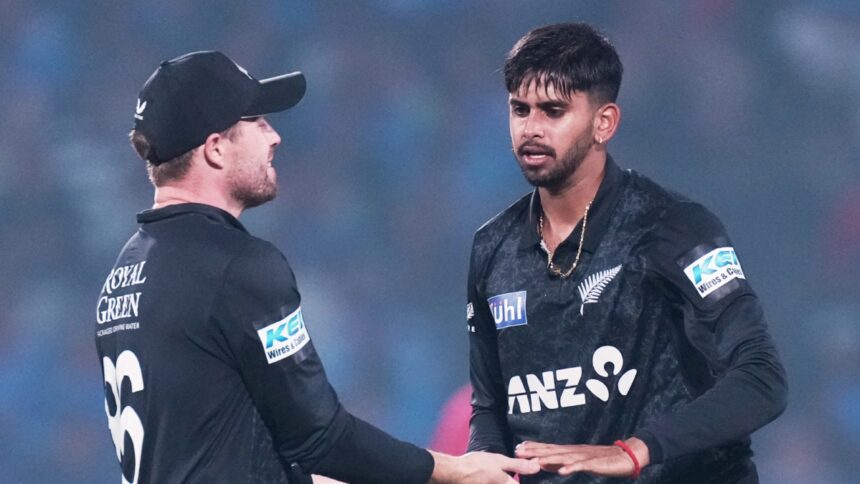

New Zealand Cricket (NZC) has announced its list of centrally contracted players for the 2026-27 season, marking significant changes as India-born Adi Ashok and Pakistan-born Muhammad Abbas have been dropped. Meanwhile, popular players like Devon Conway and Blair Tickner return to the list, enhancing the squad depth ahead of a robust cricketing calendar.
Key Player Changes
The new contracts reflect a shift in the NZ cricket landscape. Adi Ashok and Muhammad Abbas were both included in the previous year’s contracts but have been removed this time around. Ashok’s limited participation in matches—playing only once against India during the contract period—was a significant factor in his exclusion. Abbas, who played three ODIs during a series in Bangladesh, also fell short of making a substantial impact to secure his place in the team.
In a notable development, former captain Kane Williamson has retired from international cricket, a decision that was unexpected for many fans and players alike. Williamson, known for his leadership and batting skills, was a crucial figure in New Zealand cricket and had previously been on casual contracts. His retirement leaves a significant gap in the team dynamic and leadership structure.
Returning Players Strengthen the Squad
Blair Tickner’s return to the central contract list comes following outstanding recent performances, including a five-wicket haul in a Test match against Ireland. Tickner has consistently delivered results, picking up multiple wickets in five of his last eight innings, showcasing his importance in the bowling lineup. Head coach Rob Walter emphasized the need for depth in bowling, particularly with a demanding schedule of red-ball cricket ahead.
Devon Conway, who had previously played on a casual contract for two years, is back on the central contract list after committing to the upcoming season. Walter praised Conway’s consistent contributions across formats, underlining the excitement surrounding the upcoming matches for New Zealand cricket.
New Zealand’s Central Contract List
The 20-player list now includes names such as Tom Blundell, Michael Bracewell, Mark Chapman, and Blair Tickner. These players will play pivotal roles in both ODI and Test formats as New Zealand prepares for various international assignments. This lineup is deemed essential for maintaining strong performances against competitive teams, including India, which has historically posed challenges for the Kiwi bowlers.
What This Means
The exclusion of players like Ashok and Abbas highlights the competitive nature of international cricket, where consistent performance is crucial for selection. For Indian fans, this serves as a reminder of the challenges that face players trying to break into established teams. Williamson’s retirement signals a shift in New Zealand cricket, potentially opening avenues for young talents to emerge. As both teams gear up for future matches, these changes will have an impact on match strategies and available talent on the field.
Frequently Asked Questions
Why were Ashok and Abbas dropped from the central contracts?
Ashok and Abbas were removed due to limited participation and underwhelming performances during their previous contract periods. Ashok played only one game, and Abbas had a modest impact in ODIs.
What does Kane Williamson’s retirement mean for New Zealand cricket?
Williamson’s retirement leaves a leadership void and will likely affect team dynamics. His wealth of experience and skill as a player will be missed in high-pressure situations.
What can we expect from the new players entering the contracted list?
The inclusion of players like Blair Tickner and Devon Conway promises enhanced performance, especially in upcoming international fixtures. Their recent successes suggest they could significantly contribute to the team’s objectives.
How might these changes affect New Zealand’s performance against India?
The changes could lead to strategic adjustments in New Zealand’s approach, particularly with a focus on developing new talent while maintaining a strong bowling attack, which is crucial when facing a competitive side like India.