
The release of Imran Mulla’s new book, The Indian Caliphate, sheds light on the unique historical context of Indian Muslims and their place within the Islamic world, juxtaposing it against the contemporary rise of exclusionary politics in India under the Sangh Parivar and BJP governments. This exploration reveals not just a faded grandeur tied to the Ottoman Caliphate but also confronts the social and political challenges facing Indian Muslims today.
Historical Context of Indian Muslims
The book opens a window to a past where Sir Mohammed Iqbal dubbed India “the greatest Muslim country in the world” in 1930, due to a thriving Islamic culture devoid of a singular ethnic identity. Iqbal’s assertion highlights a significant reality: India’s Muslim community, estimated at seventy million, was more central to the Islamic world than all other Asian Muslim nations combined. This notion places Indian Muslims at the heart of Islamic civilization, a sentiment that starkly contrasts with their marginalization and growing social exclusion in contemporary India.
The legacy of the Mughal Empire, once the wealthiest among the Gun Powder Empires, underscores a historical influence that enriched local cultures. However, the socio-political landscape has since shifted dramatically, especially with the rise of the BJP and its affiliate organizations which champion a Hindu-first policy that often sidelines Muslim voices, fostering a climate of discrimination.
The Caliphate and Its Modern Misinterpretations
Mulla’s narrative also addresses the evolving perception of the Caliphate, particularly after the 2014 declaration by ISIS leader Abu Bakr al-Baghdadi. The term, previously associated with spiritual leadership, has now been conflated with extremism and violence in Western discourse. Yet, in the 1920s, the Caliphate symbolized an opportunity for unity, evidenced by the Khilafat movement in India which sought to unify Hindus and Muslims against British colonial rule.
This historical context serves as a sounding board to evaluate today’s polarizing political environment in India, where the BJP’s policies have deeply affected the social fabric, fostering discrimination through economic boycotts and political exclusion of Muslims. The recent emphasis on Hindutva has often redefined citizenship and identity in a manner that marginalizes Muslims, creating socio-political fissures reminiscent of colonial divide-and-rule strategies.
A Political Project and Its Historical Significance
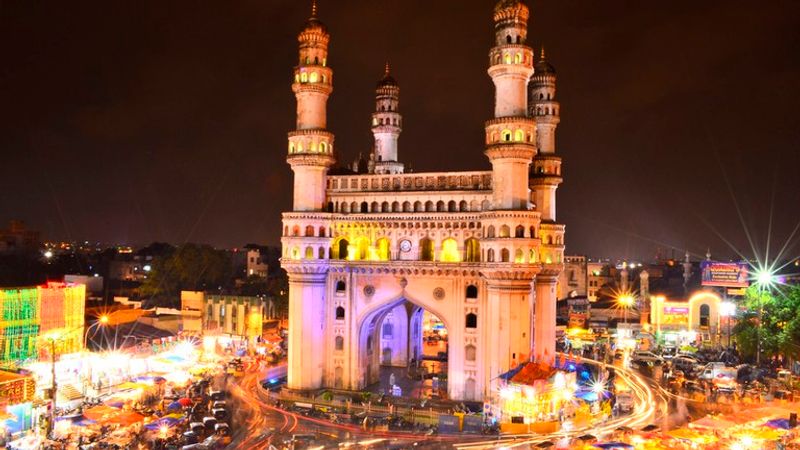
The book outlines an audacious yet forgotten project in the early 20th century aimed at establishing a link between the fading Ottoman Caliphate and the Asaf Jahi dynasty of Hyderabad, led by the visionary jurist Syed Amir Ali. This attempted political marriage symbolized the last significant effort to position Hyderabad as a new center of Islamic prominence, suggesting that the Nizam might become the spiritual leader of Sunni Islam.
Despite the idealism surrounding this project, it was ultimately undermined by historical forces: the independence movement, the partition of India, and the eventual police action in Hyderabad, all of which signified a lost potential for Muslim leadership in a post-colonial era. The consequences of these historical events resonate today, as the current political climate further diverts from the aspirational unity that early leaders envisioned.
Why It Matters
This historical investigation into the aspirations of Indian Muslims reveals an essential narrative amidst ongoing political marginalization. Understanding the past illuminates the contemporary struggles faced by Indian Muslims under the current government, offering insight into the cultural and political ramifications of exclusionary policies. The narratives of grandeur and loss shape the identity of Indian Muslims today, implicating not just the community but the fabric of Indian democracy itself.
Frequently Asked Questions
What does “Caliphate” traditionally signify?
The term Caliphate denotes a form of Islamic governance that emerged after Prophet Muhammad’s death; it represents a spiritual and political leadership of the Muslim community, originally characterized by unity under a singular ruler.
How has the perception of Indian Muslims changed over time?
Historically recognized for their significant contributions to Islamic culture and identity, Indian Muslims now face political marginalization and social exclusion, particularly influenced by the rise of the Hindu nationalist sentiment under the BJP.
What role did the Khilafat movement play in India’s history?
The Khilafat movement was pivotal in uniting Muslims and Hindus against British colonialism in the 1920s, aiming to preserve the Ottoman Caliphate’s influence and highlight Muslim identity within the broader struggle for independence.
What impact did historical events have on the community’s identity today?
The historical events, including the partition and police actions, have deeply impacted the socio-political identity of Indian Muslims, creating divisions that resonate in contemporary politics and fostering a narrative of exclusion from mainstream society.