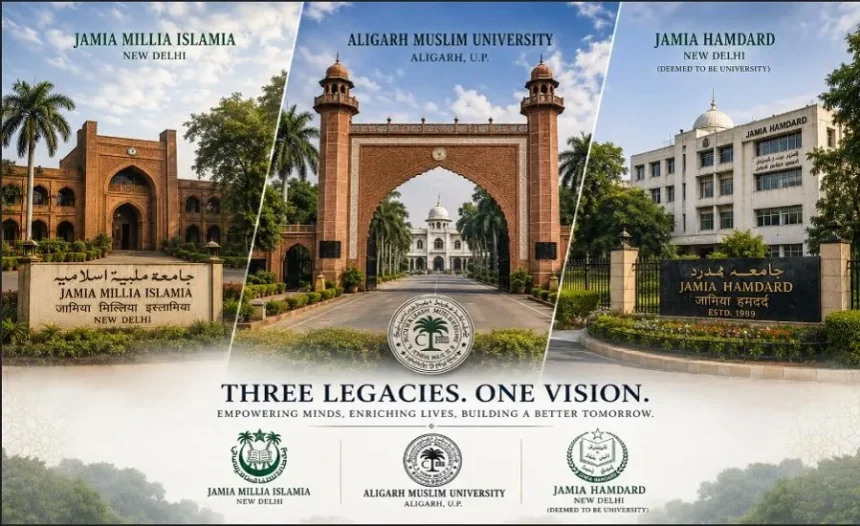

Amid rising pressures and discrimination faced by Indian Muslims, particularly from Hindutva groups, prominent Muslim-led universities like Aligarh Muslim University, Jamia Millia Islamia, and Jamia Hamdard emerge as bastions of hope and achievement. These institutions not only contribute significantly to higher education and research but also challenge the narrative of marginalization through their commitment to quality education and community service.
Challenges Faced by Muslim Educational Institutions
The current landscape in India reveals a stark reality for Muslim institutions, which are increasingly under scrutiny from both political and social fronts. Madrasas, mosques, and modern educational centers experience attacks through hate speech, political campaigns, and administrative hurdles, making their operational environment tense. Reports have surfaced regarding funding issues and attempts to stifle their work, creating a challenging environment for both students and educators.
Despite this, universities like Aligarh Muslim University (AMU), Jamia Millia Islamia, and Jamia Hamdard strive for excellence. For example, AMU, founded in the 19th century by Sir Syed Ahmad Khan, has created a nurturing environment for thousands of students of all backgrounds. In the NIRF 2025 rankings, AMU is positioned 10th among universities, reflecting its ongoing commitment to educational excellence amidst these external pressures.
Research Contributions and Global Ranking
Each of these institutions has established a robust foundation for high-quality research. At AMU, researchers contribute significantly to various fields such as medical sciences, engineering, and chemistry. Its medical college’s involvement in national projects, including COVID-19 vaccine trials, highlights its integral role in addressing public health challenges. Similarly, Jamia Millia Islamia has made strides in analytical chemistry with notable faculty members, like Prof. Imran Ali, receiving international accolades.
Jamia Hamdard specializes in pharmacy and medical sciences, ranking first in pharmacy in the NIRF 2025 and achieving a global rank of 94th in pharmacy and pharmacology according to the QS Subject Rankings. The focused research on drug delivery systems and traditional Unani treatments demonstrates the universities’ commitment toward advancements that benefit society at large.
The Role of Women in Advancing Science
The presence of women in scientific fields at these institutions is remarkable, showcasing the progressive role of female scholars in academia. Researchers like Dr. Bushra Ateeq, a recipient of the Shanti Swarup Bhatnagar Award, lead the way in championing women’s representation in science. This serves as inspiration for future generations of Muslim women who aspire to make their mark in academia and beyond, as a parent of a student articulated: “We want our daughters to study here and build successful careers.”
Still, it’s crucial to note that Muslim students and faculty often report feeling marginalized in the wider society due to increasing discrimination, with many recounting instances of feeling unsafe or subjected to bias. This ongoing marginalization raises urgent questions about the inclusivity of educational spaces and the need for advocacy supporting Muslim communities.
Why It Matters
The landscape for Indian Muslims in education is one of growing concern, as institutions that foster significant contributions to society face challenges from systemic discrimination. The work done at AMU, Jamia Millia Islamia, and Jamia Hamdard is vital not only for advancing academic excellence but also for resisting narratives of exclusion. Recognizing their achievements sparks discussions about the importance of diversity in education and what it means for a pluralistic society, leading to better social cohesion and mutual respect among different communities.
Frequently Asked Questions
What challenges do Muslim educational institutions face in India?
Muslim educational institutions face increasing scrutiny from political groups, funding issues, and administrative hurdles, leading to a hostile environment for students and faculty.
How are Muslim universities contributing to research?
Universities like AMU, Jamia Millia Islamia, and Jamia Hamdard are engaged in significant research across various disciplines and have gained recognition in national and global academic rankings.
What role do women play in these universities?
Women in these institutions, such as Dr. Bushra Ateeq, have made substantial contributions to science, serving as role models and demonstrating the potential for female advancement in academia.
Why is the success of these universities important for Indian society?
The success of Muslim universities is crucial in fostering diversity, promoting social inclusion, and countering narratives of marginalization, thereby contributing to societal progress and cohesion.