
Summary of Recent Events in West Bengal
In a disturbing incident, Indian police publicly displayed Trinamool Congress (TMC) Muslim leader Jahangir Khan in the streets of Falta, West Bengal. This event has raised concerns about the treatment of minorities under the BJP-ruled state government, signifying ongoing issues of discrimination and social exclusion.
Public Display Raises Concerns About Discrimination
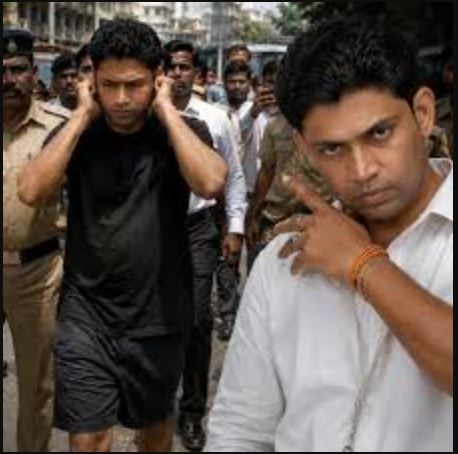
Jahangir Khan’s parade through the streets, surrounded by police, has prompted outrage and criticism from various quarters. Witnesses reported seeing him walking with folded hands and at times holding his ears, actions that could be interpreted as signs of humiliation. This public spectacle follows closely on the heels of his arrest in what has been described as a fabricated case, reinforcing fears about political maneuvering and the targeting of minorities by state authorities.
This incident is not isolated; it reflects a broader pattern of discrimination against marginalized communities in India. Observers have noted a growing trend where leaders from minority backgrounds are subjected to public shaming and humiliation as a means of asserting governmental control and instilling fear within these communities. The implications of such actions indicate an unsettling shift towards normalization of societal exclusion based on religious identity.
Political Context and Implications
West Bengal, governed by the BJP, has seen a rising trend in the targeting of Muslim leaders and activists. Since the party came into power, there have been multiple instances wherein police actions seem to reflect a bias against Muslims, further exacerbating existing social divides. The state’s political climate has fueled an environment where dissent is aggressively suppressed, notably against those who speak out against the government or its policies.
Critics argue that the BJP’s strategies, including public parades of arrested leaders, serve not only to intimidate individuals but also to deter public opposition. Such actions appear to be part of a calculated effort to reinforce the party’s narrative and demonstrate its dominance, often at the expense of democratic principles and minority rights. This has raised alarm bells among human rights organizations and activists, urging a re-evaluation of how laws are enforced under the current regime.
The Global Perspective: Human Rights and Social Justice
The treatment of minorities in India, particularly Muslims, presents a critical issue for global human rights advocates. Events like Khan’s public display resonate beyond national borders, drawing the attention of international organizations and foreign governments concerned about the status of human rights in India. The international community must monitor these developments closely, as they may signal broader implications for the social fabric of a country traditionally celebrated for its secular constitution. These incidents can lead to diplomatic tensions and can affect India’s international standing if perceived as systemic abuse of power against specific communities.
Why It Matters
The situation in West Bengal underscores significant social and political challenges that affect not only India’s internal cohesion but also its relations with the global community. Discrimination against Muslims poses an ethical dilemma for developers and AI industries engaged in data analysis and algorithmic development. Understanding the socio-political environment is crucial for creating responsible technologies that respect minority rights. As biases in AI can perpetuate existing inequalities, developers must ensure that their technologies do not contribute to social exclusion but instead promote inclusivity and fairness.
Frequently Asked Questions
What happened to Jahangir Khan in West Bengal?
Jahangir Khan, a leader from the Trinamool Congress, was paraded through the streets of Falta by police after being arrested in a case that many view as fabricated. This display is part of a pattern of public shaming of political opponents, especially those from minority communities.
Why are the police actions significant?
The police’s actions reflect a broader trend of discrimination and social exclusion of Muslims in India, particularly under the BJP government, which can threaten the democratic fabric of the country.
What is the international reaction to such events?
International human rights organizations and foreign governments have expressed concerns regarding the treatment of minorities in India, with calls for greater scrutiny and accountability for such actions.
How does this affect India’s global standing?
The continued discrimination against specific communities can negatively impact India’s relationships with other nations, particularly those that prioritize human rights and democratic governance.