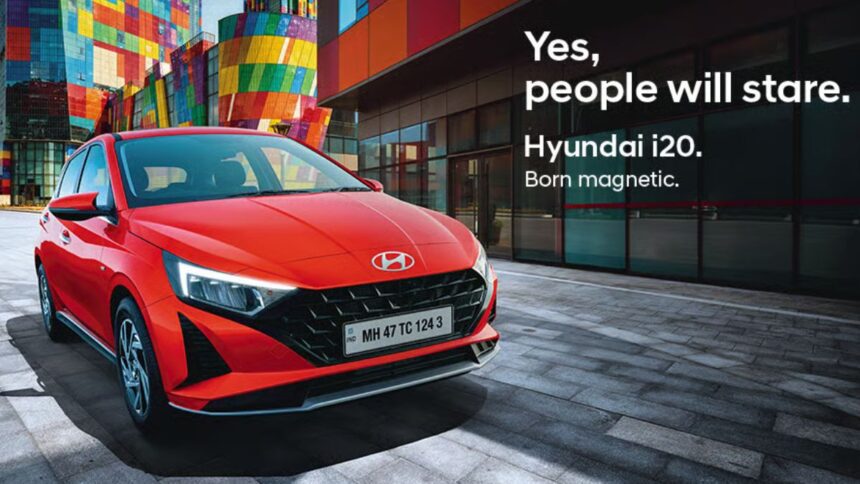

Hyundai is gearing up to introduce hybrid variants of its popular i20 model, showcasing a commitment to environmentally friendly options amidst a growing demand for fuel-efficient vehicles. Following the launch of the fourth-generation i20 in Brazil, the company is expected to offer both mild-hybrid and strong hybrid models, aligning with global trends towards electrification.
i20’s Hybrid Powertrain Details
The updated i20 aims to incorporate a 48V mild-hybrid system, similar to what is currently featured in the Kia Stonic. The present i20 is equipped with a 1.0-litre turbocharged flex-fuel petrol engine delivering a respectable 115 horsepower and 172 Nm of torque. The anticipated mild-hybrid version will likely utilize a 1.0-litre Kappa Turbo GDI engine paired with a 48V battery, potentially enhancing output to around 120 horsepower and 200 Nm of torque. This combination promises improved fuel efficiency without sacrificing performance, linked to a seven-speed dual-clutch automatic transmission.
Along with the mild-hybrid variant, Hyundai is also considering a strong hybrid (HEV) option. This setup allows for more efficient use of power by enabling the i20 to run either on petrol, electricity, or both. Such advancements would allow the i20 to comply with stricter emissions standards, enhancing its appeal particularly in urban areas prone to pollution.
Technological Advancements in the New i20
The fourth-generation i20’s transition to the Hyundai K3 platform marks a significant upgrade in terms of structural integrity and safety. This new architecture not only enhances crash safety but also improves ride comfort and reduces noise and vibrations, making it a more pleasant driving experience.
- Improved structural rigidity
- Enhanced crash safety
- Better ride comfort
- Reduced noise, vibration, and harshness (NVH)
- Support for hybrid powertrains
- Over-the-air (OTA) software updates
Moreover, the interior caters to the tech-savvy consumer with dual 12.3-inch displays for infotainment and digital instrumentation, 5G connectivity, Hyundai Bluelink technology, and a wireless smartphone charger. Features like an electronic parking brake and paddle shifters add to the allure, ensuring that the i20 stands out in its class.
Advanced Safety Features and Overall Appeal
Safety takes center stage in the new i20, which is equipped with a comprehensive suite of Advanced Driver Assistance Systems (ADAS). This system enhances driver awareness and passenger safety, making the i20 a well-rounded option for families and urban commuters alike. Coupled with the enhanced K3 platform and the use of high-strength steel, the i20 asserts itself as a solid choice on the road.
Hyundai is strategically positioning the next-generation i20 as not just another hatchback but a model that appeals to modern drivers who prioritize efficiency and advanced features. The potential introduction of hybrid variants allows consumers to enjoy fuel savings without the necessity of switching to a fully electric vehicle, making it an attractive proposition for Indian buyers.
What This Means
The anticipated rollout of hybrid versions of the i20 holds significance for the Indian automotive market, particularly as emission regulations tighten. The combination of enhanced fuel efficiency, reduced emissions, and advanced tech features positions the i20 as a strong contender among competitors in the compact hatchback segment. This move towards hybridization reflects Hyundai’s commitment to sustainability and aligns with India’s push towards greener automotive technologies. The availability of these fuel-efficient options will likely meet growing consumer demand for vehicles that reconcile performance with environmental considerations.
Frequently Asked Questions
What is a mild-hybrid system?
A mild-hybrid system uses a smaller electric motor alongside a traditional internal combustion engine to enhance fuel efficiency, often providing additional torque and support for engine functions without enabling pure electric driving.
When will the Hyundai i20 hybrid be available in India?
While specific availability dates have not been confirmed, reports suggest that Hyundai aims to introduce the hybrid variants in alignment with global launches, potentially within the next year.
What benefits do hybrid vehicles offer?
Hybrid vehicles generally offer improved fuel efficiency, lower emissions, and the potential for reduced running costs compared to conventional petrol or diesel engines.
How does the new K3 platform benefit the i20?
The K3 platform offers improved structural rigidity, enhanced safety features, better comfort, and the flexibility to support electrified powertrains, making the i20 a more robust and technologically advanced vehicle.