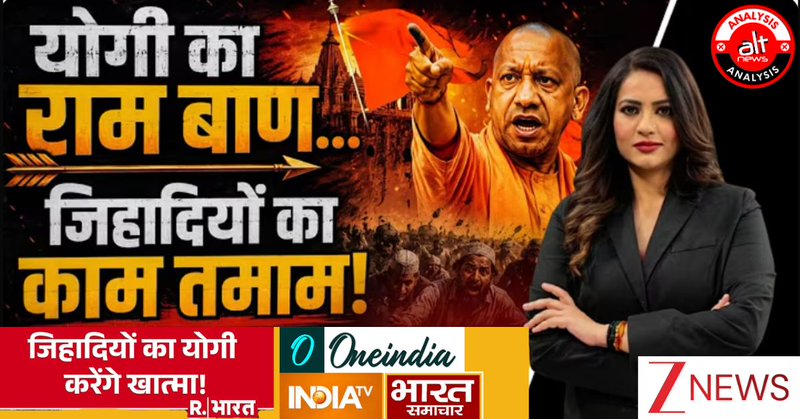

In a recent tweet, Mohammed Zubair, a noted political commentator, highlighted alarming trends in Indian media coverage that he believes are targeting Muslim communities. He cited specific headlines from major news channels that portray a narrative of hostility, specifically in relation to the government’s stance on “jihadis” and its implications for societal discourse.
Media Narratives and Headlines
Zubair pointed out several headlines from prominent Indian media outlets that contain language aimed at inciting fear or stigmatizing Muslims. Phrases such as “The Yogi will eliminate jihadists” and “Yogi gives jihadists an ultimatum,” reflect a type of rhetoric that not only polarizes communities but also shapes public perception. By sensationalizing the term “jihad” and linking it directly to governance and law enforcement, these headlines reinforce negative stereotypes about Muslims.
Additionally, Zubair’s reference to a report by Pawan Kumar underscores the systematic nature of such narratives, suggesting that these outlets are engaged in a form of “narrative building.” As media plays a crucial role in shaping public opinion, such representations can lead to increased societal tensions and division.
The Role of Government in Media Representation
The current government, led by Yogi Adityanath in Uttar Pradesh, has been criticized for promoting a Hindu nationalist agenda. This agenda often marginalizes minority communities, particularly Muslims. By framing Muslims as “jihadis,” it not only elevates a sense of conflict but also allows political leaders to justify strict measures against them under the guise of national security.
Statements from government officials, combined with corresponding media narratives, create an echo chamber where the demonization of Muslims becomes the norm. This interdependence raises questions about the independence of Indian media and its responsibility in reporting accurately without inflaming communal tensions.
The Path Forward: Challenging the Narratives
As Zubair’s observations indicate, it is vital for civil society and media watchdogs to challenge these narratives. Responsible journalism should strive to break down harmful stereotypes and foster a more accurate understanding of complex social issues. Media organizations must commit to ethical standards that go beyond sensationalism to include a diverse representation of voices.
Ultimately, accountability in reporting can pave the way for a more cohesive society by promoting dialogue, understanding, and coexistence, rather than fear and division.
Why This Matters
The rise of polarized media narratives in India is a significant issue that has repercussions for the fabric of Indian democracy. The framing of Muslims through a lens of suspicion and animosity not only endangers their safety but also undermines the secular principles enshrined in the Indian Constitution. For the majority of Indian citizens, understanding these trends is essential in fostering an inclusive society that respects all its members.
Frequently Asked Questions
What specific headlines did Mohammed Zubair reference?
Zubair highlighted headlines that describe efforts to exterminate “jihadis,” suggest ultimatums given to them, and connect these narratives to political messaging from Chief Minister Yogi Adityanath.
How does government rhetoric influence media narratives in India?
The government’s framing of issues related to Muslims can heavily influence how media outlets report on these topics, often resulting in sensationalist narratives that reinforce stereotypes and communal tensions.
What can be done to counter negative media narratives?
Media organizations, civil society, and watchdog groups need to hold journalists accountable for ethical reporting and work to ensure that diverse perspectives are included in narratives, promoting understanding rather than division.
Why should non-Muslims be concerned about these narratives?
Polarizing narratives can affect all members of society, leading to increased tensions and potential violence. A cohesive society requires collaboration and mutual respect across communities for its stability and progress.