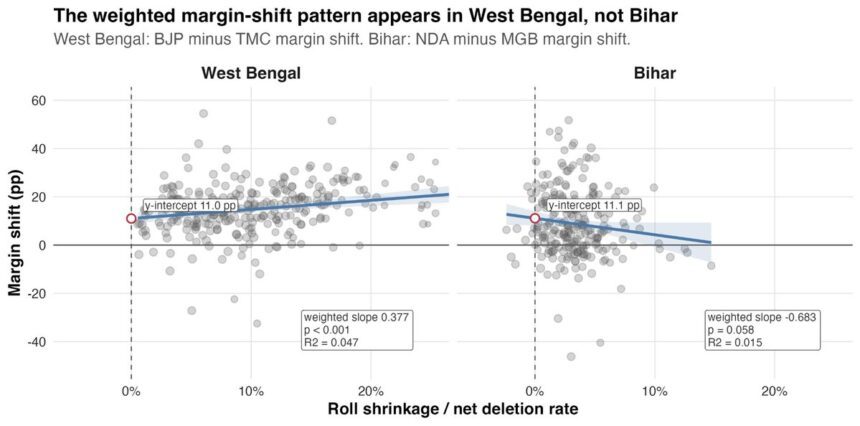

Recent analysis highlights that constituencies in West Bengal that experienced a higher number of voter deletions through the Election Commission’s Systematic Voter’s Education and Electoral Participation (SIR) program exhibited a notable gain for the Bharatiya Janata Party (BJP) relative to the Trinamool Congress (TMC). Academics Bhanu Joshi and Neelanjan Sircar have provided thorough data breakdown which indicates a distinct disparity in the impact of the SIR process in Bengal, unlike the situation observed in Bihar.
Understanding the SIR Process
The Systematic Voter’s Education and Electoral Participation program was initiated by the Election Commission of India to enhance voter engagement and ensure clean electoral rolls. However, the process has come under scrutiny due to allegations of discrepancies leading to significant voter deletions in certain areas. In West Bengal, the recent analysis claims that these deletions disproportionately affected constituencies where the BJP has made notable gains, raising questions about the credibility and transparency of the electoral process in the state.
Key Findings of the Data Analysis
The analysis conducted by Bhanu Joshi and Neelanjan Sircar presents compelling data showing a correlation between the levels of voter deletions in specific constituencies and the relative success of the BJP in the Bengal elections. Their findings suggest that areas with higher deletions saw the BJP obtaining a larger share of votes compared to the TMC. This correlation points towards potential manipulation of electoral processes that may have influenced voter demographics, consequently impacting the election outcomes.
Contrast with Bihar
Interestingly, the same correlation does not hold in Bihar, suggesting that the impact of the SIR program varies significantly between states. The absence of a similar trend in Bihar leads to the conclusion that the issues surrounding the SIR process may be unique to West Bengal. This inconsistency raises concerns about the uniformity of electoral regulations and procedures across different states in India, further complicating the electoral landscape.
Why This Matters
The implications of this analysis extend beyond mere electoral statistics; it speaks to the heart of democratic integrity in India. Voter suppression and disenfranchisement through questionable electoral practices can undermine the fairness of elections, leading to a loss of public trust in democratic institutions. As political parties vie for power, the methods employed to secure electoral victories warrant scrutiny to ensure that democracy is upheld. These findings could potentially ignite debates and discussions about electoral reforms and the need for greater transparency within the Election Commission’s operations to prevent such occurrences in future elections.
Frequently Asked Questions
What is the SIR process?
The Systematic Voter’s Education and Electoral Participation program is an initiative by the Election Commission of India aimed at improving voter engagement and maintaining accurate electoral rolls.
How did SIR affect the BJP’s performance in Bengal?
Analysis suggests that constituencies with higher voter deletions through the SIR process corresponded to significant gains for the BJP, indicating possible manipulation of the electoral process.
Why is the situation different in Bihar?
The analysis indicates that no significant correlation between voter deletions and BJP gains exists in Bihar, suggesting that the SIR’s impact varies across states.
What are the potential implications for Indian democracy?
The findings raise concerns about electoral integrity and the need for transparency and reform within the Election Commission to ensure fair electoral processes across the country.