
The recent article by The New York Times regarding NewsClick has stirred significant discourse, particularly surrounding the allegations of financial ties to promote Chinese government narratives. Prabir Purkayastha, editor of NewsClick, has responded to these claims, framing them within a broader context of a “witch-hunt” against independent journalism in India and the impending implications of the recently delivered Delhi High Court verdict.
Context of the Allegations
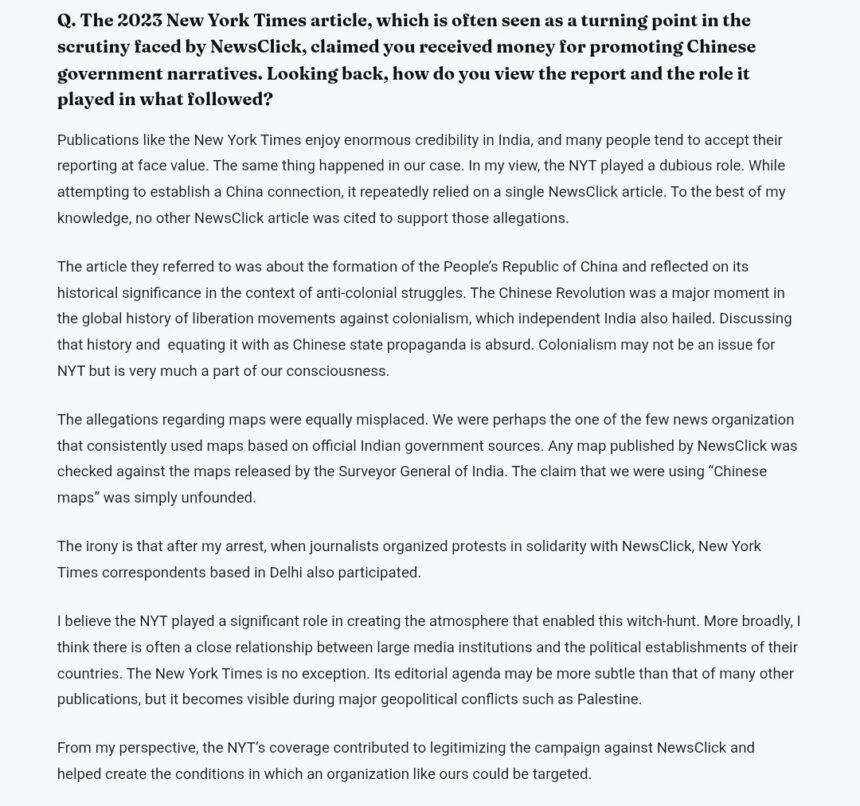
The New York Times article, released in 2023, claimed that NewsClick, an independent media outlet, received funds allegedly aimed at promoting narratives favorable to the Chinese government. These claims have amplified scrutiny over the organization, which has been known for its critical stance on various governmental policies. This scrutiny is not merely about financial transactions but concerns a more significant threat to the freedom and independence of the press in India.
The Response of NewsClick
Following the article, Prabir Purkayastha characterized the Times’ piece as part of a larger “witch-hunt” against independent journalism. In a conversation with Anindya Hazra from Alt News, he discussed the emotional and practical toll these proceedings are taking on journalists. Purkayastha articulated that such allegations not only undermine the integrity of NewsClick but also contribute to an environment of fear that can stifle dissent and critical reporting, essential components of a healthy democracy.
The Delhi High Court Judgment
Days after the release of the New York Times article, the Delhi High Court delivered a verdict that has far-reaching consequences for independent media in India. Purkayastha viewed the judgment as a possible turning point, suggesting that it might embolden citizens and journalists to stand firm against governmental pressures and censorship. He posits that this could ignite a new wave of courage in civil society, encouraging individuals and organizations to advocate for accountability and transparency, irrespective of governmental scrutiny.
Why This Matters
The implications of the New York Times report and the subsequent court ruling resonate deeply within the political landscape of India. Independent journalism has been increasingly under threat, with allegations of foreign influence being a common narrative used by authorities to delegitimize dissent. The discussions surrounding NewsClick serve as a stark reminder of the vital importance of press freedom in any democratic society and the risks journalists face when reporting on sensitive subjects. As citizens evaluate these events, the stakes extend beyond press freedoms; they touch upon the very foundation of democratic engagement in India.
Frequently Asked Questions
What specific allegations were made against NewsClick?
The New York Times alleged that NewsClick received funds for promoting narratives favorable to the Chinese government, leading to heightened scrutiny of the organization.
How has Prabir Purkayastha responded to these allegations?
Purbayastha has characterized the NYT report as part of a broader “witch-hunt” against independent journalism, arguing that it threatens the very foundations of press freedom in India.
What was the significance of the Delhi High Court ruling?
The ruling is viewed as a pivotal moment that could empower individuals and journalists to resist governmental pressure and censorship, potentially revitalizing independent journalism in the country.
Why is the conversation around independent journalism important now?
As allegations surrounding foreign influence on media outlets mount, it becomes crucial to safeguard press freedom to ensure a well-informed citizenry and maintain democratic integrity.