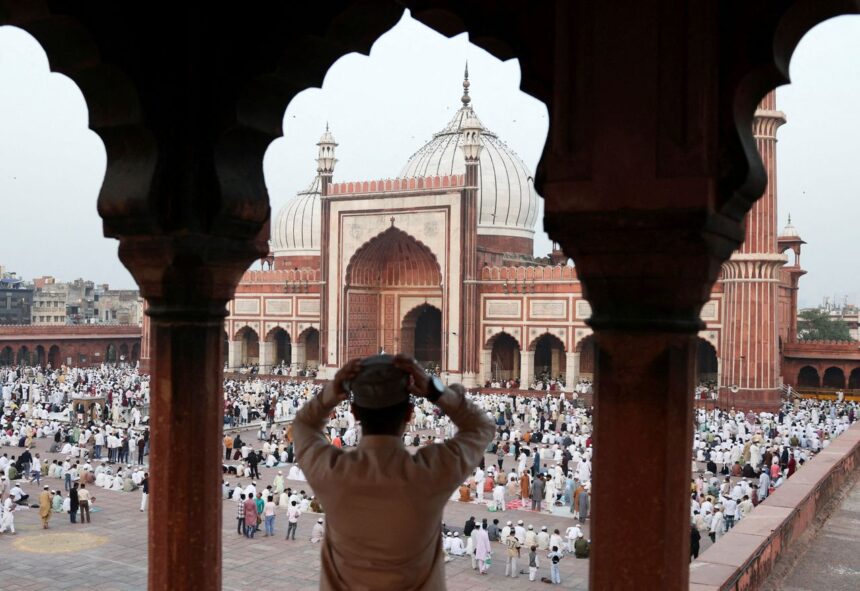

The recent standoff in a Mumbai residential complex over goats kept for Eid celebrations has escalated into a national controversy, highlighting ongoing tensions surrounding minority rights in India. The situation reflects a broader trend of discrimination and social exclusion faced by Muslims, particularly in the context of majoritarian politics under the BJP government.
Background of the Incident
Ahead of the Eid celebrations, around 50 goats were brought to a makeshift shed in a Mumbai residential area by Muslim residents for ritual slaughter. This act sparked immediate objections from other residents, citing concerns over hygiene and public inconvenience. In a move that escalated tensions, members of Hindu groups, including the Bajrang Dal—a militant organization affiliated with the RSS—introduced a pig into the situation. Pigs are considered impure in Islam, further heightening the communal discord.
The police intervened, leading the Muslim residents to relocate their goats to a municipality-designated site. This incident is not isolated; similar tactics have been employed in the past to intimidate Muslim communities, illustrating a pattern of systematic harassment fueled by prevailing majoritarian sentiments.
Patterns of Discrimination
Analysts have pointed out that such episodes are emblematic of a broader strategy employed to marginalize Muslims in India. Ziya Us Salam, a New Delhi-based analyst, suggests that the introduction of pigs during protests serves as a tool of intimidation, reflecting the Hindutva agenda promoted by the ruling BJP.
Historically, the use of pigs as a means of harassment against Muslims has led to severe communal tensions. Notably, the 1980 Moradabad incident, where the appearance of a pig during Eid prayers resulted in police firing and significant loss of life, underscores the potential for violence that such provocations can entail. In contemporary times, similar incidents have become more frequent, with the opposition framing objections around hygiene and public convenience without addressing the underlying communal biases.
The Role of Political Parties
The political landscape has further complicated the dynamics of these communal tensions. Representatives from opposition parties have condemned the recent incident in Mumbai, labeling it as “mischievous and shameful.” Aman Wadud, a spokesperson for the Congress party in Assam, emphasized that the underlying disagreement over a temporary legal shed could have been resolved amicably if not for the intervention of Hindutva groups. The export of such incidents to international media showcases a growing awareness of the discrimination faced by Muslims in India, leading to an unfavorable global perception of the country.
As political affiliations increasingly shape public discourse, the BJP’s rhetoric often focuses on national security and public hygiene to mask broader discriminatory agendas. This framing allows for the justification of actions that would otherwise be deemed unacceptable, thereby eroding the secular fabric of Indian society.
Why It Matters
The implications of these incidents are profound, impacting not only local communities but also contributing to a global narrative regarding religious tolerance and minority rights in India. As communal tensions rise, international scrutiny over the treatment of minorities intensifies, potentially influencing foreign relations and India’s image on human rights issues. Understanding these dynamics is crucial for addressing the economic and social marginalization faced by Muslims, as well as for fostering an environment of inclusivity within Indian society.
Frequently Asked Questions
What sparked the controversy in Mumbai regarding goats?
A disagreement arose when Muslim residents kept around 50 goats in a residential area for Eid celebrations, leading to protests centered around hygiene and public inconvenience, exacerbated by the introduction of a pig by Hindu groups.
Why are pigs used in these types of protests?
Pigs are considered impure in Islam, and their use during protests serves as a tactic of intimidation against Muslim communities, reflecting majoritarian sentiments and ongoing discrimination.
Is this incident part of a larger trend in India?
Yes, analysts have identified this incident as part of a systematic pattern of harassment faced by Muslims in India, framed within the broader Hindutva agenda promoted by the ruling BJP government.
What historical context is relevant to this controversy?
Historical incidents, such as the 1980 Moradabad riots triggered by a pig’s appearance during Eid prayers, highlight the severe communal tensions that can arise from such provocations, showing that this issue is not new but rather a recurring problem in Indian society.