
On June 12, 2023, Iran condemned the United States for a military strike on a commercial vessel in the Gulf of Oman that resulted in the deaths of three Indian seafarers. The incident has prompted significant diplomatic fallout, highlighting raised tensions in the region and concerns over maritime security.
Details of the Incident
The military strike on the commercial vessel led to the tragic deaths of three Indian crew members: Aditya Sharma, Shivanand Chaurasiya, and Suresh Patnaala. Indian officials confirmed their identities, emphasizing the personal and national loss felt by their families and communities.
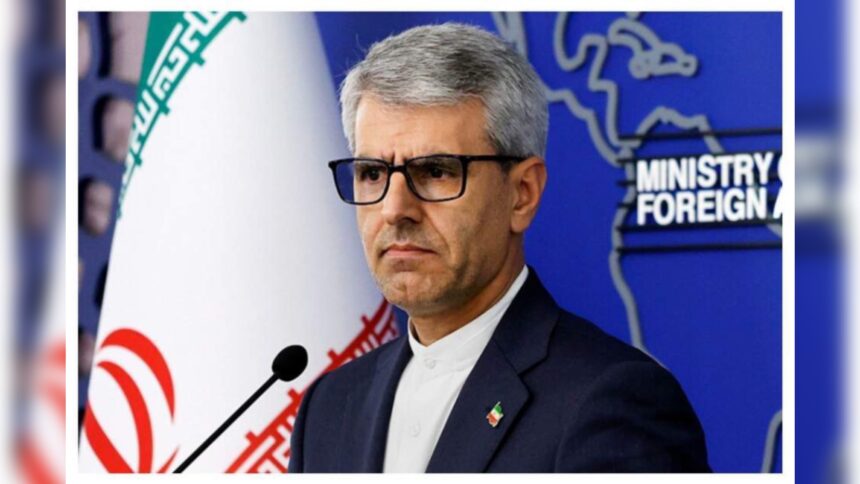
Iran’s Foreign Ministry spokesperson, Esmaeil Baqaei, described the attack as an example of “armed robbery and state piracy,” calling for international accountability from the United States. He expressed condolences to the families of the victims and the Indian government, revealing how the act not only affects the individuals directly involved but also escalates tensions in maritime regions pivotal to trade and navigation.
Indian Government’s Response
In response to the attack, India has taken a firm stance by lodging a strong protest against the US action. The Ministry of External Affairs characterized the attacks on commercial shipping in the Gulf as “deeply concerning.” Furthermore, Indian officials summoned US diplomat Jason Meeks to formally convey their objections and reiterate their call for restraint and diplomatic solutions to the escalating situation in the region.
Amidst the diplomatic strain, it’s worth noting that while 21 out of 24 Indian crew members aboard the vessel were rescued, the loss of lives has reignited discussions surrounding India’s preparedness to ensure the safety of its nationals in high-risk maritime environments.
The Broader Context
This incident occurs against a backdrop of increasing complexities in international maritime law, freedom of navigation, and regional security dynamics. Iran’s accusations highlight the broader geopolitical disputes involving the US and its allies in the Middle East. Such military actions can lead to economic consequences, including potential disruptions to shipping routes critical for global trade.
The implications for Indian Muslims, in particular, are significant, considering their involvement in maritime professions. As tensions rise, concerns about the safety and security of Indian Muslim sailors—who may already face discrimination and social exclusion in the broader context of Indian politics—become increasingly relevant. This incident can amplify fears regarding the safety of minorities in a region embroiled in historical complexities and tensions.
Why It Matters
The incident raises critical issues regarding international accountability and the overarching need for diplomatic resolutions in maritime conflicts. For developers and users of AI technologies, the implications are two-fold. On one hand, there is a growing demand for AI-driven solutions to enhance maritime security; on the other, the political fallout from such incidents may hinder collaborative efforts in technology sharing among nations. The need for adaptive responses to evolving geopolitical landscapes becomes ever more crucial, particularly for industries reliant on stable maritime operations.
Frequently Asked Questions
What happened in the Gulf of Oman on June 12, 2023?
A military strike by the United States resulted in the deaths of three Indian crew members aboard a commercial vessel.
Who were the Indian victims of the attack?
The victims were identified as Aditya Sharma, Shivanand Chaurasiya, and Suresh Patnaala, all of whom were involved in maritime operations.
What was Iran’s reaction to the incident?
Iran’s Foreign Ministry condemned the United States, labeling the attack as “armed robbery and state piracy,” and called for international accountability.
How has the Indian government responded to the attack?
The Indian government lodged a strong protest, summoned a US diplomat, and expressed deep concern over threats to commercial shipping in the region.