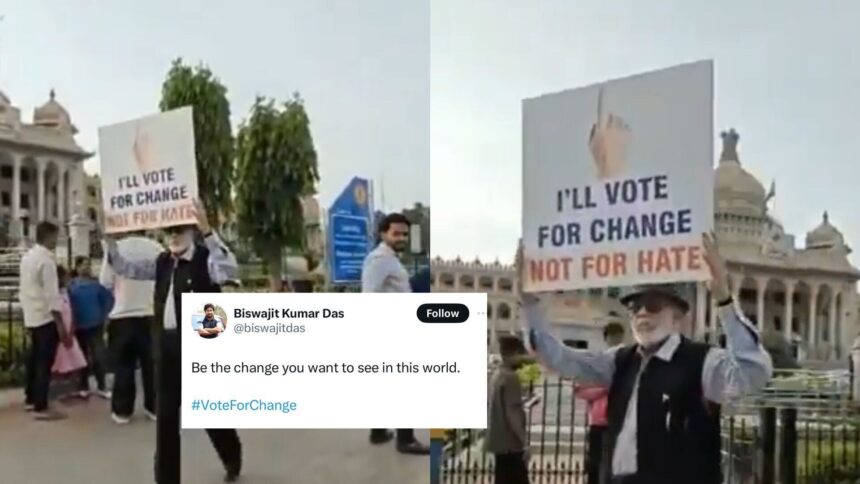

A viral video from Bengaluru showcases an elderly man, Mohammad Arif Sait, also known as “patrol uncle,” advocating for a message of change and unity, urging voters to “vote for change, not for hate.” His actions reflect a growing desire among citizens for positive political reform in India.
The Heart of Bengaluru: Mohammad Arif Sait
In the vibrant city of Bengaluru, a heartfelt scene captured the attention of many, as Mohammad Arif Sait took to the streets with his placard. This 80-year-old man has become a beloved figure, known for his acts of kindness and generosity, often bringing smiles to those around him.
His recent endeavor saw him walking through iconic locations like Vidhana Soudha and MG Road, spreading a powerful message about the importance of change over hatred. As he engaged with passersby, Sait encouraged conversations about civic responsibility and the impact of individual actions on society. His sincerity and passion struck a chord with the community and resonated widely on social media.
The Power of Social Media
The video of Sait’s advocacy quickly gained traction on platforms like Twitter, with various users sharing their support and admiration for his message. The tweet from @ShayarGuruji highlighted Sait’s earnest appeal, prompting others to reflect on the significance of civic engagement. Responses varied from support for Sait’s message to proclamations against hatred and the status quo.
Comments such as “Good man. Respect!” and “Yes, vote against hate,” showcase a public that is yearning for a shift in political discourse. Users like @DhruvRatheeIN emphasized the importance of selfless love for the country, further amplifying Sait’s message in a world where division often prevails.
Unity Through Civic Engagement
For Sait, this initiative is not merely a personal quest but a call for collective action. By circulating his placard and actively engaging with the community, he embodies the spirit of grassroots mobilization. His simple yet profound message serves to remind citizens of their power and responsibility in shaping the future of the nation.
Sait’s approach suggests that even in an increasingly polarized political landscape, there exists an opportunity for healing and unity through constructive dialogue. His message invites individuals to transcend narrow partisan lines and focus on shared values, which resonate deeply within diverse communities that make up modern India.
Why This Matters
The political implications of Sait’s actions are significant for India as they encapsulate a broader yearning for change among the electorate. Significant socio-political movements often begin with individual actions that inspire collective transformation. Sait has sparked discussions around the need for more positive narratives in politics—ones that focus on hope and unity, rather than divisions created by hatred.
As the nation approaches potential electoral processes, advocates like Sait serve as vital reminders of the power that lies in civic responsibility and the importance of every vote. This resurgence of civic engagement points toward a hopeful shift in India’s political landscape, driven by a desire for constructive transformation.
Frequently Asked Questions
Who is Mohammad Arif Sait?
Mohammad Arif Sait, affectionately called “patrol uncle,” is an 80-year-old man from Bengaluru, known for his acts of kindness and recent activism urging people to vote for positive change.
What was the message on Sait’s placard?
His placard stated, “I’ll vote for change, not for hate,” emphasizing the need for positivity and unity in the political discourse.
How has social media reacted to Sait’s video?
The video attracted significant attention on social media, with numerous users expressing support for his message and encouraging discussions around civic engagement.
Why is Sait’s message important for Indian politics?
Sait’s message highlights the importance of collective action and encourages voters to advocate for change, reflecting broader societal sentiments in the face of political division.