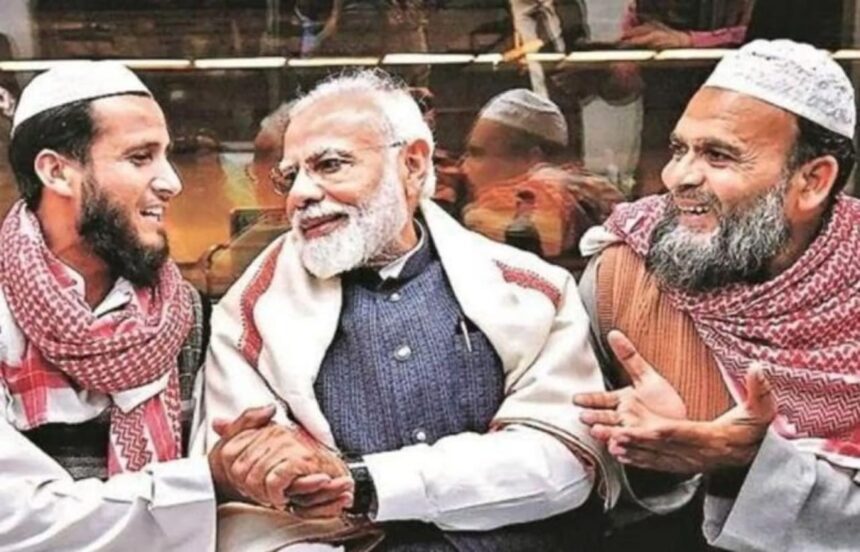

As Prime Minister Narendra Modi completes twelve years as India’s dominant political leader, the relationship between his government and the nation’s nearly 200 million Muslims remains fraught with complexity. Despite some notable advancements in welfare and communal stability during his tenure, the perception of alienation and mistrust persists among many in the Muslim community, creating a paradox that defines this era of governance.
The Shift in Violence and Security Dynamics
Over the past decade, the Modi administration has overseen a notable decline in large-scale communal riots and terrorist attacks that plagued earlier decades. High-profile events like the 1984 anti-Sikh riots and the 1992-1993 Mumbai riots have not been repeated on the same scale. Furthermore, the security approach has shifted, focusing on intelligence-driven operations rather than broad-based suspicion that led to widespread arrests of Muslim youth in earlier years. Welfare initiatives have also increasingly utilized a religion-neutral framework, benefiting millions across communities, including Muslims. However, these developments exist alongside a growing sense of alienation within the Muslim community, as they struggle for more than just welfare — they seek recognition and representation.
The Challenge of Political Representation and Trust
A critical shortcoming of the Modi government has been its inability to foster trust through political outreach to Muslims. While economic development is a cornerstone of the governance model, it has lacked structured engagement with Muslim communities. The result is a growing feeling among many Muslims that despite infrastructural and welfare improvements, they are politically marginalized. This underrepresentation in legislative bodies is alarming; Muslim presence in Indian politics has steadily declined over the last decade, particularly within the ruling Bharatiya Janata Party (BJP). This absence serves to deepen mistrust and undermine social cohesion, highlighting the necessity of representation as a fundamental aspect of democracy.
The Psychological Dimensions of Exclusion
The psychological impact of perceived exclusion is less often discussed, yet it is profound. While fears of riots have diminished, a climate of insecurity persists, amplified by hostile public discourse and polarizing rhetoric. Many Muslims express feelings of being unwelcome or unwanted in the national narrative, not necessarily rooted in reality but rather in societal perceptions. This highlights a gap in governance; the government’s duty extends beyond maintaining order to fostering an environment where every citizen feels valued and secure. The challenge remains: how to build a political culture that incorporates voices from all communities, thereby allowing Muslims to feel that they are integral parts of the national project.
Why It Matters
The ongoing dynamics between the BJP government and India’s Muslim community are significant for the broader discourse on democracy, social justice, and national identity. Economic growth and political stability can only be sustainable if they are inclusive. For the AI industry and technology developers, understanding these societal shifts can influence policy and algorithms designed to promote social equity, representation, and community engagement in increasingly diverse societies. Social cohesion is crucial for the collective progress of any nation, making it vital for technology and governance models to incorporate voices across demographics.
Frequently Asked Questions
What role does political representation play in the inclusion of Indian Muslims?
Political representation is crucial for ensuring that the voices and concerns of Muslim communities are heard within the governance structure, establishing trust and fostering a sense of belonging.
Has there been any improvement in welfare programs for Muslims under the Modi government?
While welfare initiatives have become more religion-neutral and have benefited many Muslims, the lack of trust and political engagement remains a persistent concern for many in the community.
How has the public discourse affected Muslims in India?
Public discourse has increasingly been characterized by hostility and polarization, contributing to a sense of exclusion among Muslims despite improvements in physical security.
What steps could improve relations between the government and Indian Muslims?
Structured engagement, increased political representation, and support for moderate voices within the Muslim community are essential steps for the government to improve relations and foster trust.