
Summary
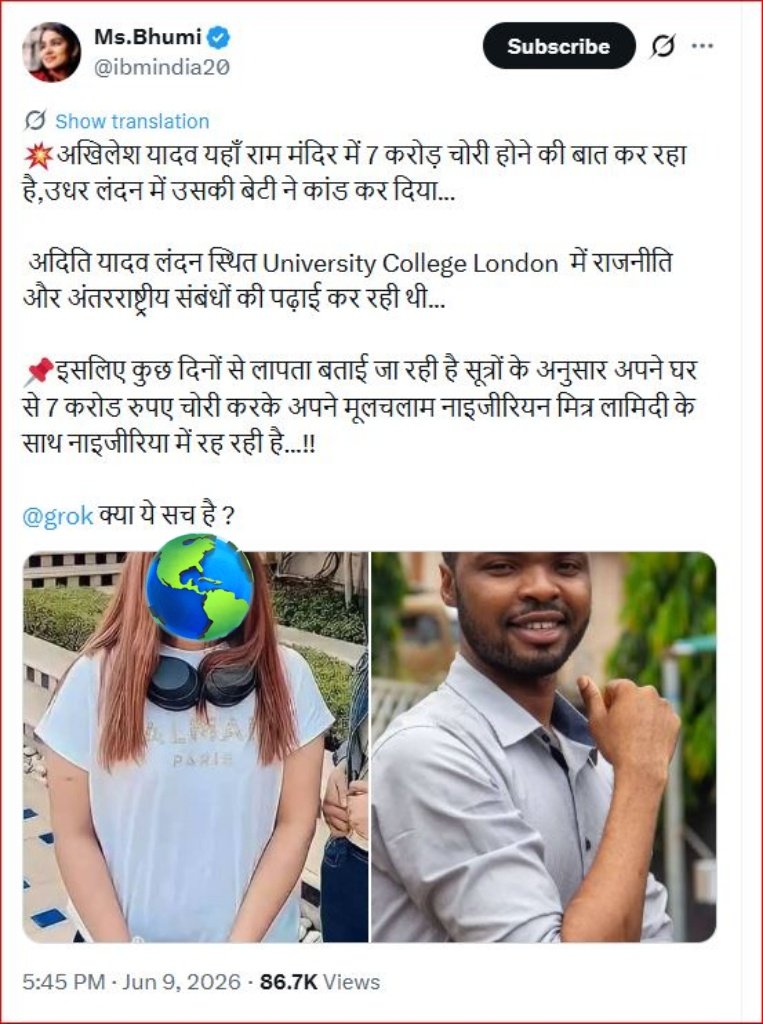
Recent developments in Indian politics have seen accounts associated with the controversial tweets about Akhilesh Yadav’s daughter now deleted. Prominent commentator Mohammed Zubair highlighted this incident, reflecting ongoing tensions in the political landscape. In the digital age, such actions amplify discussions surrounding accountability and free speech on social media.
Background on the Incident
In a recent post, Mohammed Zubair pointed out that several Twitter accounts initially shared inflammatory comments regarding Akhilesh Yadav’s daughter, a significant figure in Uttar Pradesh politics. Akhilesh Yadav is the leader of the Samajwadi Party and has been a prominent political figure in Uttar Pradesh, often engaging in fierce political rivalry, particularly against the ruling Bharatiya Janata Party (BJP). Zubair’s tweet suggests that the accounts’ deletions may be indicative of the backlash faced when engaging in politically sensitive discourse.
The deletion of accounts on social media platforms often raises questions about the nature of online discourse and the extent of existing polarization. The rapid rise and fall of such accounts can signify not only the delicate balance of power in Indian politics but also the evolving landscape of public opinion shaping this discourse.
Context of Political Rivalry
Political rivalry in India, especially in Uttar Pradesh, is notoriously intense. Parties, such as the BJP and the Samajwadi Party, frequently engage in a battle of narratives which can lead to misinformation and heated exchanges online. Zubair’s commentary reflects the real-time nature of this rivalry, where social media serves both as a battleground and a megaphone for political messaging.
Akhilesh Yadav’s adherence to traditional political values contrasts sharply with the BJP’s often aggressive and modern tactics. This dynamic plays out through social media activities, impacting public narrative and influencing voter perceptions. The deleted tweets about Yadav’s daughter specifically underscore the potential for backlash and the critical nature of female representation in political discourse.
The Role of Social Media in Indian Politics
Social media’s role in shaping political discourse cannot be understated. Platforms like Twitter and Facebook have become primary channels for communication among politicians and their constituents. However, they also serve as tools for misinformation and conflict. The incident involving the deleted accounts discussing Akhilesh Yadav’s daughter illustrates how easily narratives can shift in this environment.
In many cases, politicians and commentators use social media to cultivate their image, directly interact with voters, and sometimes, to launch attacks on opponents. This has led to rising concerns regarding the ethics of political communication and the impact on societal values. As the digital discourse evolves, so does the public’s expectation for accountability from both public figures and social media platforms.
Why This Matters
This incident reflects broader implications for political stability and the nature of democracy in India. The ability to engage in free discourse while ensuring political accountability is critical in a diverse democracy like India.
As political figures continue to leverage social media strategies, the potential for misinformation persists. Stakeholders—not just politicians but citizens—must remain aware of how narratives are constructed and deconstructed in the public sphere. The implications for political campaigns, voter education, and public opinion are profound, calling for a more nuanced approach to digital engagement.
Frequently Asked Questions
What was the content of the deleted tweets regarding Akhilesh Yadav’s daughter?
The specific content of the tweets has not been disclosed, but they were deemed inflammatory enough to warrant deletion by the accounts that initially posted them.
Why are deleted accounts significant in this context?
Deleted accounts can signal the volatility of political discourse on social media, highlighting issues of accountability, misinformation, and the fragile nature of political messaging.
How does this incident reflect broader political trends in India?
This incident underscores the increasing polarization in Indian politics, particularly through the lens of social media, which is shaping public sentiment and political narratives.
What impact does social media have on political accountability?
Social media can enhance political accountability by allowing for immediate responses to misinformation or harmful narratives, but it can also amplify false claims and incite divisions.