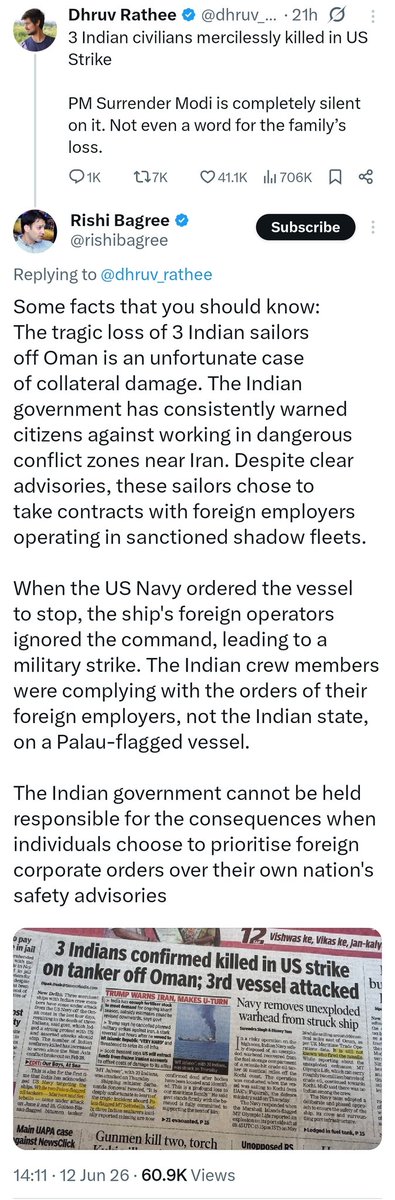

Rishi Bagree has weighed in on the tragic loss of three Indian sailors off the coast of Oman, suggesting that the Indian government should not be held responsible. He emphasizes that the sailors were operating under foreign corporate orders, contrasting their actions with the government’s warnings about working in dangerous areas.
Context of the Incident
The incident involving the three Indian sailors occurred when they were reportedly aboard a vessel that ignored orders from the US Navy to stop. This refusal led to a military strike resulting in the loss of life. Bagree points out that the sailors were part of a foreign-operated ship and were following directives from their employers rather than the Indian government. The vessel was flagged under the Palau registry, highlighting a complex landscape of maritime operations where various nationalities and jurisdictions are involved.
Government Warnings and Responsibilities
Bagree stresses that the Indian government has consistently issued warnings against working in conflict zones, particularly near Iran. This advisory underscores the government’s efforts to safeguard its citizens in precarious situations. By highlighting the sailors’ choice to work with foreign entities operating in sanctioned areas, he argues that individuals must take accountability for their decisions. He posits that the government should not be liable for the unforeseen consequences that arise when citizens disregard such warnings.
Corporate Influence and Sailor’s Choices
The situation further illuminates the tension between corporate interests and national safety. Bagree argues that sailors, in pursuing lucrative contracts with foreign companies, may prioritize monetary gains over adhering to government advisories. This narrative raises questions about the ethics of employment in hazardous conditions and the obligations of both the state and private entities towards their workers. It reflects an increasing trend where individuals may find themselves caught between corporate demands and national directives.
Why This Matters
The implications of Bagree’s comments strike at the heart of ongoing discussions about national responsibility, the safety of Indian citizens abroad, and the broader geopolitical climate. As more Indians work in international markets, the question of government liability versus individual choice becomes increasingly pertinent. It is vital for citizens to navigate these risks carefully, as the state’s ability to protect its citizens can be drastically limited by the complexities of international relations and corporate practices.
Frequently Asked Questions
What led to the loss of the Indian sailors?
The loss occurred when the foreign vessel they were on refused to comply with orders from the US Navy, which subsequently led to a military strike.
What has the Indian government said about the incident?
The government has issued warnings advising against working in conflict zones and has expressed that it cannot be held responsible for individuals who ignore these advisories.
What role do foreign corporations play in this situation?
Foreign corporations are responsible for operations in these conflict zones, often hiring sailors who may face significant risks. Their directives can place individuals in precarious situations, which raises ethical concerns about their employment practices.
Why is the conversation about personal choice and governmental duty important?
This conversation reveals the balance between individual agency and state protection. As globalization increases, understanding this dynamic becomes crucial for safeguarding citizens’ rights and safety in uncertain environments.