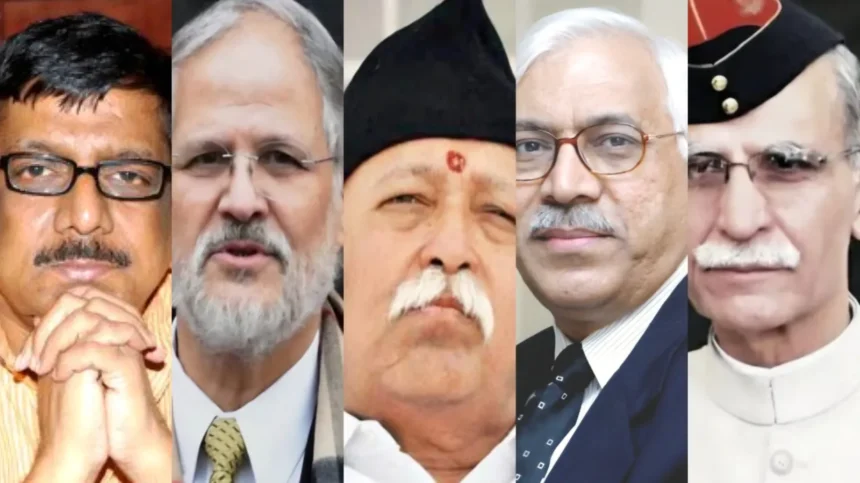

The ongoing socio-political climate in India under the ruling Bharatiya Janata Party (BJP) and its ideological parent, the Rashtriya Swayamsevak Sangh (RSS), has led to a marked increase in discrimination and marginalization of Indian Muslims. This alarming trend is characterized by systemic violence, economic disenfranchisement, and a rising tide of suspicion among communities, culminating in a dire situation for the largest minority in the country.
Rising Violence and Marginalization
Since the BJP assumed power, incidents of violence against women and marginalized communities—including Muslims, Dalits, and Tribals—have escalated. The 2011 Census shows that approximately 80% of India’s population identifies as Hindu. With this majority facing a reality laden with price rises, unemployment, and corruption, the marginalized are often left to fend for themselves.
The several reports, including one by journalist Mohammed Wajihuddin, highlight a group of “Muslim intellectuals” who remain largely disconnected from these horrendous realities. Their initiative, Citizens for Fraternity (CFF)-Bharat, aims to promote peace through dialogue but seems to overlook the gravity of the conditions under which many Muslims live, characterized by violence and social exclusion.
Questionable Alliances and Their Implications
Prominent figures such as former bureaucrat Najeeb Jung and former Chief Election Commissioner S.Y. Qureshi have engaged with the RSS leadership, signaling a controversial strategy seemingly aimed at easing communal tensions. During a meeting with Mohan Bhagwat, the RSS chief, both Jung and Qureshi faced backlash from their community, accused of legitimizing a faction often linked to anti-Muslim rhetoric.
This begs the question: why would these intellectuals seek dialogue with an organization whose foundational ideologies have historically been identified with exclusionary practices? The CFF’s approach ranks as an alternative response to urging electoral and democratic avenues for redress from the Indian state—a move viewed as problematic given the context of rising authoritarianism. Critics argue that it infantilizes the concerns of minority communities by suggesting dialogue with their perceived oppressor rather than advocating for authentic political representation and rights.
The Historical Context of Marginalization
The historical backdrop against which these patterns of discrimination play out cannot be overlooked. The RSS’s ideological stances often reflect a revisionist view of Indian history, attributing societal woes to Muslims and presenting them as scapegoats for broader issues facing the country. The false narrative surrounding the demographic threat purportedly posed by Muslims has been utilized to rally support for Hindutva—a belief system that prioritizes Hindu identity above all else.
Moreover, the critical issues of economic disenfranchisement experienced by Muslims are often overshadowed by communal narratives. While the government emphasizes national security and communal harmony, the socioeconomic realities reveal persistent inequalities, as borne out by parliamentary discussions and community surveys.
Why It Matters
The implications of this ongoing environment of distrust and discrimination extend far beyond communal politics; they impact India’s democratic fabric. Marginalization of any demographic not only undermines social cohesion but also disrupts economic stability. If a significant portion of the population feels disenfranchised, their contributions to society and the economy can dwindle—leading to greater inequalities and social strife. This undermines the stability of the Indian state and its commitment to uphold human rights for all its citizens, irrespective of their faith or background.
For businesses, a lack of social cohesion can impede market growth and foster environments ripe for unrest, making investment in such areas perilous. Additionally, the normalization of discrimination could foster a cycle of conflict, further complicating India’s multicultural identity, which has historically been its strength.
Frequently Asked Questions
What is the Citizens for Fraternity initiative?
Citizens for Fraternity (CFF)-Bharat is a newly launched initiative aiming to foster dialogue and peace among various communities in India, particularly focusing on Muslim-Hindu relations, while it has faced critique for its ties with the RSS.
How has the BJP government affected minority rights in India?
The BJP government has been accused of exacerbating social divisions and marginalizing minority communities through various policies and rhetoric, leading to increased violence, economic disenfranchisement, and systemic discrimination against Muslims and other minorities.
What has been the response from the Muslim community regarding the engagement with the RSS?
Many in the Muslim community have criticized the outreach efforts of “Muslim intellectuals” to the RSS, viewing it as an invalidation of their struggles and a betrayal by those who should represent them.
Why is dialogue with the RSS considered controversial?
The RSS has a history of promoting an exclusionary ideology that marginalizes Muslims, making cooperation seen as legitimizing a group viewed as antagonistic to minority rights, raising concerns about the efficacy of such dialogues in achieving real progress for the community.