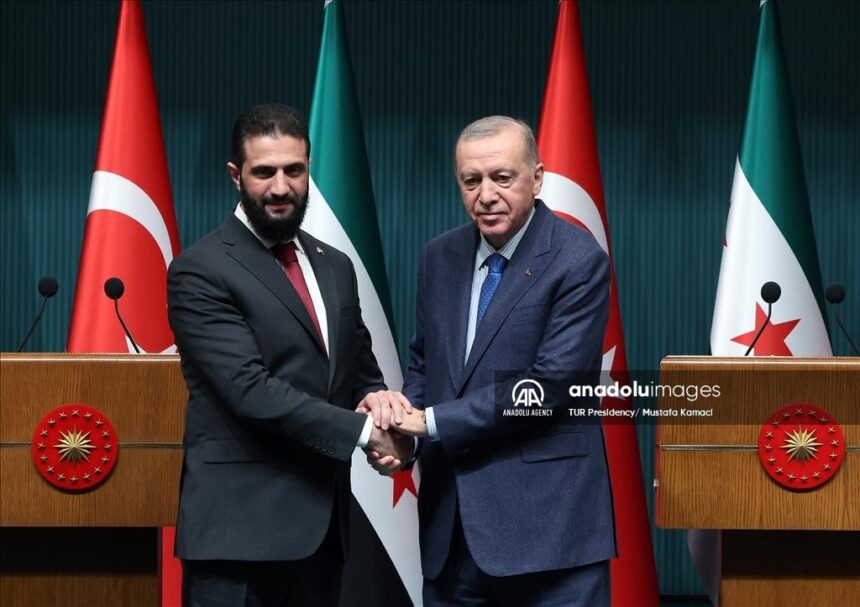

Turkey and Syria Advance Economic Ties with Banking Agreement
Turkey and Syria have taken a significant step towards enhancing their economic relations by allowing Turkish banks to open branches in Syria. This development, announced at a Turkish-Syrian economic forum in Gaziantep, reflects a broader strategy aimed at stabilizing Syria’s economy amidst ongoing reconstruction efforts.
The Forum and Key Agreements
During the economic forum, Turkish Trade Minister Ömer Bolat shared that Turkish and Syrian officials are working on necessary amendments to Syria’s banking regulations to facilitate the establishment of these bank branches. Central bank consultations are also in progress to ensure this initiative aligns with both countries’ financial frameworks.
The forum was attended by Syrian Economy and Industry Minister Mohammad Nidal al-Shaar, signaling a renewed commitment between Ankara and Damascus. Bolat set a short-term target for bilateral trade at $5 billion annually within two years, with an ambitious long-term goal of reaching $10 billion by the early 2030s.
Reopening Border Crossings and Trade Expansion
In addition to banking arrangements, Minister Bolat announced the completion of preparations to reopen the İslahiye border crossing in Gaziantep. This reopening is expected to enhance cross-border trade, with six out of twelve border crossings currently operational. The gradual normalization of cross-border movement aligns with the ongoing discussions about stabilizing Syria’s economy and restoring its financial systems.
Syrian officials have expressed optimism about closer ties with Turkey, viewing Turkey as a vital strategic partner for economic stability and reconstruction amidst regional uncertainty. The focus on increasing trade and investment may provide much-needed confidence to both economies.
Implications for Financial Systems
The discussions surrounding banking regulations and currency printing in Syria underscore broader efforts to rebuild the country’s financial systems. Turkish banks could play a crucial role in reviving the banking sector in Syria, offering vital services and support to local businesses. This collaboration represents a potential turning point in the relationship between Turkey and Syria, moving from a history of conflict to one focused on economic development and cooperation.
Why It Matters
The decision to allow Turkish banks to establish branches in Syria is significant for several reasons. First, it marks a shift towards economic normalization and cooperation in a region historically marked by tension. This initiative could be a model for future economic collaborations in similarly conflicted areas. Moreover, the influx of Turkish banking services may stabilize Syria’s economy, making it more resilient and integrated with its neighbors. Finally, this agreement highlights the importance of mutual economic interests in fostering peace and stability, both locally and regionally.
Frequently Asked Questions
What is the significance of Turkish banks establishing branches in Syria?
This agreement is crucial for revitalizing Syria’s economy while enhancing bilateral trade and investment, fostering a cooperative environment between the two countries.
How does this affect trade between Turkey and Syria?
Turkey and Syria aim to significantly expand bilateral trade, targeting $5 billion annually within two years and $10 billion by the early 2030s, marking a robust economic partnership.
What is being done to restore Syria’s financial system?
Efforts include discussions on Syria’s banking regulations and currency printing arrangements to stabilize and rebuild the country’s financial systems, essential for economic recovery.
How many border crossings between Turkey and Syria are operational?
Currently, six out of twelve border crossings between Turkey and Syria are operational, reflecting gradual normalization of cross-border movement and trade.