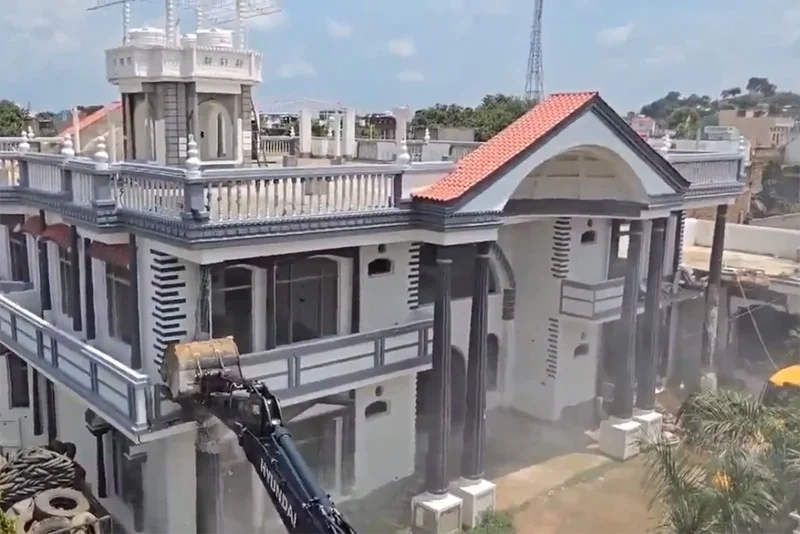

Local body authorities in Chhatarpur, Madhya Pradesh, demolished the lavish bungalow of former Congress District Vice President Haji Shahzad Ali on August 22, 2024, following violent protests triggered by blasphemous remarks made by a Hindu “saint.” This controversial action raises questions about the intersection of religion, politics, and governance in India.
Overview of Events Leading to Demolition
The catalyst for the demolition occurred after a delegation of Muslims visited the Chhatarpur Police Station on August 21, 2024, demanding action against Hindu “saint” Ramgiri Maharaj, who made derogatory comments. Maharaj’s statements, made in Maharashtra and widely disseminated on social media, provoked outrage within the Muslim community.
Following the comments, several FIRs were filed against Maharaj in various cities, including Mumbai and Pune. However, Chief Minister Eknath Shinde publicly defended Maharaj, stating, “Maharashtra is the land of saints, and we will not take any action against them.” These comments intensified protests against Maharaj and led to unrest in Chhatarpur.
Escalation of Protests and Government Response
Tensions escalated significantly on August 21, 2024, when protests turned violent, resulting in stone-pelting that injured police officials. In retaliation, authorities filed complaints against Haji Shahzad Ali and 150 others involved in the unrest. In the ensuing chaos, local officials were instructed by Chief Minister Mohan Yadav to take swift action.
As part of this directive, the demolition of Ali’s bungalow commenced on August 22, 2024. Local civic body officials were seen using bulldozers to raze the structure, which was described as lavish and reportedly built without the necessary permits. Alongside the demolition of the bungalow, parked vehicles were also destroyed, highlighting the government’s decisive approach towards those involved in the protests.
The Political Repercussions
The demolition and associated violence underscore the potent mix of religion and political agendas in contemporary India. By acting against a member of the Congress party, particularly amid a politically charged atmosphere, the ruling party may be signaling its stance on communal issues. This action not only aligns with its strategy but also raises concerns about targeting opposition figures in politically sensitive contexts.
The incident places a spotlight on the role of local authorities in managing communal tensions, the efficacy of the judicial system in addressing grievances, and the growing discourse around state-sanctioned violence. As more voices from both sides emerge, the implications could shape political narratives leading up to the next elections.
Why This Matters
The demolition represents a significant moment in Indian politics, reflecting how expressions of dissent can lead to severe repercussions. For citizens, especially those from minority communities, this event raises alarms about state actions that may favor majoritarian sentiments. Equally, the incident reveals the broader implications of political alliances and divisions that are increasingly defined by communal identities.
Furthermore, this scenario shifts public discourse, drawing attention to the responsibilities of officials in addressing not only grievances but also ensuring accountability in the political realm. The mounting tensions require a careful analysis of communal relations as they could impact upcoming electoral strategies and societal cohesion.
Frequently Asked Questions
What were the blasphemous remarks made by Ramgiri Maharaj?
Ramgiri Maharaj reportedly made comments considered offensive to the Muslim community during a public address in Maharashtra. Videos of his remarks circulated widely on social media, leading to protests.
What actions were taken by the government in response to the protests?
Following the protests, the government first registered FIRs against Maharaj and later filed cases against Haji Shahzad Ali and others for stone-pelting. Subsequently, local authorities carried out the demolition of Ali’s bungalow.
What are the implications of demolishing Haji Shahzad Ali’s bungalow?
The demolition is likely to stoke further communal tensions and increase criticism regarding government actions against opposition figures. It raises questions about legality and the motivations behind such swift punitive measures.
How does this event reflect on Indian political dynamics?
The incident highlights the ongoing interplay between religion and politics in India, shedding light on how communal tensions can be manipulated for political gain. It signifies the risks faced by minority communities amid a rising wave of nationalism that has become integral to the ruling party’s identity.