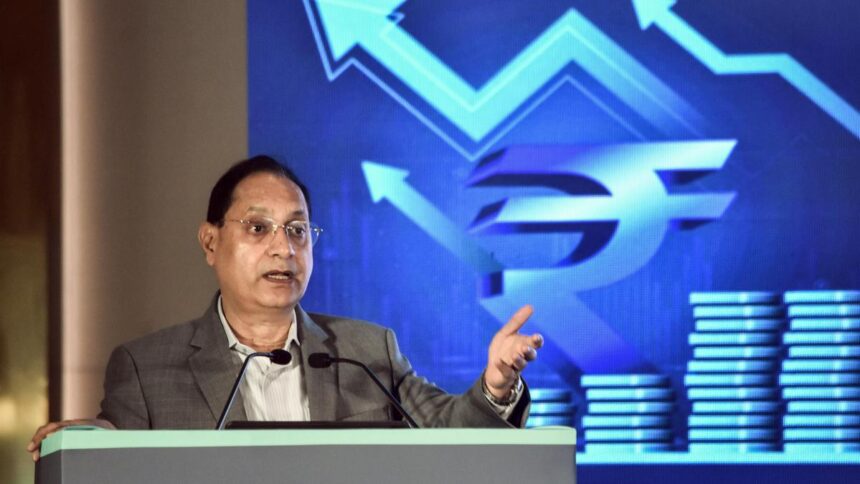

The Securities and Exchange Board of India (SEBI) is set to launch a pilot project for the tokenisation of corporate bonds utilizing distributed ledger technology (DLT) in an effort to enhance India’s corporate debt market. SEBI Chairman Tuhin Kanta Pandey announced this initiative at the CareEdge Debt Summit in Mumbai on Tuesday.
Pandey highlighted that the regulator is investigating whether tokenisation can facilitate “faster settlement, better traceability, automated servicing, and greater transparency” within the bond market. Currently, DLT is employed by depositories for governance and monitoring, and SEBI is now assessing its potential to streamline corporate bond settlements. The pilot project is anticipated to be implemented within the next six to nine months.
“This is basically instantaneous settlement with all the benefits of tokenisation,” Pandey stated, noting that the regulator will also evaluate the associated risks before finalizing the operational framework.
In addition, SEBI is collaborating with market participants, the Reserve Bank of India, and the Finance Ministry to implement the market-making framework outlined in the Union Budget. The regulator is also focused on developing exchange-traded funds (ETFs) for corporate bonds and derivatives linked to bond indices to enhance liquidity and provide retail investors with access to debt markets at smaller investment levels.
Pandey mentioned that corporate bond index derivatives could be launched following the Reserve Bank of India’s approval of draft guidelines released earlier this year. A new regulatory classification for debt brokers is also under consideration to reduce costs and lower entry barriers for intermediaries solely engaged in the debt market. Furthermore, SEBI aims to determine if entities listed exclusively in debt should adhere to the same strict regulations under Listing Obligations and Disclosure Requirements (LODR) as companies listed in equity.
While the corporate bond market has witnessed significant growth — with outstanding corporate bonds increasing from approximately ₹17.5 trillion at the end of FY15 to over ₹59 trillion currently — several structural deficiencies persist. In FY26, debt issuances amounted to ₹9.1 trillion, nearly double the amount raised through equity markets. However, approximately 85-90% of issuances are rated AA or AAA, and around 70% of outstanding bonds belong to financial sector entities, indicating a narrow issuer base. According to Pandey, out of around 6,000 companies listed on the National Stock Exchange (NSE) and Bombay Stock Exchange (BSE), only 776 have issued debt.
Low retail participation is a major concern, with only 10% awareness of corporate bonds among the general public and household penetration below 1%, as highlighted in a SEBI survey. “Retail participation will not grow merely because products are available. It will grow when products are understood,” Pandey stated, adding that SEBI plans to roll out bond-focused investor awareness initiatives under Project Jagrook.
SEBI will also begin outreach programs targeting small and medium enterprises (SMEs) and companies poised to enter the listed debt markets. Additionally, the regulator is reviewing the framework for municipal debt securities to aid local bodies in financing urban infrastructure projects and facilitate pooled financing structures for municipalities.
Published on May 26, 2026.