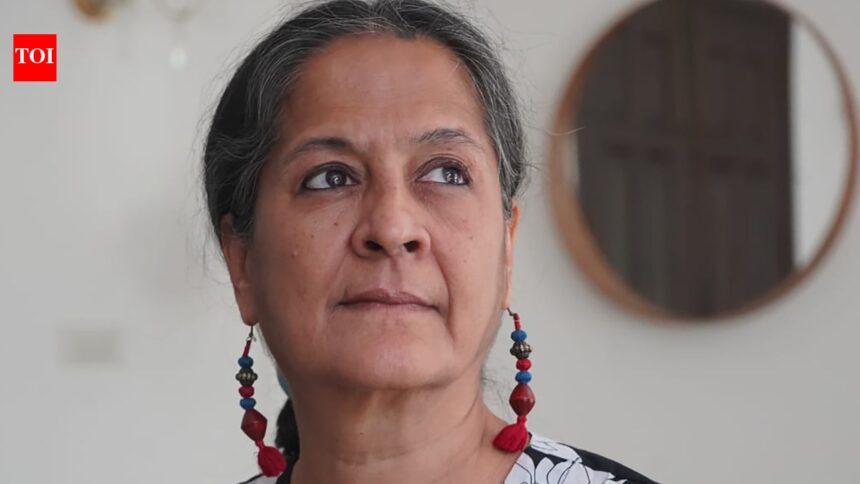

More than a decade ago, Masooma Ranalvi first publicly discussed her experience of khatna, the local term for female genital mutilation (FGM), which she underwent at the age of seven. Her revelations brought the practice within the Dawoodi Bohra community in India into the national spotlight. As the Supreme Court resumes hearings on the long-standing case in which Ranalvi is a petitioner, fresh evidence emerging from Kerala is broadening the discussion beyond just the Bohra community. Ranalvi, founder of WeSpeakOut, spoke with Mohua Das about the current phase of the fight against FGM in India.
Has there been a shift in the way the court views FGM?
“It felt different this time. Earlier, the three-judge bench—including Justices Dipak Misra, Chandrachud, and Khanwilkar—made very positive remarks, questioning bodily integrity and child rights before the topic shifted to religious issues. This time, the core focus for the nine-judge bench is the conflict between Articles 25 and 26 of the Constitution, which deals with an individual’s freedom to practice religion versus a denomination’s right to manage its religious customs. We argued that when a child undergoes bodily alteration and mental suffering under the guise of religious observance, it invites constitutional and criminal scrutiny. In this context, Justice Bagchi noted that terms like ‘health’ and ‘public health’ may be significant. We hope the court will recognize this as a violation of child rights and a criminal act that affects bodily integrity. Such a ruling could pressure the community and government to enact policies, raise awareness, educate healthcare professionals, support survivors, and illuminate the harms of FGM. It may also embolden members of the community who are still undecided.”
The FGM petition has lingered in constitutional discussions for years. What has this prolonged legal limbo meant for survivors and activists?
“That’s an important question, as the situation may have gone unnoticed during the seven years of silence. We felt discouraged, particularly since the practice persisted, and many girls underwent procedures that could have been avoided had the matter progressed earlier. The urgency of this issue seems largely unrecognized. The irreversible damage inflicted on children’s bodies deserves no place in a modern society that claims to value women’s and children’s rights. Simultaneously, the delays compelled us to rethink our strategies. We realized we were facing a formidable religious hierarchy, both politically and economically invested in stalling progress. This led us to broaden our perspective, learn from global movements, and form alliances. FGM is a global issue affecting 94 countries. For instance, in Africa, 29 countries have enacted laws against it. Last year, the WHO updated guidelines for healthcare providers after nearly a decade. While Type III infibulation often draws attention, there are also less severe forms, like nicking and pricking.”
How are Indian groups connecting with the growing Asian network around FGM?
“In recent years, we have developed alliances and shared insights. This network aims to highlight that FGM is not solely an African issue; it exists in various Asian contexts as well. In most regions, religion serves as the rationale for maintaining the practice.”
For years, FGM was viewed as an issue only within the Dawoodi Bohra community. What led WeSpeakOut to investigate reports of FGM in Sunni communities in Kerala?
“There had been rumors about the practice in Kerala and parts of Tamil Nadu; however, evidence and survivor testimonies were scarce. Around 2017, a story surfaced regarding a Kozhikode clinic and one survivor who came forward, facing significant backlash. Interest waned afterward, but we decided to delve deeper. Gathering evidence is extremely challenging. In the Bohra community, some women stepped forward to share their experiences, facilitating conversations. Nonetheless, our soon-to-be-released exploratory study provides enough evidence indicating that this requires further research, data collection, and intervention strategies.”
What differences do you see in Kerala compared to the Bohra context?
“The primary difference is the age at which FGM is performed. In the Bohra community, this occurs around the age of seven, while in Kerala, it takes place approximately 40 days post-birth. At that stage, the relevant anatomical part is so small that skilled surgeons might struggle, resulting in a heightened risk of damaging the clitoris. Additionally, the practitioner differs; in Kerala, it is often the ‘Ossathi’ community, traditionally women from the barber industry. Some locations have also begun medicalizing the practice. Survivors have reported challenging sexual experiences, though many did not initially connect these issues to the FGM they experienced, a realization that often comes later.”
After over a decade of advocacy against this issue, do you observe a trend among Bohra parents choosing not to subject their daughters to khatna, even if they do not openly express it?
“Absolutely. In areas where we have successfully engaged women through discussions, literature, campaigns, or media coverage, there has been a positive impact. However, there remain many women, particularly in smaller towns and rural areas in states like Maharashtra, Gujarat, Rajasthan, and Madhya Pradesh—where many Bohras reside—who have not participated in these dialogues. A segment of the community also openly defends the practice, deeming it their belief and right to continue. Hence, outreach is vital; the more conversations take place, the more likely it becomes that the practice may decline over time.”