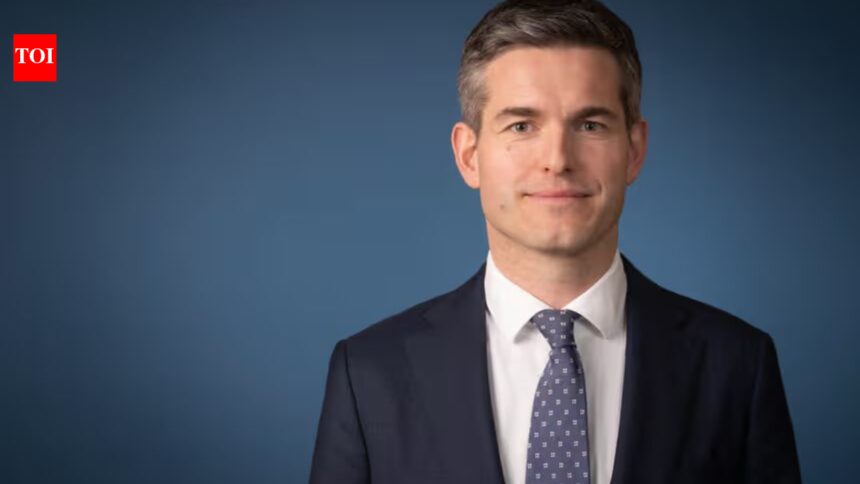

With Prime Minister Narendra Modi visiting The Hague, Dutch Foreign Minister Tom Berendsen discussed the evolving India-Netherlands strategic partnership, emphasizing its focus on semiconductors and the geopolitical necessity for trust-based relations in an exclusive interview with Sachin Parashar.
This marks PM Modi’s second visit to the Netherlands and the first since the announcement of the India-EU Free Trade Agreement (FTA). Berendsen highlighted that the main takeaways from the visit concern both nations’ direction toward enhancing cooperation, especially in trade, security, innovation, and people-to-people connections. As the global landscape becomes increasingly unpredictable, he noted that strategic cooperation is not merely advantageous but essential. The Netherlands seeks new partnerships outside traditional alliances, with India standing out due to its democratic framework and burgeoning influence in the Indo-Pacific.
The Indo-Dutch strategic partnership aims to foster greater collaboration, unlocking the potential of the India-EU FTA to enhance cooperation and strengthen supply chains amid global uncertainties. Berendsen stressed that this partnership serves as a foundation to address significant geopolitical challenges. By investing in their bilateral relationship, both countries aim to build a resilient future anchored in shared interests and strategic trust.
Regarding semiconductors, Berendsen underscored their vital role in ensuring economic resilience and technological leadership. The Netherlands boasts a highly advanced semiconductor ecosystem, complemented by India’s engineering talent and manufacturing ambitions. The objective is to create a long-term innovation partnership that connects universities, research institutes, startups, and industries in both nations. The need for diversified and trusted supply chains underscores India’s potential to emerge as a key global semiconductor hub.
On the current geopolitical climate, particularly concerning the Ukraine conflict and tensions in West Asia, Berendsen remarked that the Russian invasion of Ukraine represents one of Europe’s most pressing security challenges in decades. This conflict threatens principles of sovereignty and international law, impacting energy markets, food supplies, and global trade flows. He asserted the significance of enhanced cooperation between trusted partners like India in addressing these challenges and upholding international norms.
The discussions also encompassed defense cooperation, a key aspect of the strategic partnership. Berendsen indicated that the Netherlands and India are exploring deeper defense collaboration, particularly in maritime security, cybersecurity, and technology. Upcoming initiatives are expected to advance naval engagement, including the recent port call of a Dutch frigate to Kochi, aimed at strengthening naval ties. He noted that Europe recognizes India’s diversification of defense partnerships, prompting a pragmatic focus on areas where Dutch and Indian security interests align.
The alignment of the Dutch Indo-Pacific strategy with India’s focus on maritime security was another focal point. Both countries view stability at sea as essential for land prosperity, acknowledging the importance of open shipping routes and adherence to international maritime law. Berendsen stated that India plays a crucial role in the Indo-Pacific, with the Netherlands regarding it as a strategic partner in promoting a free and inclusive region. He reaffirmed that their approach prioritizes cooperation over confrontation, with trust-based partnerships becoming increasingly vital amid current geopolitical tensions.