
NEW DELHI: The National Democratic Alliance (NDA) appears set to retain power in Puducherry, marking the first time an incumbent government will achieve re-election since the Congress party did so in 2006. Counting for the April 9 assembly elections took place on Monday, with a voter turnout of 89.87%—the highest since Puducherry merged with India in 1964.
As of the latest reports, the NDA has won or is leading in 18 out of 30 constituencies, surpassing the majority threshold. Chief Minister N. Rangasamy’s All India NR Congress (AINRC) has claimed victory in 10 seats and is currently leading in an additional two. Among its allies, the Bharatiya Janata Party (BJP) has won four seats, while both the AIADMK and Latchiya Jananagaya Katchi (LJK) have achieved one victory each. Under the alliance’s seat-sharing plan, the AINRC contested 16 constituencies, while the BJP fielded candidates in 14, with the AIADMK and LJK receiving two seats each.
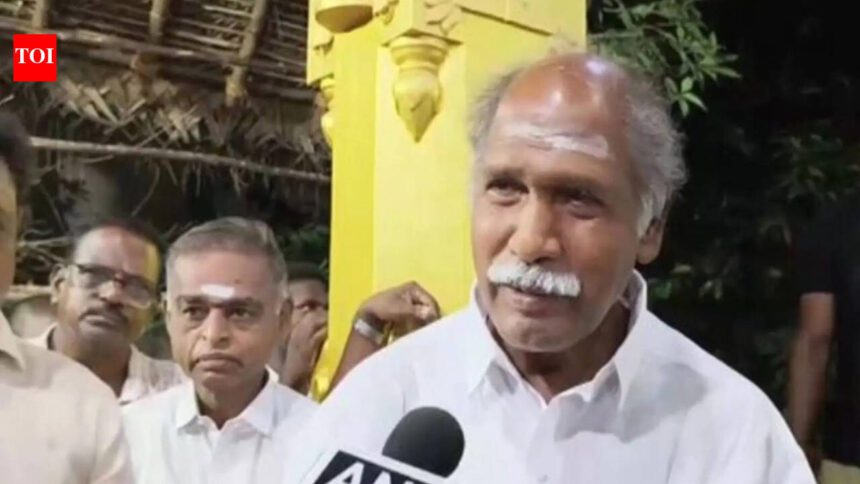
Victory in this election solidifies Rangasamy’s status as the leading political figure in Puducherry. As the longest-serving chief minister, he is poised to begin his second consecutive term and fifth overall. He successfully won both his constituencies, Thattanchavady and Mangalam. This outcome also benefits his standing within the NDA, particularly given the tensions that arose prior to the elections regarding the BJP’s inclusion of the LJK. The LJK was established by businessman Jose Charles Martin, son of the well-known lottery operator Santiago Martin.
Moreover, challenges such as the BJP-led central government’s refusal to grant statehood to Puducherry have created friction. This Union territory status allows the lieutenant governor, who represents the President of India, to override decisions made by the elected government. If positioned as the dominant partner, Rangasamy may pursue this issue more vigorously.
The results also help the AINRC avoid a situation similar to that in Bihar, where the BJP emerged as the largest party in the November assembly elections, while its ally JD(U) was in a secondary position. Despite this, JD(U) leader Nitish Kumar returned to the chief ministership for the tenth time, having led Bihar for over twenty years. Shortly thereafter, Kumar transitioned to the Rajya Sabha, enabling the BJP to establish its first chief minister in the state, with Samrat Choudhary succeeding him.