
Understanding Forest Resilience to Salinity: Lessons from a Coastal Forest Study
Introduction
As climate change and environmental degradation pose new challenges to ecosystems around the world, understanding how these systems respond to stressors like salinity is crucial. A recent study of a coastal forest revealed significant insights into tree resilience amidst saltwater exposure, providing valuable implications for ecosystems struggling against climate-induced changes.
Study Overview
The research was conducted over the span of three years (2022-2024) in a coastal forest that was subjected to varying durations of saltwater exposure. Initial experiments with a 10-hour exposure in June 2022 showed little effect on the forest’s health. The trees, primarily tulip poplars, continued to flourish throughout the year. Encouraged by these findings, the researchers increased the exposure to 20 hours in June 2023, where again, the trees showed resilience. However, a change became apparent after a 30-hour exposure in June 2024, where the tulip poplar trees began to show signs of distress.
The Impact of Salinity
After the 2024 exposure, significant changes were observed. By mid-August, the leaves of the tulip poplars began to brown, occurring weeks earlier than the typical fall season. The following month, by mid-September, the forest canopy appeared winter-like, stripped of its foliage. Notably, these changes were absent in a nearby plot treated with fresh water, illustrating the critical role of salinity in the health of the forest.
Initial Tolerance vs. Accumulated Stress
The study’s initial findings suggested that the coastal forest had a remarkable resilience to salinity, potentially due to the relatively diluted salt content of the estuarine water and subsequent rainfall that washed salt from the soil. However, the landscape shifted dramatically in 2024 when a significant drought followed the salinity exposure. The combination of extended salt exposure and lack of moisture likely tipped the scales against the trees, demonstrating that resilience has its limits.
What’s Happening Below Ground?
Interestingly, the effects of salty water exposure extended beyond visible symptoms in the canopy; they permeated the soil as well. Rainwater, which typically runs clear through the soil, turned brown approximately a month after the initial 10-hour saltwater exposure. This discoloration was attributed to carbon-based compounds leached from decaying plant matter — a process akin to brewing tea. The prolonged exposure to salty conditions altered not only the trees but also the soil chemistry, leading to long-lasting changes in the ecosystem.
Implications for Other Ecosystems
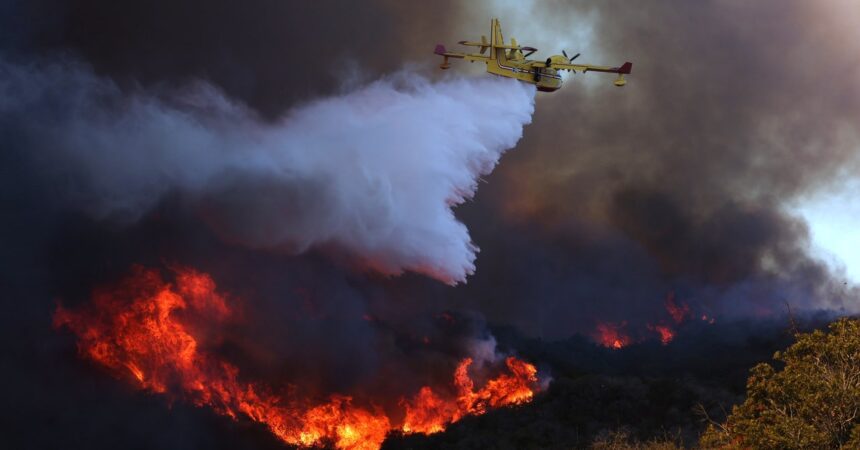
The implications of this study are profound, especially as regions like Southern California face severe droughts and wildfires. As seawater is increasingly used to combat fires — full-strength salty ocean water — understanding the long-term impacts on local forests and ecosystems becomes imperative. In contrast to the established resilience of the East Coast forest in the study, Southern California’s ecosystems, characterized by hotter and drier conditions, may experience rapid declines in health under similar salt exposure.
Conclusion
The research highlights an important narrative about ecosystem resilience and the factors that influence it. Understanding the delicate balance between stress tolerance and cumulative impacts is crucial in managing and conserving forests, especially amid the accelerating challenges posed by climate change. Forest management strategies must factor in not only immediate responses to salt exposure but also the long-term health of both the trees and soil ecosystems.
As we learn from this coastal forest study, proactive approaches that anticipate and mitigate the impacts of environmental stressors will be essential in the stewardship of our natural landscapes. In a world where climate dynamics are increasingly unpredictable, equipping ecosystems with the resilience to adapt is not only a necessity but a responsibility we all share.