Breaking India News Today | In-Depth Reports & Analysis – IndiaNewsWeekBreaking India News Today | In-Depth Reports & Analysis – IndiaNewsWeek
  • Home
  • Nation
  • Politics
  • Economy
  • Sports
  • Entertainment
  • International
  • Technology
  • Auto News
Reading: Opting Out: Embracing Child-free Living in Crisis-Ridden South Asia
Share
Breaking India News Today | In-Depth Reports & Analysis – IndiaNewsWeekBreaking India News Today | In-Depth Reports & Analysis – IndiaNewsWeek
  • Home
  • Nation
  • Politics
  • Economy
  • Sports
  • Entertainment
  • International
  • Technology
  • Auto News
© 2024 All Rights Reserved | Powered by India News Week
Trending Now: Stay updated with the latest breaking news from India and around the world
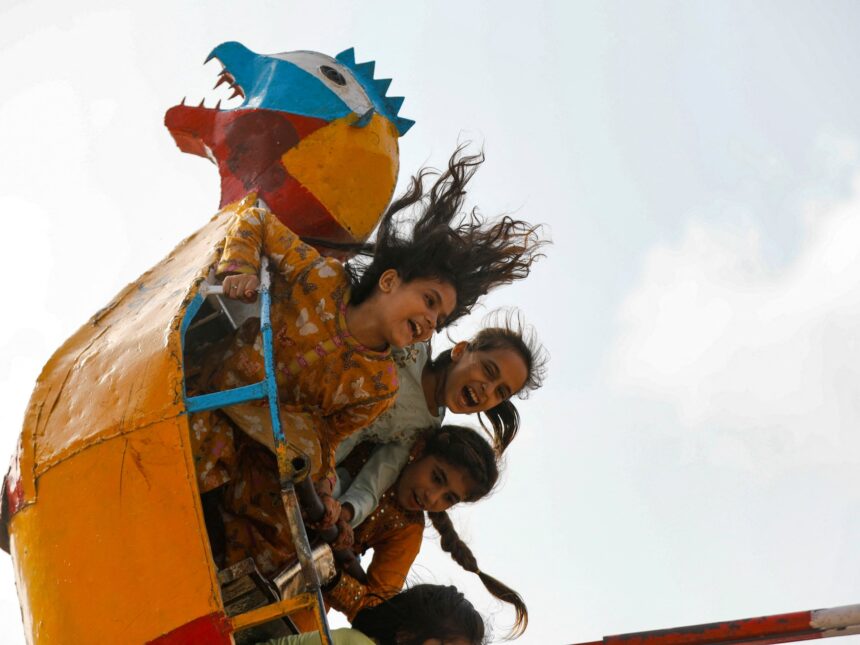
Choosing to be child-free in an ‘apocalyptic’ South Asia
Breaking India News Today | In-Depth Reports & Analysis – IndiaNewsWeek > International > Opting Out: Embracing Child-free Living in Crisis-Ridden South Asia
International

Opting Out: Embracing Child-free Living in Crisis-Ridden South Asia

International Desk By International Desk October 13, 2024 5 Min Read
Share
SHARE

Zuha Siddiqui is currently in the process of designing her new home in Karachi, mapping out her future life in Pakistan’s bustling metropolis.

Her parents will reside on the ground floor of the house, as they are aging and prefer not to deal with stairs, she explains.

On the other hand, Zuha will occupy the upstairs portion of the house, furnishing it according to her own tastes. Turning 30 recently, she is eager to have a space she can truly call her own, as she shared in a conversation with Al Jazeera over the phone.

Having worked as a journalist covering various topics such as technology, climate change, and labor in South Asia for the past five years, Zuha now works remotely, contributing to both local and international publications.

However, Zuha is part of a growing demographic in South Asia – young individuals who have made the choice not to have children.

South Asia is facing a demographic challenge as birth rates are declining across the region, a trend previously seen in the West and Far East Asian countries like Japan and South Korea.

To maintain current populations, a fertility rate of 2.1 children per woman is required, according to Ayo Wahlberg, a professor at the University of Copenhagen.

In countries like India, the birth rate has dropped significantly over the years, with projections showing a further decrease in the coming decades. Similar trends are observed in Nepal and Bangladesh as well.

Declining economic conditions play a significant role in the decision-making process for individuals like Zuha, who cite financial concerns as a primary reason for choosing not to have children.

Growing up in a financially unstable household, where planning for higher education was not a priority, Zuha and many of her peers in their 30s have opted out of parenthood due to economic uncertainties.

The instability in Pakistan’s economy, marked by high inflation, rising living costs, and mounting debt, further reinforces the decision of young people to forgo having children.

Similarly, in other South Asian countries, slow economic growth, inflation, job scarcities, and increasing debt burdens are contributing to a shift in attitudes towards starting families.

The pressure to work longer hours to meet financial needs leaves little time for personal lives or child-rearing responsibilities, prompting many couples to reconsider having children.

Societal expectations, particularly regarding gender roles in parenting, also play a role in shaping decisions about starting a family. Women like Mehreen from Karachi are conscious of the unequal burden placed on them in terms of childcare responsibilities.

Aside from financial and domestic concerns, the looming threat of climate change and environmental degradation adds another layer of complexity to the decision of whether or not to have children.

The fear of bringing children into a world plagued by environmental crises, such as pollution and climate-related disasters, weighs heavily on the minds of many South Asians, further influencing their choice to remain childfree.

Authors and researchers have highlighted the challenges of parenting in a climate-sensitive world, where anxieties about the future of the planet are increasingly shaping the decisions of young people.

Despite concerns about potential isolation in old age, individuals like Zuha are building strong support systems of friends who share similar values and beliefs. The idea of living in a communal setting with close friends is an appealing prospect for her.

While fears of growing old alone occasionally trouble her thoughts, Zuha finds solace in the reassurance of her friends, who promise to be there for her in the future.

Ultimately, the decision to not have children is a deeply personal one, influenced by a myriad of factors ranging from economic instability and environmental concerns to changing societal expectations and individual values.

TAGGED:Science
Share This Article
Twitter Copy Link
Previous Article PM GatiShakti Portal's door may open for private firms Unlocking Opportunities: Private Sector Access to GatiShakti Portal
Next Article BTEUP Result 2024 OUT at bteup.ac.in. Direct link, how to download BTEUP Result 2024 Declared at bteup.ac.in: Direct Link and Steps to Download
Leave a comment Leave a comment

Leave a Reply Cancel reply

Your email address will not be published. Required fields are marked *

Latest News

Twitter Users Rally to Fund Shop Owner Affected by Karauli Violence

September 26, 2026
BSE cautions investors as international ETFs trade at steep premiums to NAV

BSE Warns Investors of High Premiums on International ETFs Compared to NAV

September 26, 2026
Lebanese in Brazil, Brazilian in Lebanon

Lebanese Community Thrives in Brazil as Brazilian Ties Strengthen in Lebanon

September 26, 2026
India’s steel output rises 4.6% in August even as global production declines

India’s Steel Production Grows 4.6% in August Amidst Global Decline in Output

September 25, 2026
Stock Market Today Live, Sept 25: Sensex, Nifty hold marginal gains at noon amid global headwinds

Sensex and Nifty Steady at Noon Gains Despite Global Challenges – Stock Market Update, Sept 25

September 25, 2026
Buzzing stocks today: Tata Group, PB Fintech, JSW Cement and 10 other stocks in focus

Tata Group, PB Fintech, and JSW Cement Lead Today’s Stock Market Buzz with 10 Others

September 25, 2026

You Might Also Like

‘Everybody is a fighter’: Inside a First Nation’s quest for justice
International

Empowering Resilience: A First Nation’s Journey for Justice

1 Min Read
No tariffs on Day 1, but Trump promises to ‘drill, baby, drill’
International

Tariff-Free Trump Vows to Ramp Up Drilling

6 Min Read
‘Our land is not for sale’: Indigenous people protest at COP30 in Brazil
International

Indigenous Protesters Declare: ‘Our Land Is Not for Sale’ at COP30

3 Min Read
New York Governor Hochul endorses Zohran Mamdani for mayor amid poll surge
International

Hochul Backs Zohran Mamdani for Mayor Amid Rising Poll Numbers

1 Min Read

About IndiaNewsWeek

IndiaNewsWeek is your trusted source for breaking news, in-depth analysis, and comprehensive coverage of India and the world. We deliver accurate, timely reporting across politics, economy, sports, entertainment, and technology.

contact@indianewsweek.com

Quick Links

  • Nation
  • Politics
  • Economy
  • International
  • Sports
  • Entertainment

More Sections

  • Technology
  • Auto News
  • Education
  • About Us
  • Contact
  • Privacy Policy

Stay Connected

Follow us on social media for the latest updates and breaking news.

Facebook
X (Twitter)
YouTube
Follow US
© 2026 IndiaNewsWeek. All Rights Reserved.
Welcome Back!

Sign in to your account

Lost your password?