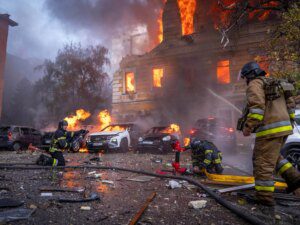
At Least 69 Dead After Major Earthquake in Colombia
A devastating magnitude 7.4 earthquake struck western Colombia, leading to the deaths of at least 69 individuals and the collapse of numerous buildings. The quake has caused widespread panic, prompting people to evacuate as far as the capital, Bogota, while emergency services scramble to assist trapped residents.
Impact on Communities and Infrastructure
The epicenter of the earthquake was located near San Jose del Palmar, a small community with around 4,800 residents in the Choco region. The earthquake struck at a depth of approximately 66 miles (107 km) on Monday, causing tremors that were felt as far away as neighboring Ecuador. Cities including Pereira, Quibdo, Cali, and Manizales have reported substantial damage, with emergency crews struggling to manage the chaos.
As people dig through debris, authorities have issued warnings about potential aftershocks, including two recorded aftershocks measuring 2.8 and 4.8 on the Richter scale. The Colombian Geological Service has labeled this seismic event the most significant earthquake in the past decade for the nation. Comparatively, smaller quakes, known locally as “temblores,” occur frequently in the region, though major quakes above 6.0 are rare.
Government Response and Emergency Measures
In the wake of the disaster, Colombia’s newly inaugurated President Abelardo de la Espriella has taken direct responsibility for coordinating the government’s response. He announced emergency measures aimed at assisting affected communities, focusing initially on San Jose del Palmar. The urgent need for disaster relief puts pressure on the administration, especially as the nation confronts the complexities of rebuilding and providing aid amidst ongoing fears of aftershocks.
Reports indicate that many residents were left injured or displaced as they rushed to evacuate their homes. The crisis highlights the importance of having well-prepared emergency plans in place, not only for immediate response but also for long-term recovery efforts.
What This Means
The earthquake’s magnitude and subsequent devastation serve as a stark reminder of the seismic activity prevalent in Colombia. For Indian readers, particularly given the recent natural disasters in India, this incident underlines the vulnerability of communities to earthquakes. Similar to various regions in India that are prone to seismic activity, it prompts discussions about disaster preparedness and infrastructure resilience. Continued awareness and educational efforts on earthquake safety and recovery are essential, especially in densely populated areas.
Frequently Asked Questions
What should people do immediately after an earthquake?
In the aftermath of an earthquake, individuals should stay calm, assess their surroundings for hazards, and evacuate if necessary. It is advised to stay away from windows and unstable structures and to follow emergency protocols established locally.
How can countries prepare for earthquakes?
Countries can prepare for earthquakes by implementing strict building codes, conducting regular drills, investing in infrastructure resilience, and educating citizens on how to respond during seismic events.
Are aftershocks dangerous?
Yes, aftershocks can be dangerous as they often occur in close succession to the main earthquake and can cause further destruction and instability in already weakened structures.
What organizations typically respond to such disasters?
National and local governments usually initiate the response efforts, supported by organizations such as the Red Cross and other humanitarian agencies. These groups focus on search and rescue, medical assistance, and providing shelter for displaced persons.