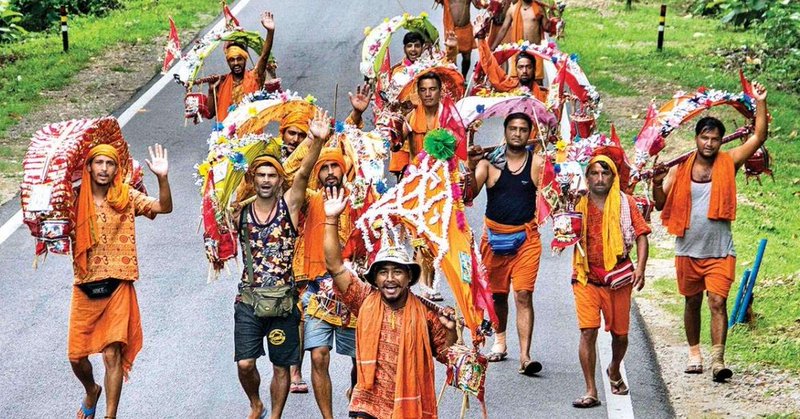

The recent death of a 24-year-old Muslim man, Azeem, following an alleged assault by a group of Kanwariyas (Hindu devotees participating in the annual Kanwar Yatra) has raised significant concerns regarding communal tensions in Uttar Pradesh. While police have lodged an FIR against Azeem for allegedly assaulting an auto driver, the incident has sparked disturbing reports about the dynamics of mob behavior and inter-community violence in the region.
Incident Overview
Azeem’s death allegedly resulted from an altercation involving a group of Kanwariyas who claim that he attacked the auto driver before the situation escalated. Witnesses indicate that the attack on Azeem was brutal and carried out by a mob, highlighting the volatility of such religious processions in the state. The police’s rapid move to file charges against Azeem, alongside the auto driver and other auto occupants, raises questions about the investigation’s impartiality and the narratives constructed around the events.
Communal Context and Historical Background
The Kanwar Yatra, a religious pilgrimage where devotees carry water from the Ganges River to their local deities, has, in recent years, become a flashpoint for communal violence in India. This annual event is not merely a religious practice but is intertwined with local politics, identity, and communal rivalry. Instances of violence during the Yatra are not uncommon and often reflect deeper societal divisions exacerbated by communal rhetoric. It is critical to note that every incident carries the potential to reignite long-standing tensions between communities, especially in regions like Uttar Pradesh, which have a complex demographic fabric.
Legal and Social Ramifications
The legal proceedings following Azeem’s death will be scrutinized by various fronts. On one hand, the police’s decision to book the victim raises critical issues about the enforcement of laws in communal contexts, suggesting a tendency to side with the majority community, thereby undermining the spirit of justice. On the other hand, there are concerns regarding the mob mentality that can emerge during religious events, where individuals may feel justified in violent acts against perceived outsiders or threats. The case serves as an urgent reminder of the need for sensitive handling of such incidents to avoid further inflaming communal tensions.
Why This Matters
This incident is significant for several reasons. Firstly, it highlights the fragile state of communal relations in India, which can be easily disrupted amid increasing polarization. The manner in which law enforcement responds to the incident may set a precedent for similar cases in the future, influencing how communal conflicts are managed at a bureaucratic level. Moreover, it pulls into focus the necessity for community dialogue and interventions that can help mitigate violence and encourage inter-religious understanding, particularly in states with histories of conflict. The political ramifications could extend beyond territorial or communal boundaries if not addressed appropriately, affecting perceptions of governance and justice across the nation.
Frequently Asked Questions
What happened to Azeem?
Azeem, a 24-year-old Muslim man, died after an alleged assault by a group of Kanwariyas during the Kanwar Yatra in Uttar Pradesh. Reports suggest a mob attacked him after an initial conflict involving an auto driver.
Why was Azeem booked by the police?
The police registered a case against Azeem for allegedly assaulting the auto driver, alongside other individuals in the auto. This move has drawn criticism regarding the fairness and objectivity of the investigation.
What is the Kanwar Yatra?
The Kanwar Yatra is an annual pilgrimage where devotees collect water from the Ganges River to offer it to their local deities. It is steeped in tradition but has recently become associated with communal tensions and violence.
What are the implications for communal relations in India?
This incident underscores the fragile nature of communal harmony in India and raises concerns about the law enforcement’s role in such contexts. How authorities handle this case could influence future interactions between religious communities and affect public trust in the justice system.