Breaking India News Today | In-Depth Reports & Analysis – IndiaNewsWeekBreaking India News Today | In-Depth Reports & Analysis – IndiaNewsWeek
  • Home
  • Nation
  • Politics
  • Economy
  • Sports
  • Entertainment
  • International
  • Technology
  • Auto News
Reading: 2026 Budget Highlights India’s Drive for Semiconductor Industry Growth
Share
Breaking India News Today | In-Depth Reports & Analysis – IndiaNewsWeekBreaking India News Today | In-Depth Reports & Analysis – IndiaNewsWeek
  • Home
  • Nation
  • Politics
  • Economy
  • Sports
  • Entertainment
  • International
  • Technology
  • Auto News
© 2024 All Rights Reserved | Powered by India News Week
Trending Now: Stay updated with the latest breaking news from India and around the world
Budget 2026 puts India’s semiconductor ambitions in focus
Breaking India News Today | In-Depth Reports & Analysis – IndiaNewsWeek > Technology > 2026 Budget Highlights India’s Drive for Semiconductor Industry Growth
Technology

2026 Budget Highlights India’s Drive for Semiconductor Industry Growth

Technology Desk By Technology Desk February 2, 2026 7 Min Read
Share
SHARE
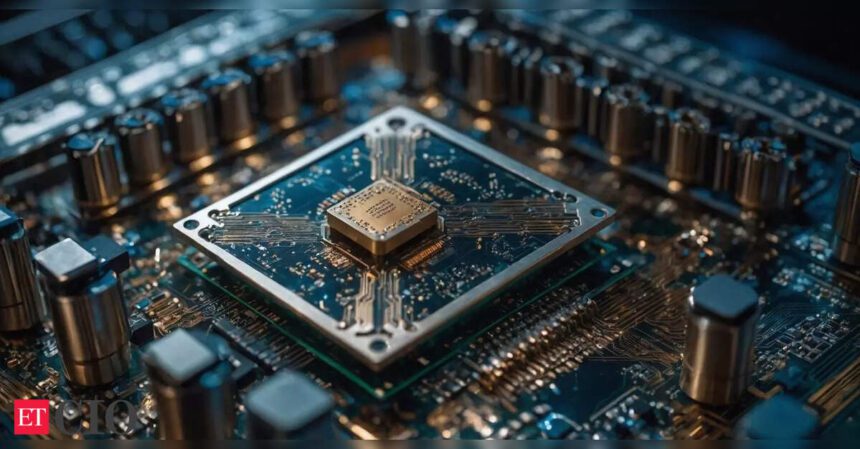
Union Budget 2026 announced in the Parliament by Finance Minister Nirmala Sitharaman. In the Part A of the announcement, India’s semiconductor ambitions took center stage.

India Semiconductor Mission 2.0

Semiconductor mission 1.0 expanded India’s semiconductor sector capabilities. Building on this, Sitharaman announced the launch of India Semiconductor Mission 2.0 “to produce equipment and materials, design full-stack Indian IP, and fortify supply chains.”

“The Electronics Components Manufacturing scheme, launched in April 2025, with an outlay of Rs. 22,919 crores, already has investment commitments and doubled the targets. We propose to increase the outlay to 40,000 crores to capitalize on this momentum,” the announcement followed. The new phase will also prioritise industry-led research and training centres to address gaps in advanced semiconductor skills.

A scheme for Rare Earth Permanent Magnets was launched in 2025, November. “We now propose to support the mineral-rich states of Odisha, Kerala, Andhra Pradesh, and Tamil Nadu to establish dedicated rare earth corridors to promote mining, processing, research, and manufacturing,” Sitharaman noted.

What the shift implies for India’s tech ambitions

By targeting equipment, materials and full-stack IP, India is attempting to reduce its exposure to global chokepoints that can disrupt industries ranging from electronics and electric vehicles to defence and renewable energy. India’s move mirrors a broader effort to “de-risk” technology supply chains rather than fully decouple them.

“While ISM 2.0 signals a transition from aspirational roadmaps to tangible ecosystem integration, the near-term resilience for Indian enterprises will be won or lost in the ATMP (Assembly, Testing, and Packaging) and Rare Earth magnet sectors rather than leading-edge fabrication.

The primary execution risk remains a skills-to-fab gap—India has the design talent, but it lacks the specialised operational workforce required to maintain high-yield manufacturing environments. For CIOs, India’s push for semiconductor sovereignty should be viewed as a vital China+1 insurance policy for mature nodes and industrial electronics, even as the cutting-edge AI silicon remains dependent on global supply chains for the foreseeable future,” says DD Mishra, VP Analyst, Gartner.

The focus on research and training also signals an acknowledgement that incentives alone are insufficient without sustained investments in skills and technology depth.

Why equipment and rare earths matter now

While semiconductor fabs often dominate policy discussions, recent global disruptions have highlighted the strategic importance of equipment, materials and critical minerals. Export controls, supply shocks and geopolitical tensions have exposed how concentrated these capabilities remain.

Control over these segments determines who can manufacture chips at scale and who remains vulnerable to external shocks.

What it means for enterprises

For enterprises, the impact will be gradual rather than immediate. Over time, stronger domestic capabilities could improve supply resilience, support long-term capital investment and ease talent shortages. However, much will depend on execution—how quickly policy intent translates into scalable industrial capacity and industry participation.

India targets services sector and emerging technologies to boost opportunities

The Indian government has announced a renewed focus on the services sector as a pathway to meeting the aspirations of a young population. Finance Minister Nirmala Sitharaman said the move is part of a broader effort to “fulfil aspirations and build capacities”, pointing out that nearly 25 crore people have moved out of multidimensional poverty over the past decade through reform-oriented policies.

As part of the initiative, a high-powered Education to Employment and Enterprises Standing Committee will be set up to recommend measures to strengthen services as a driver of Viksit Bharat. The government said the aim is to make India a global leader in services, targeting a 10% share of global trade in the sector by 2047.

The committee will focus on areas with the highest potential for growth, employment, and exports. It will also examine the impact of emerging technologies, including artificial intelligence, on jobs and skills, and propose interventions to prepare the workforce for these changes, Sitharaman said.

The announcement follows a series of government initiatives supporting new technologies, including the India AI Mission, National Quantum Mission, Anusandhan National Research Fund, and the Research, Development and Innovation Fund. Officials say the emphasis on services and skills is intended to create pathways for youth to access newer opportunities and for India to strengthen its position in the global economy.

CIO takeaways

  • Talent pipeline: Enterprises should anticipate new skill requirements in AI, digital services, and allied sectors, and plan reskilling initiatives accordingly.
  • Strategic planning: CIOs may need to align workforce development and recruitment strategies with evolving government priorities in services and technology.
  • Opportunities for collaboration: The Standing Committee’s initiatives could create partnerships for tech adoption, innovation projects, and skills development programs in both private and public sectors.

Long-term supply of capabilities: Businesses with global ambitions in services may benefit from India’s push toward becoming a 10% global services trade player by 2047.
    <!–
  • Updated On Feb 2, 2026 at 09:00 AM IST
  • –>
  • Published On Feb 2, 2026 at 09:00 AM IST
  • <!–
  • 4 min read
  • –>

Join the community of 2M+ industry professionals.

Subscribe to Newsletter to get latest insights & analysis in your inbox.

<!–
–>
TAGGED:EducationTechnology
Share This Article
Twitter Copy Link
Previous Article UP Warriorz achieve unwanted record with yet another loss against Delhi Capitals women UP Warriorz Sets Unfavorable Record with Another Defeat to Delhi Capitals Women
Next Article Maruti Suzuki signals possible car price hike as commodity costs surge Maruti Suzuki Indicates Potential Price Increase Amid Rising Commodity Costs
Leave a comment Leave a comment

Leave a Reply Cancel reply

Your email address will not be published. Required fields are marked *

Latest News

Broker’s Call: Sobha (Buy) - The HinduBusinessLine

Sobha Stock Rated Buy: A Strong Recommendation from Broker’s Call

May 7, 2026
Tamil Nadu results: TVK+ 5 short, Vijay’s oath-taking delayed as he struggles to show government majority

Tamil Nadu Election Results: Vijay’s Oath Delayed Amid TVK+ Shortage and Majority Challenges

May 7, 2026
APEDA to conduct Basmati survey in 4 mln ha, double the area of actual crop grown

APEDA Expands Basmati Survey to 4 Million Hectares, Doubling Current Crop Area

May 7, 2026
Central banks turn net sellers of gold for the first time in 10 months

Central Banks Become Net Sellers of Gold After 10-Month Streak of Purchasing

May 7, 2026
Strait of Hormuz technically open, but not operating: National shipowners' body head

Strait of Hormuz Open Yet Non-Operational, Says National Shipowners’ Association Chief

May 6, 2026
Gold jumps over 2% as West Asia peace hopes send oil, dollar lower

Gold and Silver Surge Amid Hopes for Reduced US-Iran Tensions

May 6, 2026

You Might Also Like

Next-Gen GCCs: India’s moment to redefine global enterprise value through GCC-service provider partnership
Technology

India’s GCC Revolution: Redefining Global Enterprise Value through Strategic Partnerships

7 Min Read
Impact of AI on the global cyber threat landscape
Technology

AI’s Transformative Role in Shaping the Global Cyber Threat Landscape

7 Min Read
Chaos Consumes USAID as State Department Moves to Send Overseas Staffers Home
Technology

USAID in Turmoil as State Department Plans to Recall Overseas Personnel

5 Min Read
14 Best Planners: Weekly and Daily Notebooks & Accessories (2024)
Technology

Top 14 Planners: Must-Have Weekly and Daily Notebooks & Tools for 2024

6 Min Read

About IndiaNewsWeek

IndiaNewsWeek is your trusted source for breaking news, in-depth analysis, and comprehensive coverage of India and the world. We deliver accurate, timely reporting across politics, economy, sports, entertainment, and technology.

contact@indianewsweek.com

Quick Links

  • Nation
  • Politics
  • Economy
  • International
  • Sports
  • Entertainment

More Sections

  • Technology
  • Auto News
  • Education
  • About Us
  • Contact
  • Privacy Policy

Stay Connected

Follow us on social media for the latest updates and breaking news.

Facebook
X (Twitter)
YouTube
Follow US
© 2026 IndiaNewsWeek. All Rights Reserved.
Welcome Back!

Sign in to your account

Lost your password?