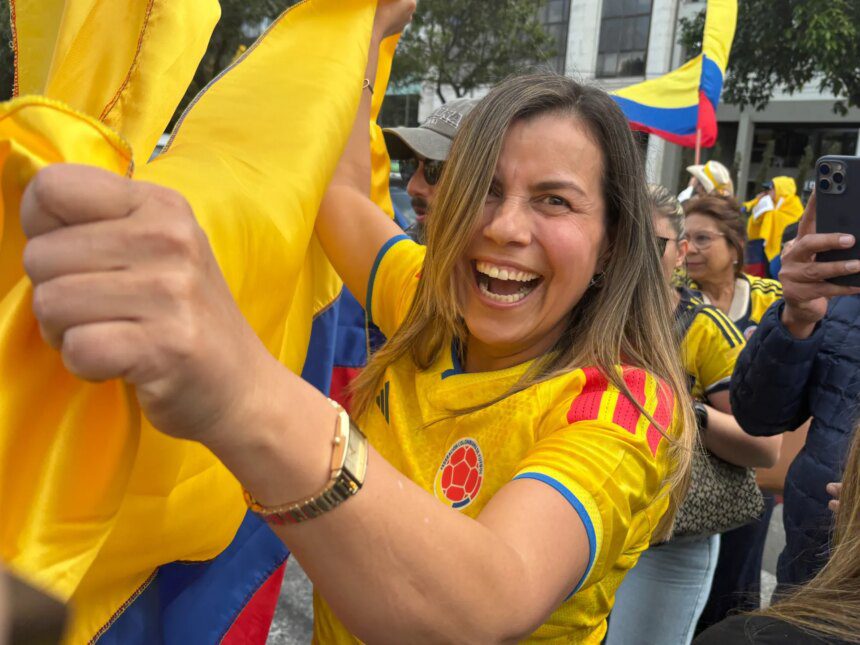

The politicisation of national football jerseys is creating significant tension in Latin America, particularly in Colombia and Brazil. Politicians and opposition figures have begun to reclaim team jerseys, arguing that these symbols belong to all citizens rather than being hijacked by any political party or movement.
Colombia’s National Unity Through Football
In Colombia, the national football jersey, primarily known for its vibrant yellow color, has become a powerful symbol in the political arena. Opposition politicians, especially from the left-wing Historic Pact coalition, have worn the jersey to counteract what they describe as its “vulgar appropriation” by far-right factions. Daniel Monroy, a prominent politician, emphasized that the national colors — yellow, blue, and red — should be a collective symbol, available to all citizens regardless of their political alignment. He remarked, “The shirt, the national team, belongs to all of us, not to any one group,” highlighting the need to preserve its integrity as a representation of national pride rather than a partisan emblem.
Brazil’s Contested Football Identity
In Brazil, a similar struggle has unfolded, especially in the aftermath of the 2022 World Cup in Qatar. The yellow jersey, traditionally seen as a source of national pride, became a point of contention after former President Jair Bolsonaro refused to concede defeat in the elections. The situation has led to a rise in the popularity of alternative football shirts, such as the blue variant, as fans hesitated to wear the yellow jersey due to fears of being associated with right-wing militaristic movements. The political atmosphere has made it increasingly challenging for fans to display their allegiance, turning the jersey into a symbol of political identities. Paulo Duarte, a football shirt collector, expressed frustration that the jersey had become politicized but resolved to continue his passion for football regardless of political influences.
A Counter-Movement Among Fans
Both leftist and rightist fans have taken steps to reclaim their identities through their national jerseys. In Brazil, supporters of the left have reclaimed the yellow jersey by adding red symbols or wearing it unaltered, attempting to communicate that national pride extends beyond political affiliations. Gardennya Linard, an educator and ardent fan, shared her belief that Bolsonaro’s claim over the yellow jersey has weakened over time. She noted an increasing trend of left-leaning supporters asserting their right to wear the jersey, indicating that national symbols should resonate with the collective identity of the populace rather than be appropriated for political gains.
What This Means
The ongoing controversies over football jerseys in Latin America underscore a larger narrative about national identity and political affiliation that resonates in various regions worldwide, including India. As nationalism and political polarization grow in many countries, the symbolism attached to national representations such as sports jerseys can frequently become contentious. These developments serve as a reminder for Indian citizens of the complexities tied to national unity and identity, especially as they engage with political spaces through communal symbols. The appropriation of cultural symbols for political claims could foster division rather than unity, an issue that resonates across continents.
Frequently Asked Questions
Why are football jerseys becoming politicised in Colombia and Brazil?
Football jerseys have become politicised as different political factions claim ownership over national symbols, creating a struggle among citizens regarding their rightful representation and usage.
What strategies are opposition politicians using to reclaim the jerseys?
Opposition politicians are publicly wearing the national jersey to assert that it belongs to all citizens, not just a particular political group, and to challenge its appropriation by right-leaning factions.
How does this situation reflect broader issues of national identity?
The politicisation of national jerseys reflects broader concerns about identity and nationalism, showcasing how cultural symbols can be manipulated to either unite or divide people in political contexts.
Is this phenomenon unique to Latin America?
No, while it is particularly pronounced in Latin America, the phenomenon of politicised national symbols can be observed globally, including in countries like India, where national icons often intersect with political narratives.