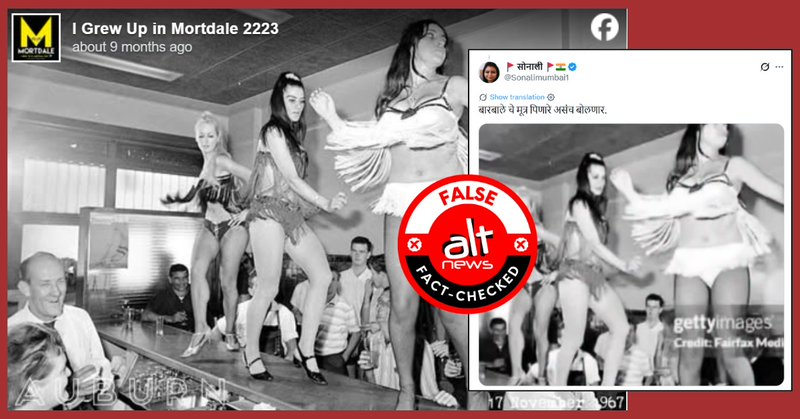

A recent viral post featuring a 1967 image of Australian dancers has been falsely attributed to Sonia Gandhi, the leader of the Indian National Congress. The misinformation originated from a user named Sonali, who describes herself as a BJP leader and is followed by Prime Minister Narendra Modi on the social media platform X (formerly Twitter).
Background of the Viral Post
The misleading image gained traction when Sonali (@Sonalimumbai1) shared it with an offensive caption aimed at Sonia Gandhi. This specific post sparked widespread discussions, particularly among political commentators and followers of the BJP. The photograph, originally depicting Australian go-go dancers from the late 1960s, has no connection to Sonia Gandhi or Indian politics. Instead, it serves as an example of how misinformation can easily spread across social media platforms.
Investigating the Origins of the Image
According to fact-checking sources, including Alt News, the image was misappropriated to create a narrative adverse to Gandhi. The photograph comes from a cultural phenomenon in Australia during the 1960s, showcasing dancers in a scene that has since been divorced from its context. In today’s digital age, the photograph’s resurrection in political discourse exemplifies the ease with which images can be manipulated for partisan purposes.
The Role of Social Media in Misinformation
This incident underscores the significant role social media plays in shaping public perception. When individuals with large followings share false information, it magnifies its reach, impacting perceptions and inciting political polarization. Sonali’s association with the BJP and her follower count, including that of Prime Minister Modi, lends undue credibility to her claims, showcasing how influencers can unearth misinformation to foster specific narratives.
Why This Matters
The propagation of misinformation like this incident illustrates the challenges faced in India’s political landscape. It raises crucial questions regarding the integrity of information consumed by the public. As misinformation can alter electoral dynamics and encourage divisive rhetoric, it becomes imperative for citizens to critically evaluate claims and seek verified sources. Moreover, how political parties respond to such actions can shape their public image and influence voter trust in the long run.
Frequently Asked Questions
What was the content of the viral post?
The viral post shared by Sonali incorrectly attributed a 1967 photograph of Australian dancers to Sonia Gandhi, accompanied by an offensive caption targeting her.
Who is Sonali and what is her political affiliation?
Sonali (@Sonalimumbai1) identifies herself as a BJP worker and is followed by Prime Minister Narendra Modi on X, indicating her influence within the party and among its supporters.
What was the original context of the photograph?
The original photograph depicts Australian go-go dancers from the 1960s and has no connection or relevance to Indian politics or Sonia Gandhi.
Why is misinformation concerning public figures such a concern?
Misinformation can damage reputations, influence public perception, and incite division among constituents. In the case of Sonia Gandhi, it reflects broader issues of how political figures can be misrepresented to serve partisan agendas.