
The United States has lifted sanctions on Russian diesel sales until April 7, 2027, following a conversation between President Donald Trump and President Vladimir Putin. This significant move aims to ease the global fuel supply crisis exacerbated by recent conflicts affecting refineries, which has led to rising diesel prices worldwide.
Details of the Sanction Lift
On October 10, 2026, the U.S. Department of Treasury announced that all transactions related to the sale and importation of diesel fuel from Russia are now authorized through April 7, 2027. This decision comes as the U.S. seeks to tackle increased fuel prices fueled by geopolitical tensions.
The lifting of sanctions was timed closely with Trump’s discussion with Putin, where they reached an agreement for immediate diesel supplies to reach American and global markets. Trump indicated that Russia would supply over 300,000 tonnes of diesel initially, followed by 500,000 tonnes in November, and an additional one million tonnes thereafter. The agreement could ultimately culminate in an estimated total of 3 million tonnes depending on the operational status of Russia’s refineries.
Factors Influencing Diesel Prices
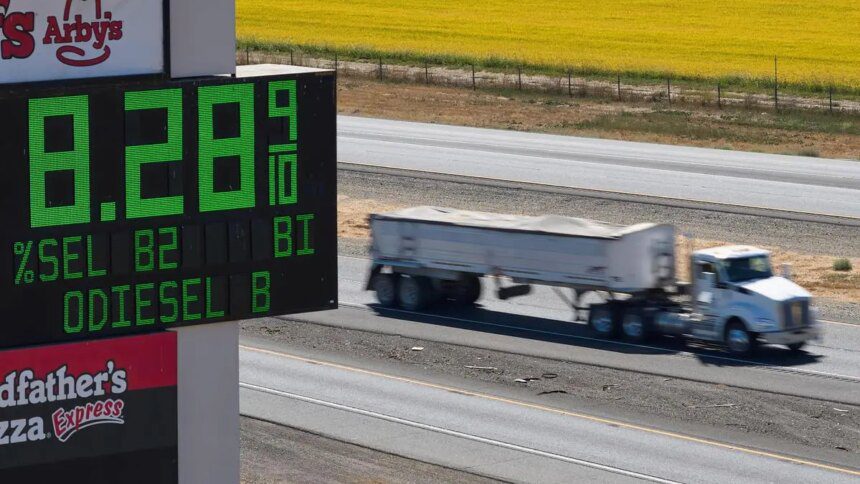
Global diesel prices have been under pressure due to a series of disruptions, particularly the conflict in Ukraine, which has seen Ukrainian forces targeting Russian refineries. In addition, Houthi militia attacks on Saudi Arabian refineries have compounded issues in supply chains, contributing to heightened fuel prices across multiple markets.
For consumers and industries reliant on diesel, these disruptions have been felt sharply, making the lifting of sanctions a timely intervention aimed at stabilizing not just prices but also availability in the American market and, by extension, internationally.
Trump’s Political Pressure and Energy Strategy
As the November midterm elections approach, Trump faces increasing pressure to alleviate fuel prices—a critical issue for voters. The decision to lift sanctions aligns with a broader energy strategy aimed at securing reliable fuel supplies as the U.S. navigates a complex geopolitical landscape.
The U.S. administration’s approach suggests a pivot towards pragmatic energy diplomacy, balancing domestic interests with international collaborations. This move could redefine energy markets, potentially influencing import strategies and pricing frameworks in countries dependent on diesel fuel, including India.
What This Means
For Indian readers, the lifting of U.S. sanctions on Russian diesel could have significant implications. India, a major consumer of diesel for both transportation and industrial sectors, faces ongoing challenges posed by fluctuating global oil prices. The easing of sanctions may lead to a stabilization in diesel prices, mitigating the pressure on Indian businesses that rely heavily on this fuel.
Moreover, if Russian diesel enters the Indian market, it could foster competition, possibly driving down prices further. However, the volatility of global oil markets and geopolitical tensions continue to be unpredictable factors that can significantly impact fuel availability and pricing globally.
Frequently Asked Questions
How does the lifting of U.S. sanctions affect global diesel prices?
The lifting of sanctions is expected to increase the availability of Russian diesel in global markets, which could lead to decreased prices due to higher supply levels, assuming demand remains constant.
What impact will this have on Indian consumers?
Indian consumers may see some stabilization in diesel prices, as increased availability from Russian supplies could relieve pressure created by price hikes caused by ongoing geopolitical tensions.
Is this a permanent policy change by the U.S.?
No, the sanctions have only been lifted until April 7, 2027. The economic and political contexts surrounding sanction policies will ultimately determine the long-term effects and future actions by the U.S.
What is the significance of the U.S.-Russia conversation regarding diesel supply?
The conversation between Trump and Putin marks a diplomatic engagement aimed at addressing mutual economic interests in energy supply, reflecting a strategic maneuver by the U.S. to curb rising fuel prices while navigating international relations amidst ongoing tensions.