
For the first time since World War II, excluding the COVID-19 pandemic, U.S. public debt has eclipsed the nation’s GDP. As of late March, the public debt reached $31.27 trillion, slightly surpassing the GDP of $31.22 trillion.
This milestone is often viewed as a long-term fiscal concern, but the immediate economic implications of this debt are becoming more pronounced. The most pressing issue arises from the potential for significant foreign holders of U.S. assets to begin withdrawing their investments from U.S. markets.
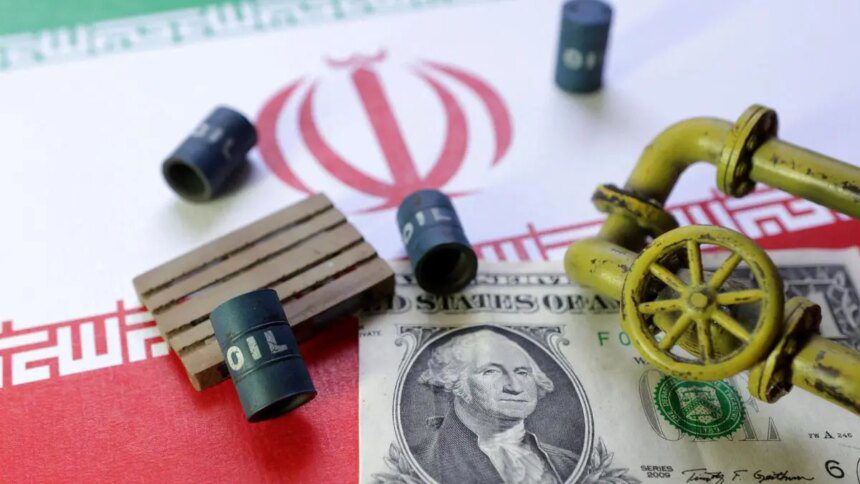
Gulf states, whose trust in U.S. fiscal and military assurance has been undermined by the U.S.-Israel operations against Iran, together hold approximately $2 trillion in U.S. assets through sovereign wealth funds. Officials in the Gulf are already reevaluating their positions. For instance, in March, a Gulf official indicated that three of the four largest economies in the Gulf Cooperation Council were analyzing their sovereign wealth fund positions in light of the ongoing conflict with Iran.
Why the U.S. Cannot Simply Block a Selloff
The U.S. has very limited options to prevent foreign investors from divesting. The unrestricted access to what the Federal Reserve Bank describes as “the deepest and most liquid fixed-income market in the world” is precisely what makes U.S. assets desirable. However, this very openness also creates systemic vulnerabilities.
The U.S. economy heavily relies on inflated asset valuations—overvalued stocks, bonds, and real estate—where market prices vastly exceed their actual fundamentals. If confidence wanes and these inflated markets experience corrections, a sell-off may occur, leading to a sharp decline in prices, similar to the 2008 financial crisis. The ramifications for the real economy can be severe.
Should Gulf states begin selling U.S. assets as regional instability continues, declining prices could diminish collateral value across the financial system. Leveraged institutions might react to weakening balance sheets by reducing borrowing and liquidating assets. This in turn could trigger further price declines, initiating a cascade of financial stress globally.
Swap Lines as a Stopgap
As these pressures intensify, central bank swap lines have resurfaced as a potential remedy. These agreements allow countries to access U.S. dollars without having to sell their American investments, as forced sales would exacerbate price drops and spread financial turmoil.
In the 2008 crisis, the Federal Reserve employed swap lines as emergency measures to provide dollar liquidity to banks and governments needing it urgently. Recently, U.S. Treasury Secretary Scott Bessent noted that several U.S. allies in both the Gulf region and Asia had requested swap lines to avert “disorderly” asset sales.
However, it is essential to consider where this dollar liquidity originates. For many years, the U.S. dollar’s global role permitted the United States to spend beyond its means, while other nations accumulated dollars through trade to invest back into U.S. markets. Gulf states played a critical role in this arrangement, using oil revenues to purchase U.S. bonds, stocks, real estate, and military equipment.
This system, known as the petrodollar system, dates back to a 1974 agreement between the U.S. and Saudi Arabia, which stipulated that oil be priced in U.S. dollars. In return, Gulf nations received American political and military support, allowing for an expansion of the dollar supply through mechanisms like quantitative easing.
While this can stabilize markets temporarily, it consequently increases reliance on repetitive interventions, effectively buying time rather than addressing underlying issues.
A Fracturing Arrangement
The petrodollar system is sustainable only as long as Gulf states continue to reinvest in U.S. markets. Swap lines, however, reverse this flow, demanding that dollars now flow to the Gulf instead of the other way around.
Iran’s aggressive actions against Gulf states, including physical threats to economic assets and control over key waterways like the Strait of Hormuz, have created instability in oil markets, government budgets, and overall regional security. In response, Gulf sovereign wealth funds are prioritizing liquidity and adaptability.
The United Arab Emirates’ departure from OPEC on May 1 exemplifies the extent to which the previous energy-financial agreement has unraveled. Gulf nations now seek greater control over production, revenue generation, and liquidity than the OPEC framework allows. This shift may also align with U.S. pressures to lower oil prices in the short term.
Such a strategy, however, is not sustainable. While lower oil prices may benefit the U.S. and other importers temporarily, Gulf states still require robust revenues to support budgets, sovereign wealth funds, and diversification efforts.
Additionally, Gulf nations are indicating a readiness to utilize alternative currencies, including China’s yuan, for portions of their oil trades if regional instability impacts dollar liquidity. This transition would merely expedite the trend among emerging economies towards reduced reliance on the U.S. dollar.
Extending swap lines to Gulf states might mitigate that process, but it may not suffice to reverse the currency diversification already beginning.
A System Under Pressure
The global financial structure was already evolving towards greater fragmentation and diminished reliance on the U.S. dollar long before the conflict with Iran commenced. Escalation by former U.S. President Donald Trump has accelerated this trend by compromising confidence in the political and military foundations that have sustained the petrodollar system for decades.
Policymakers are increasingly leaning on swap lines, monetary expansion, and emergency coordination strategies to stabilize dollar liquidity and reassure allies. These measures, once reserved for periods of acute crisis, are becoming normalized within systems that risk undermining the credibility of U.S. assets.
Underlying these developments is a global economy increasingly characterized by decades of financialization, reliance on inflated asset valuations, and escalating geopolitical rivalries—all of which intensify the existing strains on the U.S.-centered order.
Elliot Goodell Ugalde, Queen’s University, and Natalie Braun, York University
Published on May 13, 2026