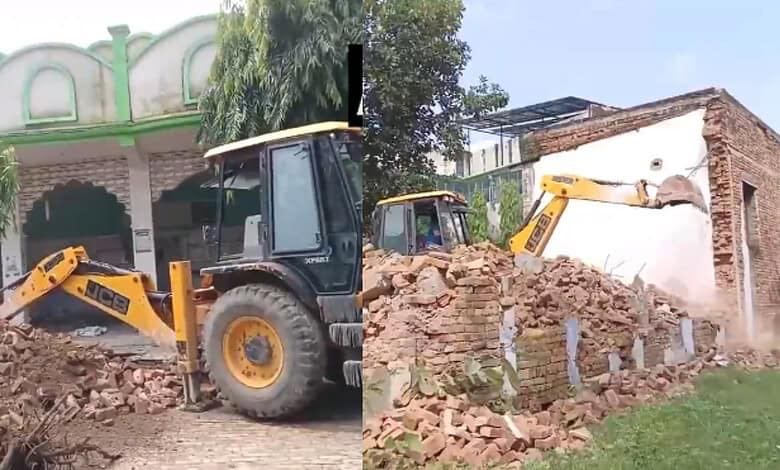

In a significant move raising eyebrows about religious and social governance, the district administration of Muzaffarnagar in Uttar Pradesh demolished the Darul Uloom Rahimia madrasa on August 23, 2023, after deeming it illegal. This action reflects ongoing challenges faced by the Muslim community in India amidst rising scrutiny and regulation of religious institutions.
Context of the Demolition
The demolition of the madrasa comes after a detailed inquiry by the local revenue department, where it was concluded that the institution was built on land designated as government property. Senior Superintendent of Police Sanjai Kumar stated that the madrasa was acted upon under police protection, aligning with a strict regulatory environment aimed at curbing illegal constructions.
Maulana Hifzurrehman, the in-charge of the madrasa, alongside his sons Zuber and Junaid, was implicated in a legal case preceding the demolition. On July 6, they were arrested, which included allegations under multiple sections of Indian law that encompass offenses like intentional insult and criminal intimidation, as well as under the Uttar Pradesh Prohibition of Unlawful Conversion of Religion Act, 2021. The arrest signals a wider trend of legal pressures on religious minority leaders.
Broader Implications for Muslim Communities
This incident marks just one of many instances where Muslim institutions have faced scrutiny. Critics argue that such actions reflect systemic discrimination against Muslims in India, exacerbated by the political climate fostered by the ruling Bharatiya Janata Party (BJP) and affiliated organizations like the Rashtriya Swayamsevak Sangh (RSS). Many within the community view these measures as part of a broader trend of marginalization, where laws and regulations are deployed unevenly against religious minorities.
Moreover, the legal framework surrounding religious institutions has further raised concerns regarding freedom of practice. The perception is that Muslim institutions face stricter regulatory standards compared to their Hindu counterparts, often leading to a disproportionate impact on educational and religious activities within the community.
Political Context and Responses
The actions taken in Muzaffarnagar are reflective of a larger political narrative in India, particularly under BJP governance. Since assuming power, the BJP has often been criticized for its approach towards Muslims, leading to heightened tensions and increased socio-political divisions. This ongoing narrative has significant implications not only for community relations but also for political stability within the region.
Opposition parties and various human rights organizations have voiced concerns about the demolition as a politically motivated action, aimed more at appeasing a certain voter base than addressing legal issues genuinely. The impact stretches beyond mere demolition; it embodies the fractures within society emphasized by political dynamics.
Why It Matters
The demolition of the madrasa illustrates critical issues related to social justice and minority rights in India, raising questions about religious tolerance and governance. For developers and users of AI and technology, this situation highlights the necessity of contextual understanding when analyzing sociopolitical data. Companies working in data analytics or providing AI solutions must recognize the implications of socioeconomic factors, particularly when dealing with religious demographics and their corresponding legal challenges. This incident serves as a case study in the importance of responsible data interpretation and ethical decision-making in technology applications.
Frequently Asked Questions
Why was the madrasa demolished?
The madrasa was demolished after it was declared illegal by the local district administration, following findings from a revenue department inquiry that confirmed it was built on government land.
Who was arrested in connection with the madrasa?
Maulana Hifzurrehman, the madrasa in-charge, along with his sons Zuber and Junaid, were arrested on charges including criminal intimidation and unlawful conversion of religion.
What are the broader implications of this incident for the Muslim community?
This incident highlights ongoing discrimination and marginalization faced by Muslim institutions in India, signaling a trend of heightened scrutiny and political pressure on religious minorities.
How does this relate to the current political climate in India?
The demolition is viewed as part of a larger narrative of political action by the ruling BJP government, which has often been accused of fostering division and discrimination against Muslim communities.