
The Short-Lived Return of Net Neutrality: Implications and Future Prospects
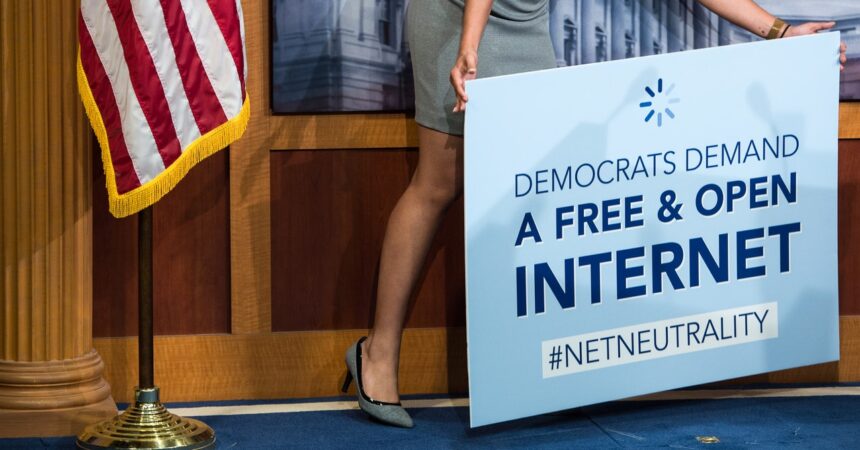
The battle for net neutrality has been a contentious issue in American politics and technology for over a decade, and recent developments indicate that the fight is far from over. In a significant ruling, the Sixth Circuit Court of Appeals recently overturned rules introduced by the Biden administration aimed at restoring internet neutrality. This decision raises crucial questions about the future of consumer protection laws and the balance of power between federal agencies and the judiciary.
Understanding Net Neutrality and Its Recent History
Net neutrality is the principle that internet service providers (ISPs) must treat all data on the internet equally, without discriminating against or charging differently by user, content, website, platform, or application. Essentially, it ensures that consumers have unfettered access to all content on the web. This principle was enforced under the Obama administration through regulations imposed by the Federal Communications Commission (FCC). However, the rules were rescinded shortly after Donald Trump’s inauguration in 2017, which led to a period characterized by a lack of clear regulations governing internet access.
The Biden administration’s attempt to reinstate net neutrality protections aimed to prevent ISPs from engaging in practices like throttling, where companies slow down internet speeds for specific services or prioritize their own content over competitors’. Yet, the recent court ruling indicates a retreat from these ambitions, signaling a return to the pre-Biden status quo where ISPs operate with minimal regulatory oversight.
The Court’s Rationale: A Shift Away from Chevron Deference
Central to the Sixth Circuit’s ruling was the reinterpretation of how courts engage with administrative agencies. Traditionally, the Chevron deference doctrine required courts to defer to the expertise of regulatory bodies like the FCC when interpreting ambiguous laws. However, with the Supreme Court’s recent decision in Loper Bright Enterprises v. Raimondo, that deference has been overturned, allowing courts to interpret laws independently.
This shift has significant implications. As the Sixth Circuit noted, it no longer feels bound to defer to the FCC’s interpretation of the statute concerning net neutrality. Instead, the court asserted its authority, declaring, “our task is to determine ‘the best reading of the statute’ in the first instance.” This poses a direct challenge to regulatory agencies, potentially undermining their capacity to protect consumers effectively.
Critics of the ruling, such as Evan Greer from Fight for the Future, condemn it as a “sad day for democracy.” The fear is that giant corporations will now be able to search for judicial venues that favor them, eroding consumer protections that enjoyed widespread public support.
Broader Implications for Consumer Protections
The ramifications of this ruling extend beyond internet neutrality. The Sixth Circuit’s interpretation could serve as a blueprint for challenging various regulatory measures across multiple industries, from environmental protections to healthcare policies. As John Bergmayer from Public Knowledge points out, this could lead to a situation where the first panel of judges to hear a case has the authority to set nationwide policy, relegating federal agencies, designed to handle such interpretations, to the sidelines.
The absence of Chevron deference could empower corporations and industries to seek judicial relief for regulations they oppose, undermining years of legislative efforts aimed at protecting consumers and the environment alike.
Potential Avenues for Addressing the Imbalance
In the wake of these developments, suggested solutions focus on congressional action. Bergmayer highlights that Congress could pass legislation granting agencies explicit authority to interpret laws, reestablishing their role as the primary regulators. However, this seems unlikely in the current political climate, particularly within a GOP-led legislature that tends to prioritize deregulation.
The potential for future court rulings to undermine other consumer protections is alarming, especially as ISPs and other industries may leverage this legal precedent for their benefit. Given the current shift in judicial philosophy and its implications for regulatory powers, the challenge ahead will not just be about net neutrality but about the broader framework of consumer rights and environmental standards.
Conclusion
The Sixth Circuit’s ruling against net neutrality marks a significant moment in a long-standing battle for a fair internet. As the legal landscape shifts away from considering agency expertise, the implications spread far beyond broadband regulations. The related erosion of consumer protections could pose a serious challenge in the years to come. For advocates of digital rights and consumer protection, the fight is far from over—these developments underscore the need for renewed advocacy, public engagement, and potential legislative responses to protect the rights and interests of consumers in an increasingly complex digital landscape.