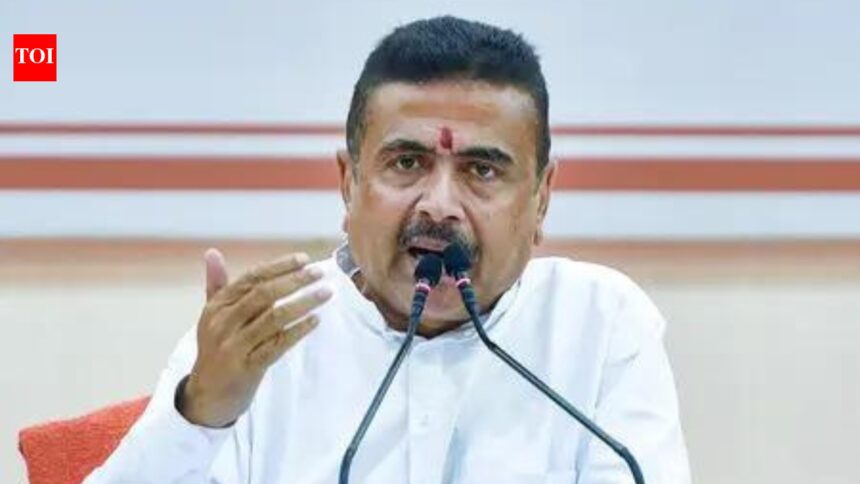

The BJP government in West Bengal, shortly after taking office, has initiated several significant administrative, welfare, and governance reforms to distinguish its policies from those of the prior Trinamool Congress (TMC) administration. These reforms encompass adjustments in welfare programs, recruitment processes, modifications in reservation policies, verification of caste certificates, educational directives, and anti-corruption measures. The government is also working to enhance nationalist symbols within public institutions and reinforce oversight in welfare distribution and reservation frameworks. Many of these measures have both political and legal implications, particularly those related to OBC reservation, verification of caste certificates, and investigations into alleged corruption by former officials.
One noteworthy action was the government’s approval to transfer seven key national highways in the Siliguri Corridor, also known as the ‘Chicken’s Neck,’ to central authorities. This transfer aims to bolster connectivity and expedite the movement of armed forces through this strategically vital link between the Northeast and the rest of India.
Furthermore, during its inaugural cabinet meeting on May 11, the new BJP government announced the implementation of the Ayushman Bharat health insurance scheme, a flagship program of the Union government that had previously been avoided by the TMC regime, which had favored its own Swasthya Sathi initiative. Under Ayushman Bharat, eligible families can receive annual health coverage of up to ₹5 lakh for secondary and tertiary medical care at accredited hospitals.
Additionally, the West Bengal government has replaced the TMC’s Lakshmir Bhandar scheme with the new Annapurna Yojna, which will provide eligible women aged 25 to 60 years with a monthly assistance of ₹3,000 through Direct Benefit Transfer to Aadhaar-linked accounts. This scheme excludes permanent government employees, pensioners, and income taxpayers, and will automatically transfer current beneficiaries.
In another significant policy move, the School Education Department mandated that all state-run and aided schools sing “Vande Mataram” during morning assemblies, effective from May 18. This addition aims to inculcate a sense of patriotism among students, although it has sparked debates regarding its implementation.
The government also initiated the transfer of land to the Union Ministry of Home Affairs for fencing projects along the India-Bangladesh border. Chief Minister Suvendu Adhikari stated that around 435 km remains unfenced, with over 286 km pending primarily due to land acquisition hurdles.
On May 19, a revised reservation policy for OBCs was notified, reinstating a 7% reservation structure for 66 communities. This decision addressed a Calcutta High Court ruling that invalidated earlier OBC notifications, ensuring that affected groups retain their benefits without disruption.
In a step aimed at enhancing women’s welfare, the state cabinet approved free bus travel for women in state-run transport services. This initiative is designed to alleviate commuting expenses for women, encouraging workforce participation and catering to daily transportation needs.
Moreover, the Finance Department announced that the upper age limit for state government recruitment will be increased by five years. The new age limits are now set at 41 for Group A posts, 44 for Group B, and 45 for Group C and D positions. This change aims to benefit candidates who had surpassed the previous age limits due to delays in recruitment processes.
The government has also sanctioned the prosecution of former R G Kar Medical College principal Sandip Ghosh, in light of alleged financial irregularities surrounding procurement practices during his tenure. This case drew attention after the rape and murder of a doctor at the hospital in 2024 led to broader investigations into corruption.
Additionally, all caste certificates issued since 2011 will undergo re-verification due to allegations of widespread fraudulent issuance. This review, affecting nearly 1.69 crore certificates for Scheduled Castes, Scheduled Tribes, and OBCs, aims to identify and cancel certificates obtained through misinformation.
Finally, the government plans to discontinue several religion-specific welfare schemes that had been implemented by the TMC, indicating a shift towards religion-neutral welfare provisions, a strategy aligned with the BJP’s broader campaign narrative in Bengal.