
Concerns Over Housing Allotment in Surat
In Surat, Gujarat, tensions have risen among some Hindu residents following the reported distribution of over 60 government-built homes to Muslim families. Residents convened on June 2, expressing discontent regarding the allocation of nearly one-third of the project’s homes—65 out of 190 total units—to non-Hindu beneficiaries, raising fears about an increase in the local Muslim demographic.
Community Reactions and Protests
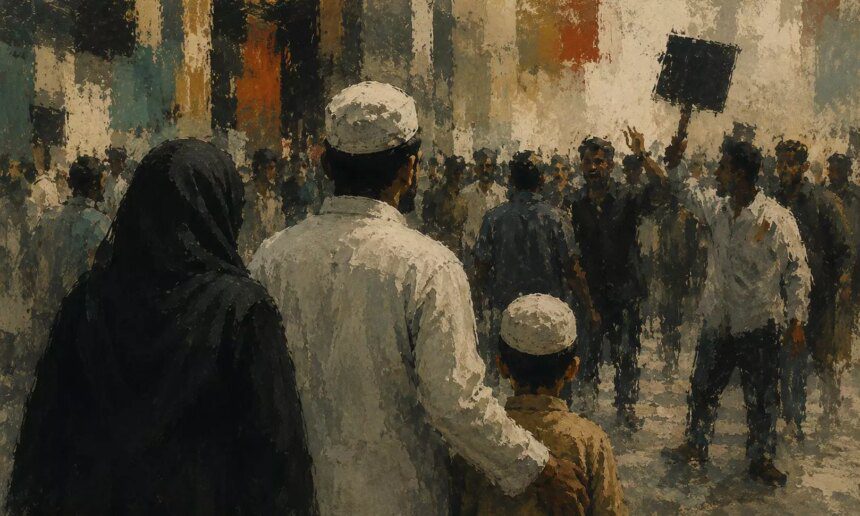
At a community meeting, attendees articulated their apprehensions about the growing Muslim presence within the housing project, reflecting a complex blend of both coexistence and division. While residents acknowledged the relatively peaceful interactions among different faith communities, their objections stem from concerns over demographic shifts in a predominantly Hindu area. Subsequently, protests erupted, fueled by members of far-right Hindu groups, clearly indicating a resistance to the integration of Muslim families into their neighborhoods.
Historical Context of Communal Tensions
This incident is not an isolated one but aligns with a broader narrative of communal tensions in India, where issues of housing, land, and social inclusion often reveal deep-seated biases. Historically, the allocation of public resources—including housing—has been a flashpoint for conflict, especially when intertwined with religious identities. Instances like these not only highlight the vulnerabilities of marginalized communities but also illustrate the challenges of fostering inclusive urban development in a nation marked by diverse religious affiliations.
Government’s Role and the Political Climate
The involvement of the government in this housing project brings up questions regarding policy direction under current leadership, particularly the Bharatiya Janata Party (BJP). Critics argue that under BJP governance, there has been a concerning trend toward policies that favor Hindu populations, potentially marginalizing Muslim communities. The housing controversy in Surat exemplifies how state-sponsored initiatives can also become arenas of cultural and religious contention, thus necessitating a re-evaluation of equity in public resource allocation.
Why It Matters
The situation in Surat is emblematic of larger societal rifts that can affect social cohesion and community stability. For developers and urban planners, this scenario presents a crucial learning opportunity about the implications of demographic considerations in housing policies. Understanding the socio-political context is essential for creating inclusive spaces that respect and celebrate diversity. Moreover, as urban areas continue to grow, failure to address these underlying tensions may result in economic and social boycotts, hampering inclusive growth efforts.
Frequently Asked Questions
What triggered the protests in Surat regarding housing allocations?
The protests were triggered by the allotment of more than 60 government-built homes to Muslim families in a predominantly Hindu area. Residents expressed concerns about increasing the Muslim population in the housing project.
How many homes were built in the Surat housing project?
A total of 190 homes were constructed in the Surat housing project, with 65 homes reportedly allocated to Muslim families.
What role do far-right groups play in these protests?
Far-right Hindu groups participated in the protests, emphasizing opposition to the distribution of housing to Muslim families and voicing concerns about shifting demographics in the neighborhood.
Why is this issue significant for Muslim communities in India?
This issue highlights the ongoing challenges of social exclusion and discrimination faced by Muslim communities in India. Such situations can perpetuate cycles of marginalization and hinder community cohesion.