
Supreme Court Warns Against Prioritizing Individual Religious Rights Over Group Rights
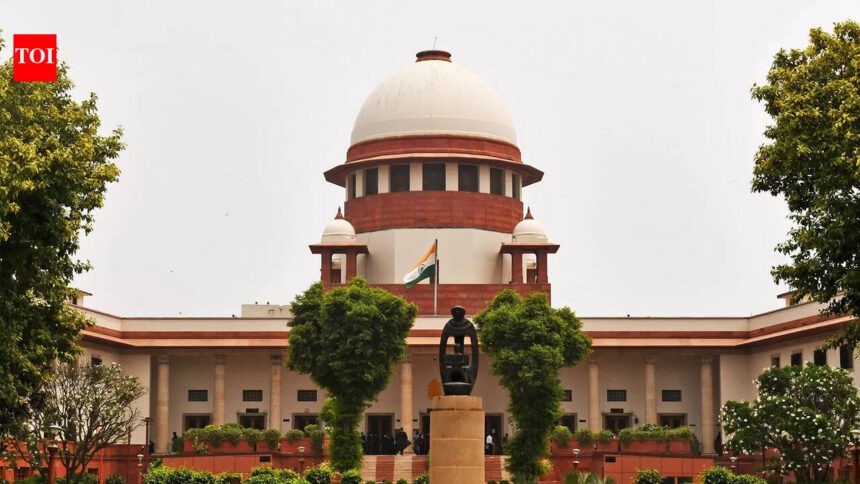
New Delhi: The Supreme Court of India reiterated on Wednesday that an individual’s fundamental right to freedom of religion should not be deemed superior to that of a religious group or denomination, cautions regarding potentially dangerous ramifications. The court emphasized that it would not participate in any process that could lead to the annihilation of a religion.
Bindu Ammini, a lawyer and social activist, was previously assaulted while attempting to enter the Sabarimala temple after a 2018 Supreme Court ruling lifted the ban on women aged 10 to 50. She asserted her fundamental right to enter the temple, with support from advocate Indira Jaising, who represented Ammini and another woman, Kanakadurga. Jaising argued that there is no theological restriction preventing women from entering public temples.
During proceedings before a bench comprising Chief Justice Surya Kant and Justices B V Nagarathna, M M Sundresh, A Amanullah, Aravind Kumar, A G Masih, P B Varale, R Mahadevan, and J Bagchi, Jaising stated that Ammini did not challenge the ‘naistik brahmachari’ attributes of Lord Ayyappa at Sabarimala. However, she insisted that traditional customs should not infringe upon an individual’s fundamental rights.
Jaising remarked on the uniqueness of the Indian Constitution, which offers significant emphasis on individual fundamental rights. “If a woman wishes to enter a temple, what legal harm is she causing to anyone?” Jaising questioned, emphasizing the global scrutiny on the Supreme Court’s decisions regarding women’s rights.
Justice Sundresh expressed his dissent, questioning whether the individual right to freedom of religion under Article 25(1) should take precedence over the rights of a group of devotees. He cautioned that if the court were to favor the individual over the collective rights, it could lead to severe consequences for religious identity.
Justice Nagarathna shared concerns regarding the potential erosion of religious integrity, asserting that matters of religion should not be adjudicated by the courts or the legislature, as such issues pertain to individual conscience.
Justice Amanullah raised the issue of enduring practices, asking if those customs, established over centuries, should be disregarded by the court in order to accommodate a single person’s desire to enter a temple, particularly when it may offend the sentiments of the majority. Arguments in the case are set to continue on Thursday.