
Supreme Court Lifts Life Ban on Academics Involved in Controversial Textbook Content
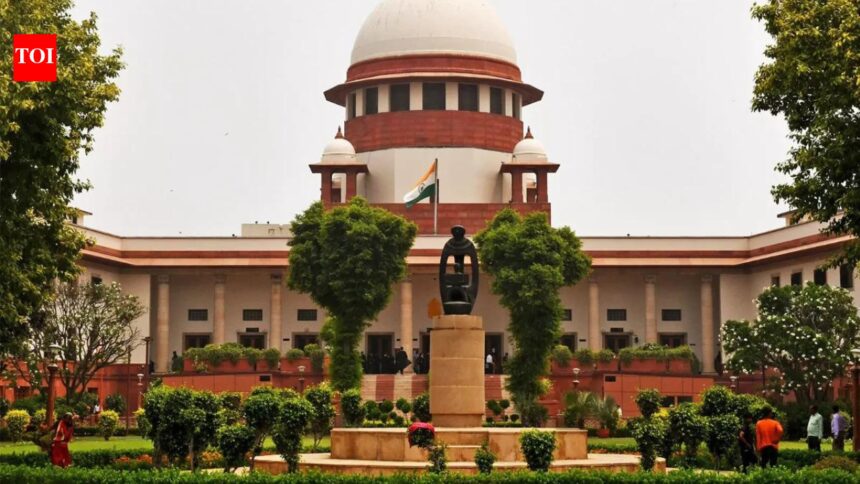
NEW DELHI: The Supreme Court has lifted the life ban on three academics—Prof. Michel Danino, Suparna Diwakar, and Alok Prasanna Kumar—pertaining to their involvement in academic work at government-run universities and institutions. The ban had been imposed by the Court on March 11 due to concerns over a chapter in a National Council of Educational Research and Training (NCERT) social studies textbook for Class VIII, which addressed corruption within the judiciary.
The Court had expressed serious dissatisfaction, deeming the chapter as potentially damaging to the judiciary’s reputation among young students. After hearing arguments from the academics’ counsel, who clarified that their intentions were not to undermine the judiciary but rather to highlight systemic issues, the bench consisting of Chief Justice Surya Kant, Justice Joymalya Bagchi, and Justice Vipul M. Pancholi decided to lift the ban.
Solicitor General Tushar Mehta stated that the government would refrain from involving these academics in future government-affiliated academic projects, including textbook preparation. He also indicated that the government had received complaints concerning objectionable content in other textbooks, specifically cartoons related to the judiciary, which would be referred to a high-powered expert committee led by former Supreme Court Justice Indu Malhotra. The government plans to take further action based on the committee’s recommendations.
Justice Bagchi emphasized that the Court’s concerns were centered on the content of the textbook rather than individual accountability. He noted that while corruption was indeed mentioned, the text failed to acknowledge the judiciary’s crucial role in protecting constitutional rights and providing legal aid to marginalized groups. As the Court scrutinized the material, Justice Bagchi pointed out that the presentation lacked balance, failing to cover the judiciary’s contributions.
On March 11, NCERT Director Dinesh Prasad Saklani and School Education Secretary Sanjay Kumar had issued an unconditional apology to the Supreme Court for the “major and unpardonable lapse.” They pledged to implement measures aimed at preventing similar errors in the future. The NCERT had previously reported that the contentious chapter was drafted under Prof. Danino’s leadership, involving contributions from Diwakar and Kumar, who will not be associated with any future NCERT activities.