
“We the people of India” played a crucial role in navigating the nation through the Covid pandemic by “living like soldiers.” Today, citizens are once more being asked to assist the country by “living responsibly.” The terminology has shifted from pandemic precautions to economic discipline, yet the underlying political dynamic remains familiar.
One clear indicator of looming challenges can be observed in government discourse. When administrations increasingly speak about citizen behavior—encouraging fuel conservation, limiting unnecessary spending, cutting down on travel, and responsible consumption—it signifies that the state is preparing society for potentially tougher economic measures. India has encountered this scenario twice in the last five years: first during the Covid crisis and currently due to the Gulf tensions sparked by the US-Israel-Iran conflict.
In both situations, governance transitioned from direct management to a focus on behavioral adjustments. Citizens were not merely seen as taxpayers or voters but as integral to the nation’s endurance. The BJP-led NDA government has previously employed direct administrative measures when required, as seen with demonetization and the implementation of GST—actions that left a profound impact on public life. However, during periods marked by economic hardship or geopolitical strain, the central government often alters its tone prior to modifying policies. This is an illustration of behavioral governance, a potential indicator of national distress.
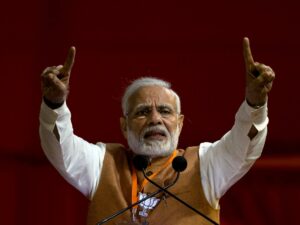
Prime Minister Narendra Modi’s recent speech in Hyderabad echoed sentiments reminiscent of the pandemic years. It was framed as an appeal rather than an emergency decree, lacking any announcements of rationing or restrictions. Instead, there was a clear focus on restraint, conservation, and collective responsibility.
Governments typically initiate crisis management through persuasion rather than coercion. This concept is often described as applying behavioral economics to governance, wherein public decision-making is influenced through messaging instead of force. Rather than implementing severe measures immediately, the emphasis is on gently guiding behavioral changes: reducing fuel consumption, delaying discretionary spending, and avoiding panic buying.
As Surya Bhushan, an economics professor at DMI, Patna, explains, “Behavioral appeals are generally fast and low-cost.” Major fiscal interventions such as subsidies or price controls require extensive legislative processes, while behavioral appeals can effectively shift part of the adjustment burden onto citizens voluntarily, thus reducing immediate state expenditure. “Behavioral messaging avoids politically painful policies,” he adds.
Economic distress is not solely a numbers game; it is deeply intertwined with public sentiment. Bhushan contends that governments have increasingly acknowledged this psychological aspect, stating, “Crises are often partly psychological… expectations matter enormously.” Panic-induced behaviors, such as hoarding or urgent bank withdrawals, can exacerbate economic issues. Thus, the role of official communication is twofold: managing not only the economic landscape but also public emotions.
Throughout history, India’s leaders have employed similar behavioral governance tactics during national emergencies. For instance, during the 1962 India-China war, Prime Minister Jawaharlal Nehru appealed to citizens’ sense of civic duty for contributions to the Prime Minister’s National Defence Fund. This not only sought financial support but reframed the war effort as a collective responsibility.
A similar engagement was seen during the 1965 Indo-Pak war, where then-Prime Minister Lal Bahadur Shastri urged citizens to fast weekly to conserve food supplies. Shastri set a personal example, enhancing the moral legitimacy of his appeal. By the time of the 1971 war and the Bangladesh refugee crisis, behavioral messaging became even more pronounced, with Indira Gandhi calling for “stern national discipline” and emphasizing collective sacrifice.
The contemporary language surrounding fuel conservation and restrained consumption resonates with the historical grammar of national resilience, adapted for a modern context marked by oil shocks and global supply chains. The recent rise in fuel prices exemplifies this issue; petrol and diesel prices are significant political barometers in India. They influence transport costs, food inflation, and household budgeting, which explains the government’s previous hesitance to raise prices amid electoral considerations.
India’s vulnerability to energy shocks makes behavioral governance even more pertinent. As Bhushan notes, oil is not merely a commodity but a cornerstone of various interconnected systems, including transport, agriculture, and inflation management. Consequently, disruptions in regions like the Strait of Hormuz can rapidly propagate through the economy, leading to inflation and increased living costs.
Behavioural governance aims to engage citizens as active participants in managing national crises rather than passive subjects. For instance, during the Covid-19 pandemic, PM Modi introduced a voluntary “Janta Curfew” before announcing a nationwide lockdown, leading to widespread compliance without immediate enforcement. The language used during this period portrayed citizens as “soldiers” participating in a unified battle against the pandemic.
However, the collective nature of sacrifice is uneven. During the Covid lockdown, the disparities were stark; while some adapted seamlessly to remote work, many migrant workers faced immediate hardship when transportation ceased and jobs vanished overnight. This led to significant struggles for those reliant on daily wages, showcasing the unevenness with which national responsibilities are experienced.
Critics argue that while behavioral governance can foster resilience during emergencies, it also raises concerns about shifting state responsibility onto citizens. Yet, some experts maintain that the government has not relinquished its responsibility; rather, it is trying to balance intervention with flexibility. “The government should guide citizens toward ideal actions while allowing them to maintain their own decisions,” says Varahe.
Ultimately, behavioral governance transforms citizens from passive policy recipients into engaged participants in crisis management. However, it also provokes essential questions regarding the extent of crisis-related burdens that should be borne by citizens. As political language evolves toward themes of discipline and responsibility, it psychologically prepares society for the challenges ahead, revealing that the true warning signs of a crisis often lie in the urges for voluntary adaptation rather than outright restrictions.