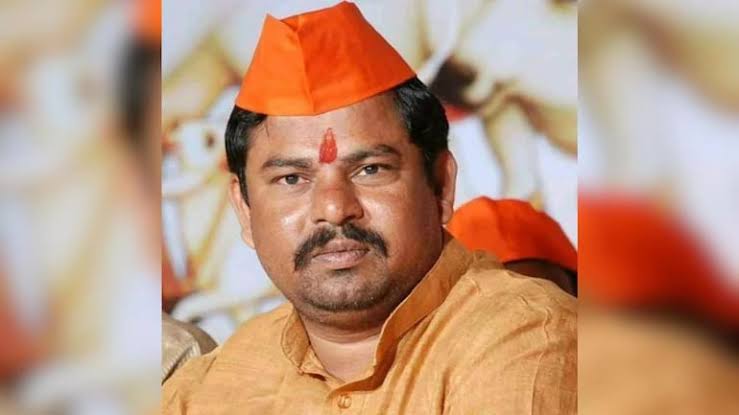

Goshamahal MLA T Raja Singh has taken a contentious stance against the Hyderabad police, alleging that recent FIRs filed against him were influenced by external pressure from “certain people.” His comments arise in the wake of a complaint by BRS leader Salman Khan related to allegedly objectionable remarks Singh made about Muslim women, reigniting discussions on political rhetoric and the treatment of minority communities in India.
Background of the Controversy
The crux of the controversy centers around a viral interview clip in which Raja Singh made remarks that many perceive as derogatory towards Muslim women. In this interview, he claimed to receive affection from individuals in Pakistan, Saudi Arabia, and Dubai, stating, “Mujhe pyaar karne wale bohoth hai, har musalman chahta hai ke hum Raja Singh ko apni behen de de aur apna jija bana le.” The comments sparked outrage, prompting Salman Khan to file a complaint with the Mehdipatnam Police, resulting in the formal registration of an FIR against Singh.
Raja Singh’s Response and Political Implications
In response to the FIR, Singh addressed both his critics and the police, suggesting that fear and intimidation from unnamed individuals govern their actions. He claimed that threats he has received via phone calls are from “impotent people” and challenged anyone who identifies as a “true Muslim” to confront him directly. Singh further questioned the procedural integrity behind the filing of FIRs, highlighting the prevalence of older videos being re-uploaded on platforms like YouTube, and asked if those re-uploaders would also be subject to legal action. This statement illustrates the challenges in navigating free speech within a politically charged environment.
The Sociopolitical Context
This incident is part of a larger narrative concerning the treatment of Muslims in India, particularly under the leadership of the Bharatiya Janata Party (BJP) and affiliated Hindu nationalist organizations. Critics argue that such comments and subsequent legal actions reflect a pattern of discrimination and social exclusion faced by the Muslim community. The BJP government has been accused of fostering an environment where minority voices are marginalized, leading to increased tensions and a sense of insecurity among Muslim populations. Singh’s remarks not only feed into this existing narrative but also highlight the precarious position of political discourse in the region.
Why It Matters
The unfolding controversy surrounding Raja Singh’s remarks underscores the fragility of communal harmony and the significance of language in political discourse within India. The rapid spread of such inflammatory rhetoric can exacerbate societal divisions, particularly when directed towards vulnerable communities like Muslims. Moreover, it calls into question the accountability mechanisms in place for public officials, prompting discussions on free speech versus responsible communication. For the global audience, this incident serves as a crucial case study in understanding how nationalist politics can shape social dynamics and influence public sentiment towards minority communities.
Frequently Asked Questions
What led to the FIR against Raja Singh?
The FIR was filed based on a complaint by BRS leader Salman Khan, who took issue with Singh’s allegedly objectionable comments about Muslim women made in a viral interview clip.
How did Raja Singh respond to the FIR?
Singh criticized the Hyderabad police, alleging that they acted out of fear influenced by certain groups. He challenged his critics to confront him directly and questioned the procedural validity of filing an FIR based on older video content.
What impact do Singh’s comments have on the Muslim community in India?
Singh’s remarks contribute to an atmosphere of discrimination and social exclusion faced by Muslims in India, reflecting broader concerns about the treatment of minority communities under the current political landscape.
Why is this controversy important in the context of Indian politics?
This situation highlights the intersection of free speech and accountability for public officials, emphasizing the need to address hate speech and its consequences in a diverse society such as India.