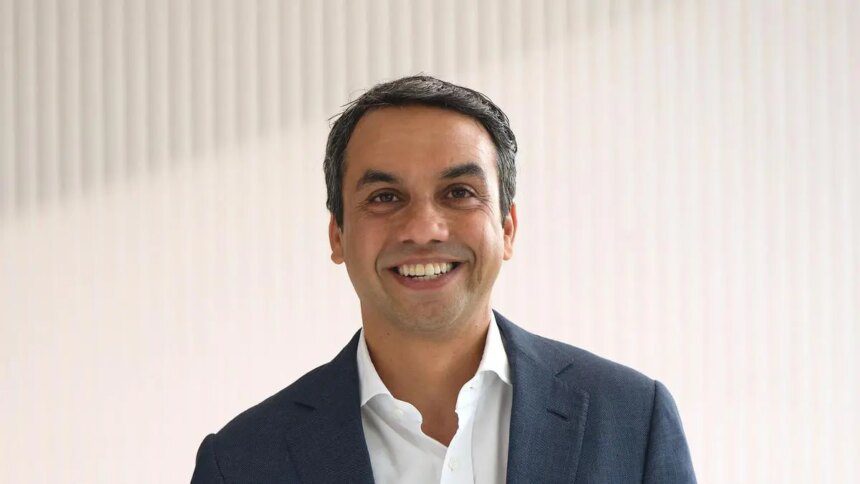

“The first person who should be fired if my performance is poor is me,” asserts Pirojsha Godrej, the incoming chairman of the Godrej Industries group. When questioned about who would dare to dismiss its top leader, Pirojsha refers to the management and governance framework he adheres to, highlighting how the 129-year-old conglomerate is striving to blend its traditional values with enhanced accountability, expedited execution, and disciplined expansion.
This structure encompasses both familial leadership and professional management. Pirojsha will oversee the wider Godrej group while also chairing Godrej Properties, Godrej Capital, and Godrej Ventures. Burjis Godrej will assume the chair for Godrej Agrovet, with executives like Sudhir Sitapati at Godrej Consumer Products and Sunil Kataria at Godrej Agrovet receiving enlarged operational roles.
As the Godrej group readies for a generational transition later this year, it is subtly transforming its operational dynamics, aiming to grant businesses more autonomy, institutionalize board-led oversight, and compel each segment to meet stricter return and performance standards. Businesses are expected to yield returns of 18–20% or present a credible route to leadership and growth. If not, restructuring or exits could be considered, regardless of the leadership in charge.
Focus on the Future
Historically, the Godrej group has exemplified stability and stewardship-led expansion. Pirojsha states, “The key, as we see it, is combining the best of our past, the incredible set of values built consistently over generations, while avoiding the risk of looking backwards too much and keeping focus firmly on the opportunity ahead.”
Portfolio discipline has been established over the years under the next generation’s guidance. Ventures deemed secondary to the group’s long-term goals have been exited, deprioritized, or realigned. For instance, Godrej divested its premium grocery chain Nature’s Basket to the RP-Sanjiv Goenka group in 2019, while a 2024 family settlement formally disbanded capital-intensive sectors like appliances, aerospace, and heavy engineering into the Godrej Enterprises group led by Jamshyd Godrej.
Simultaneously, the group has intensified its concentration on consumer products, real estate, and financial services while increasingly delegating operational authority to professional executives away from family-centric management.
Capital First
In contrast to conglomerates hastily venturing into fields such as semiconductors and infrastructure, the Godrej group is sidestepping sectors where capital intensity and execution complexity overshadow strategic benefit.
The group evaluated opportunities in data centers but eventually withheld involvement, citing technology risks and management limitations. Recent projects like Taj The Trees, a mixed-use community development in Vikhroli, Mumbai, align more closely with its strengths in urban real estate and premium consumption.
This fiscal discipline is most evident in Godrej Properties, which has expanded nationally through joint development agreements rather than accumulating extensive land banks. The firm concluded FY26 with ₹34,171 crore in booking value, making it India’s largest publicly listed residential developer by sales for the third consecutive year.
A similar approach is mirrored at Godrej Consumer Products, where managing director Sitapati has initiated a “2040 backcast” strategy to pinpoint categories expected to grow as India becomes wealthier and align portfolios accordingly. This strategy has led to investments in liquid detergents, fragrances, and digital-first grooming categories, as well as acquisitions such as Raymond Consumer Care and men’s grooming brand Muuchstac. “Capital and management bandwidth are not infinite,” Pirojsha remarks, adding that the “99 percent rule” will be applied universally.
The ‘99% Rule’
“Ninety-nine percent of what the businesses do should not rely on each other,” Pirojsha explains. This denotes a key distinction between the Godrej Industries group and other contemporary integrated conglomerate models.
While the businesses function independently, the group center emphasizes talent, culture, sustainability, and strategic alignment. Although the family name is prominent, the operational directive is increasingly not considered a family affair.
Ironically, Pirojsha identifies culture, rather than macroeconomic volatility, as the primary challenge. Godrej Capital, established just five years ago, now manages assets worth around ₹25,000 crore. “We are a fast-growing organization with a lot of new people coming in,” he states. “What we deliver is very important, but so is the ‘how’.”
This underscores why the Godrej group is redefining its identity with the tagline “Crafting Tomorrow Since 1897,” an endeavor to balance continuity with renewal. The transition is less about succession and more about reengineering how a legacy conglomerate operates in an India increasingly characterized by scale, speed, and precision.
The group has flourished for 129 years by being careful, deliberate, and cautious about overextension. Pirojsha’s challenge is now to preserve institutional trust while driving the group towards increased speed, focus, and performance orientation.
The Redesign
The formal succession process will conclude when Nadir Godrej steps down in August to assume the role of chairman emeritus. However, operational redesign is already in progress. The 2024 division of the broader Godrej empire into the Godrej Industries group and Godrej Enterprises group has clarified ownership distinctions and compelled each side to establish a more definitive strategic identity.
“Values without performance is a bit empty, because our reputation and relevance ultimately depend on our ongoing results, not just what someone did in a previous generation,” Pirojsha emphasizes, underscoring the necessity for a clear forward-looking plan.