
Interfaith Marriage in Uttar Pradesh: A Reflection of Societal Challenges
A recent interfaith marriage in Uttar Pradesh highlights ongoing societal tensions, including discrimination and social exclusion faced by certain communities in India. Hira Nazmi, a Muslim woman, and Atul, a Hindu man, married under police supervision after familial disputes escalated, raising questions about religious tolerance and the rights of individuals in interfaith relationships.
The Context of Dispute and Police Intervention
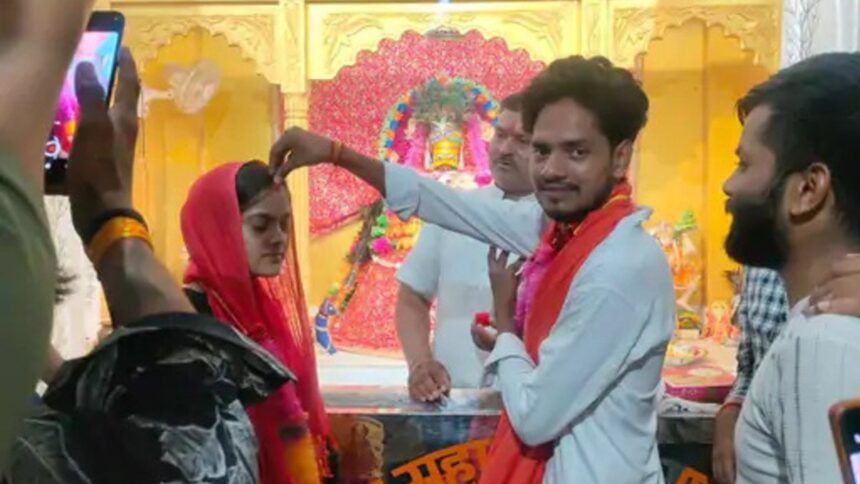
The marriage occurred in Badaun district’s Khatu Shyam Temple, amidst police oversight following a complaint lodged by Atul. He claimed that Hira’s family was preventing her from living with him after they had completed a court marriage around six months prior to the temple ceremony. The couple had been in a relationship for four years, indicating a deep but troubled commitment influenced by familial pressures.
As Atul escalated his concerns through the Integrated Grievance Redressal System (IGRS), Hira’s family retaliated with their own allegations against him, accusing him of coercing their daughter. The involvement of police can be seen as both a protective measure for the couple and a reflection of the complex familial and societal dynamics that often accompany interfaith unions in India.
Mrs. Himanshi: A Symbol of Choice Amidst Familial Opposition
During the police investigation, Hira, who later adopted the name Himanshi, affirmed her autonomy and choice to live with Atul. This moment underscores a significant transition in societal norms, where young adults assert their rights against traditional familial expectations. The presence of members from Hindu organizations at the police station raised the stakes, showcasing the communal tensions that often surround inter-religious relationships.
Despite these pressures, the couple went ahead with traditional Hindu wedding rites post-intervention, with police facilitating the process by ensuring all legal parameters were met. Usawan Station House Officer Rajendra Singh emphasized that Hira’s status as an adult allowed for her decision to be respected, which highlights the legal protections afforded to adult individuals under Indian law, irrespective of religious background.
Broader Implications of Interfaith Marriages
This marriage is emblematic of the broader societal issues surrounding interfaith relationships in India, particularly how they are affected by politics and religious extremism. The very fact that police mediation was necessary not only points to the resistance faced by couples who defy societal norms but also showcases the tensions that intensify under political regimes that frequently harness religious identity for electoral gain.
Such instances provoke reflection on the experiences of Indian Muslims and other religious minorities, who often face discrimination and social exclusion. The legal framework may support individual rights, yet societal acceptance often lags, leading to potential marginalization of those who choose to form alliances across the religious divide.
Why It Matters
The implications of this case extend beyond the individual couple, raising significant questions about religious tolerance and the agency of women in multicultural societies. The legal acknowledgment of adult autonomy versus societal expectations reflects broader issues around intersectionality and the role of religion in contemporary India. In a world increasingly concerned with social justice, these dynamics matter for anyone interested in understanding the contours of identity, power, and legal rights in diverse communities.
Frequently Asked Questions
What prompted the police involvement in the marriage between Hira and Atul?
The police intervened after Atul filed a complaint stating that Hira’s family was preventing her from living with him, despite their prior court marriage.
What actions did Hira take during the police investigation?
Hira, during her statement to the police, expressed her desire to live with Atul of her own free will, confirming her autonomy as an adult.
What was the outcome of the marriage ceremony?
The couple completed their wedding rituals at Khatu Shyam Temple under police supervision and subsequently left together for Atul’s family home.
How does this case reflect societal attitudes toward interfaith marriages in India?
This case reveals the challenges interfaith couples face in India, including familial and societal pressures, as well as the legal complexities tied to religious identity in a politicized landscape.