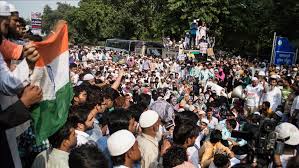

Summary: In Maharashtra’s Sangli district, around 20 Muslim families are compelled to leave their ancestral homes due to ongoing harassment and mob violence attributed to Hindu extremist groups. The situation reflects a broader trend of discrimination and marginalization faced by the Muslim community in India.
Escalating Violence and Intimidation
Residents of Arala village in Maharashtra have expressed their fears after a series of violent attacks directed against Muslim families. The latest incident involved a mob assault triggered by a trivial dispute over kitchen utensils at a local mutton shop owned by a Muslim family. Following the altercation on April 28, local men allegedly rallied a crowd that soon escalated into a communal attack. Witnesses reported chants of “Jai Shri Ram” and threatening slogans like “Let’s break them, kill the Pakistanis,” as the armed assailants descended on the shop, armed with sticks and sharp weapons.
Saddham Shaukat Dange, a resident who suffered injuries during the assault, claimed that more than 30 individuals were involved in the coordinated attack. He criticized the police’s lenient handling of the situation, which allowed the assailants to return to the village after securing bail and publicly celebrating their release. This has left the community feeling increasingly vulnerable and abandoned by law enforcement.
Community Response and Fears of Repercussions
In response to the persistent threats, the affected families initially planned to seek legal redress at the Kolhapur bench of the Bombay High Court, only to be advised by district officials to submit their demands in writing. Local resident Abid Dange warned that a planned event in the village could ignite further violence, stating, “Our lives are in danger.” The palpable tension is exacerbated by the presence of groups affiliated with the Rashtriya Swayamsevak Sangh (RSS) and the Vishwa Hindu Parishad (VHP), which are often linked to a broader agenda of Hindu nationalism.
Over the past few years, residents report a significant increase in anti-Muslim sentiment, characterized by violent attacks, social boycotts, and a climate of fear. The communities have reached a breaking point where they see relocation as their only viable option for safety and security. Dange’s assertion that “we cannot live in peace” encapsulates the desperate plight of these families who are now abandoning homes that have housed their ancestors for generations.
Broader Implications of Discrimination
This alarming trend highlights systemic issues within India regarding the treatment of its Muslim minority. Civil rights advocates indicate that such cases often escalate into broader communal violence, fueled by a lack of adequate police protection and societal bias. Reports suggest that victims frequently find themselves marginalized in both social and economic contexts, which only worsens their vulnerability.
According to human rights organizations, this situation in Arala village is indicative of a larger pattern across India, where communal tensions frequently result in the social ostracization of Muslims and intensified discrimination. Families now face economic hardships resulting from boycotts and legal discrimination, as their businesses and livelihoods come under threat due to communal animosities.
Why It Matters
The ongoing crisis in Arala village serves as a critical reminder for global observers of India’s societal rifts. It reflects not just the plight of Muslim families but also points to systemic issues affecting the broader Indian society, where religious minorities frequently face inequities. This situation warrants attention from policymakers, civil society organizations, and international human rights advocates to ensure that communal harmony is prioritized over divisive ideologies. The challenge lies in addressing the societal norms that enable such discrimination, requiring collective efforts towards fostering tolerance and inclusion.
Frequently Asked Questions
What led to the Muslim families leaving their village in Maharashtra?
Around 20 Muslim families in Arala village decided to relocate due to ongoing harassment and mob violence, primarily instigated by supporters of Hindu extremist groups, along with perceived police inaction.
How have local authorities responded to the complaints from the Muslim community?
Local authorities initially advised residents to submit their grievances in writing rather than engage directly in legal action, which has contributed to the community’s sense of vulnerability and lack of support.
What are the broader implications of this situation for Indian society?
The incidents in Arala village illustrate systemic discrimination against Muslims in India, reflecting a troubling trend of communal violence, social exclusion, and inadequate police protection that undermines societal harmony.
How can the international community assist in addressing these issues?
International human rights organizations can advocate for the protection of minority rights in India, pressuring the government to uphold legal protections and promote social tolerance among different communities.