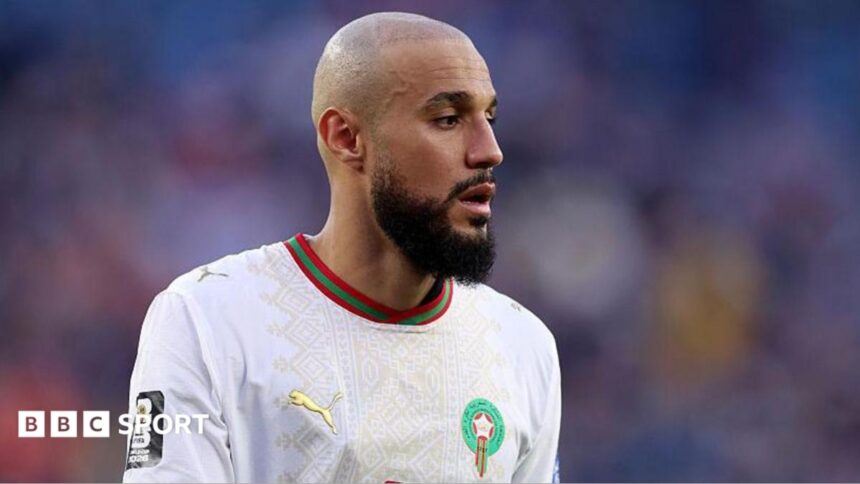

The evolution of international football is profoundly shaped by migration and dual nationality, as evidenced by the remarkable transformation within the Moroccan national team. The Royal Moroccan Football Federation has successfully tapped into a pool of talent across Europe, allowing them to field a squad with a predominantly foreign-born roster, reflecting a new era in global football dynamics.
Shifting Dynamics in Football Representation
The impact of migration on international football cannot be overstated. As we look towards World Cup 2026, nearly one in four players will have been born outside the country they represent. This trend is illustrated starkly by nations like Morocco, which have transformed their footballing landscape by integrating a diverse range of players. The Moroccan squad saw 19 of its 26 players born abroad, with the historic moment of fielding an entire starting XI of players born outside the nation during a match against Brazil.
The Role of the Royal Moroccan Football Federation
Over the past decade, the Moroccan football authorities have actively sought to identify and recruit dual-national talents from countries like France, Belgium, Spain, and the Netherlands. Scouts have played a crucial role, not just by monitoring youth prospects, but also by engaging with their families to ensure connections remain strong. Former technical director Pim Verbeek emphasized that familial ties often sway a player’s decision more than just football alone. This strategic approach has revitalized Moroccan football, as highlighted by the growing number of players with foreign roots contributing to national success in global tournaments.
A Shift in Player Preferences
Historically, players such as Khalid Boulahrouz and Ibrahim Afellay chose representation for the Netherlands, drawn by the allure of competing for a traditional powerhouse in international football. However, Morocco’s investment in dual nationals has gradually shifted perceptions. The nation not only aims to elevate its global presence but also showcases the potential of its diaspora. With 14 players born outside Morocco helping the country reach its first World Cup semi-final, it is evident that this trend is transforming the nation’s international football success.
Why This Is Trending
In India, the growing interest in football parallels global trends, as fans and players become more aware of the dynamics within international teams. With an increasing number of Indian footballers pursuing careers abroad and dual nationality becoming a more common choice, the Moroccan approach resonates. Furthermore, India’s rising passion for football, fueled by local leagues and international tournaments, has led to curiosity about how other nations, like Morocco, navigate dual national representation. This topic garners attention as many Indians see it as a potential blueprint for their burgeoning football scene.
Frequently Asked Questions
Q1: Why are more foreign-born players joining the Moroccan national team?
A1: The Royal Moroccan Football Federation has proactively sought overseas talent, building relationships with dual nationals to strengthen its international squad significantly.
Q2: How successful has Morocco been with its current strategy?
A2: Morocco has experienced notable success, highlighted by reaching the semi-finals in the 2022 World Cup, showcasing the effectiveness of its strategy to integrate foreign-born players.
Q3: Why is this topic relevant in India?
A3: The increasing interest in football in India and the rising numbers of Indian players abroad make this topic significant, as many look to Morocco’s approach for potential pathways in international football.
Q4: What challenges do dual-national players face?
A4: Dual-national players often navigate various cultural, familial, and national identity issues, making their choice of representation a complex and deeply personal decision.