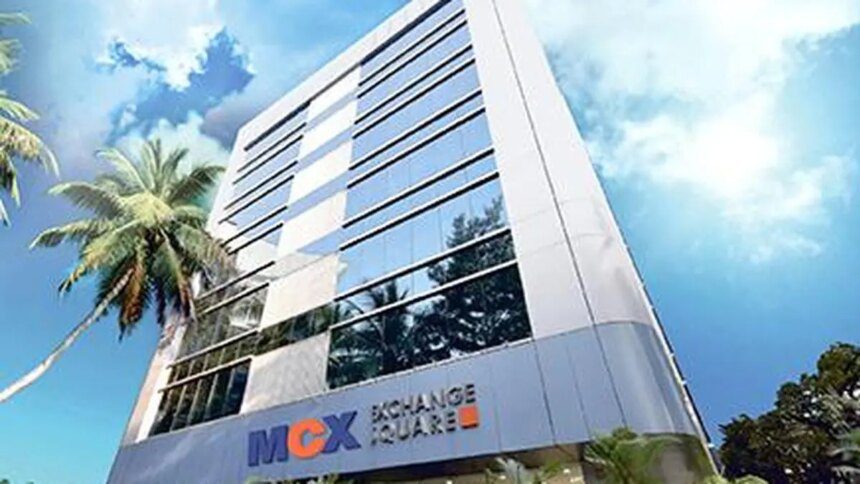

The Multi Commodity Exchange of India (MCX) recently achieved a significant milestone, with its commodity derivatives trading turnover reaching a record ₹62.93 lakh crore. This surge in activity is attributed to rising gold prices and increased participation within the volatile metals market, signaling a growing engagement with organized commodities trading.
Record Turnover: A Closer Look
On August 29, the MCX reported an all-time high turnover of ₹62,93,465 crore, encompassing over 3.13 crore contracts traded. Notably, options trading dominated this turnover, contributing ₹61,84,516 crore, while futures accounted for ₹1,08,949 crore. This remarkable achievement highlights a newfound vibrancy in India’s commodity derivatives market.
The surge in turnover is further bolstered by recent measures from MCX aimed at enhancing market robustness, including the introduction of Good Delivery Norms for primary aluminium, refined copper, and refined zinc. These norms aim to establish a transparent framework, which should boost confidence among market participants.
Strengthening Market Confidence
The new Good Delivery Norms introduced by MCX require a rigorous structure for auditing and testing at producing plants. This framework ensures quality and acceptability of deliverable metals tied to exchange contracts. As a result, participants can now engage with greater assurance regarding the quality of their transactions.
Experts like Rajeev Agarwal, the National President of the Commodity and Capital Market Participants Association of India, emphasize that this record turnover is indicative of enhanced participation and depth in the market. The changes made by MCX are paving the way for a more liquid and reliable trading environment for all stakeholders involved.
Future Directions for Commodity Trading
Naveen Mathur, Director at Anand Rathi Share and Stock Brokers, noted that the growth in participation in MCX reflects the increasing significance of organized commodity markets. The market is becoming essential for hedgers, traders, and investors who are looking for reliable platforms for risk management and price discovery.
The continued evolution of India’s commodity markets depends on broadening participation and maintaining transparency alongside strong risk-management practices. Pioneering efforts in product innovation, coupled with an expanding range of standardized delivery frameworks, are likely to deepen engagement across the sector.
What This Means
The record trading turnover on MCX exemplifies the growing acceptance and integration of online trading platforms for commodities in India. As more participants recognize the potential of these markets for hedging against price volatility, it could lead to a more stable price discovery mechanism. This evolution not only enhances the credibility of the commodity trading sector, but it also positions India favorably in global commodity trading dynamics.
Frequently Asked Questions
What factors led to the record turnover on MCX?
The record turnover was largely driven by a sudden increase in gold prices, paired with improved market participation amid volatility in metal prices, particularly for key commodities like aluminium, copper, and zinc.
What are Good Delivery Norms and why are they important?
Good Delivery Norms are standards established by MCX for the quality and acceptability of deliverable metals. They provide a transparent framework for the empanelment of producing plants and ensure that the metals meet specific quality requirements, thereby increasing market confidence.
How does trading options differ from futures on MCX?
Options trading involves contracts that give the buyer the right, but not the obligation, to buy or sell an asset at a predetermined price before a specified date, while futures contracts are legally binding agreements to buy or sell an asset at a specified price on a specified future date. Options accounted for the majority of turnover on MCX recently, reflecting changing trader preferences.
What role does enhanced market participation play?
Increased market participation contributes to greater liquidity, a more stable trading environment, and improved price discovery. This is essential for efficient functioning, risk management, and the overall growth of commodity markets in India.