
In a troubling incident reflecting ongoing societal tensions in India, three Muslim schoolboys in Maharashtra’s Latur district were allegedly assaulted and tied to a pole by a group of Maratha men following accusations of theft. The case has sparked considerable public outrage, raising questions about communal violence and the treatment of minorities in India.
Incident Overview
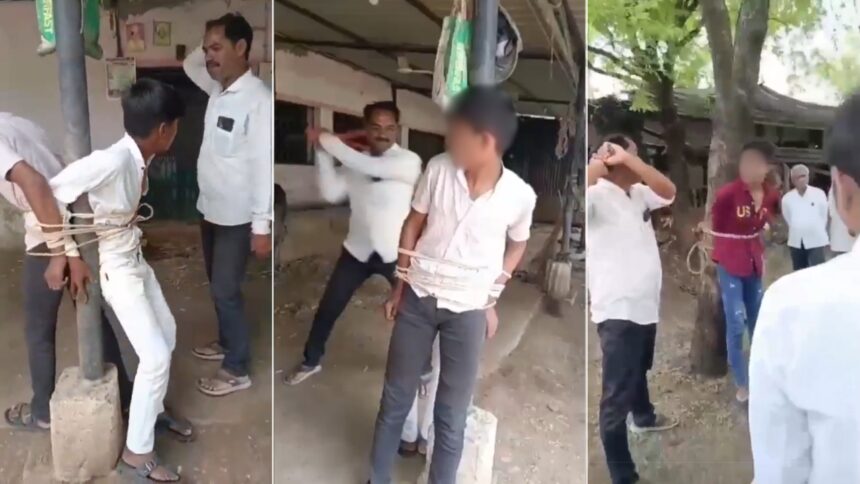
The assault occurred on July 10 in Kharola village, where the boys, aged between 13 and 15, were reportedly attacked with belts, electric wires, and pipes after being accused of stealing electric wires. A video of the brutal incident, filmed by one of the attackers, soon circulated widely on social media, intensifying public scrutiny of the police response and community dynamics.
Following significant criticism, police initially filed a theft case against the boys but later registered a case against the attackers after the victims’ families intervened. The distressing situation escalated as the parents of the boys attempted to intervene and were met with threats from the alleged attackers, leading them to seek police assistance from a location several kilometers away. It took hours before intervention occurred, during which time the boys suffered severe physical abuse.
Police Response and Accountability
Despite witnessing the assault, law enforcement officials did not file a First Information Report (FIR) against the attackers until more than ten hours after the incident occurred. This delay has raised serious concerns about police accountability and responsiveness in cases involving minority communities. The initial FIR named only two attackers, but further investigation led to the identification and addition of six more suspects, reflecting the complexities involved in addressing mob violence and community conflicts.
The police claim that there were no communal motives behind the assault; however, the victims’ families contend that the attackers used communal and caste-based slurs during the beating. This raises critical questions about the intersectionality of caste and religion in India, particularly regarding the treatment of marginalized groups by both society and law enforcement.
Community Dynamics and Broader Implications
Kharola village is home to over 1,500 households, including more than 300 Muslim families and over 500 Maratha families. Many Muslims in this area, primarily from Other Backward Classes (OBC), work as landless laborers, relying on Maratha landowners for their livelihoods. This economic dependency creates a precarious balance, often leading to tensions that can erupt into violence, especially against a backdrop of rising communal sentiment fueled by political narratives.
Prominent political figures, such as Congress Rajya Sabha MP Dr. Syed Naseer Hussain, have pointed to the enabling environment created by the ruling BJP government, arguing that it fosters an atmosphere of hatred that affects not just adults but vulnerable children as well. Such incidents reflect broader societal exclusion and calls into question the commitment of governmental bodies to foster inclusivity and safety for all citizens, irrespective of their religion.
Why It Matters
This incident highlights ongoing challenges related to social cohesion, minority rights, and law enforcement accountability in India. As various communities navigate their identities amid rising political tensions, the need for a comprehensive approach to protect vulnerable groups is paramount. Understanding the nuances of community relationships can inform policymaking and social programs aimed at fostering peace and inclusion. Moreover, examining such incidents can provide valuable insight for developers and social organizations working to create frameworks that advocate for equality and justice.
Frequently Asked Questions
What led to the assault on the boys in Maharashtra?
The boys were accused of stealing electric wires, which prompted a group of Maratha men to tie them to a pole and physically assault them.
How did the police initially respond to the incident?
Police initially registered a theft case against the boys rather than taking immediate action against the attackers, despite witnessing the assault.
Are there communal motives behind the assault, according to the police?
Police have stated that there were no communal motives involved; however, the victims’ families claim that communal slurs were used by the attackers during the incident.
What has been the political response to this incident?
Political figures, including Congress MP Dr. Syed Naseer Hussain, have criticized the BJP-led Maharashtra government for fostering an environment of hatred that endangers minorities, including vulnerable children.