
This forecast stems from several decades of inquiry that my colleagues and I have been conducting at the University of Oxford to understand what motivates individuals to fight and sacrifice for their groups. Employing various methodologies such as interviews, surveys, and psychological assessments, we gather data from a diverse array of groups, including tribal warriors, armed insurgents, terrorists, conventional forces, religious fundamentalists, and violent sports fans.
Our findings indicate that transformative and group-defining experiences result in the merging of our personal and collective identities. We term this phenomenon “identity fusion.” Individuals who experience fusion are driven to pursue their group’s interests relentlessly, which encompasses not only admirable acts—such as rescuing children from flames or taking a bullet for comrades—but also acts of suicide terrorism.
Fusion is typically gauged by showing participants a small circle (representing the individual) and a larger circle (representing the group). These circles are presented in pairs that overlap to varying extents: from no overlap at all, to slight overlap, and so on, until the smaller circle is fully within the larger one. Participants then indicate which pair best reflects their connection with the group. Those who select the pair with the smaller circle entirely enclosed within the larger one are identified as “fused.” These individuals possess such deep affection for their group that they are willing to undertake almost any action to protect it.
This is not a trait exclusive to humans. Certain avian species will pretend to have a broken wing to divert a predator away from their chicks. One particular species—the superb fairy wren of Australasia—entices predators away from its offspring by making swift movements and producing squeaky sounds that mimic the behavior of a tempting mouse. Humans, too, frequently go to great lengths to safeguard their genetic relatives, particularly their offspring, who (aside from identical twins) share a greater proportion of their genes than other family members. However, unlike most animals, humans often extend this protective instinct to genetically unrelated members of their community. In ancient times, tribes were small enough that everyone was familiar with each other. These local groups bonded through shared challenges such as grueling initiations, hunting perilous animals collectively, and demonstrating valor in battle.
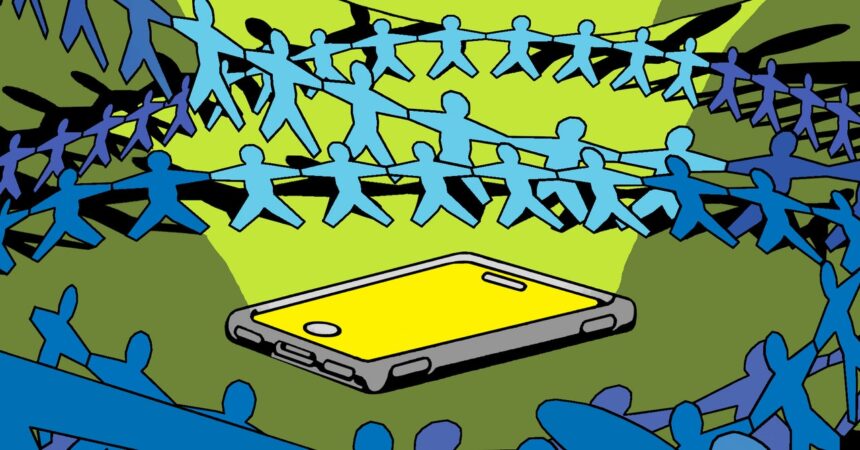
In contrast, today’s fusion is magnified to encompass much larger groups, a phenomenon made possible by the pervasive influence of global media—including social media—filling our minds with vivid depictions of atrocious suffering occurring in distant conflicts.
During a meeting with a former leader of the terrorist group Jemaah Islamiyah in Indonesia, he recounted how he was first radicalized in the 1980s after digesting newspaper articles regarding the treatment of fellow Muslims by Russian forces in Afghanistan. Fast forward two decades, and nearly a third of American extremists were radicalized through social media platforms, with that figure rising to approximately three-quarters by 2016. The advent of smartphones and immersive reporting has compressed the world, allowing shared experiences of suffering in close-knit groups to be replicated and disseminated to millions across vast distances at the click of a button.
While fusion rooted in shared suffering can be potent, it alone does not suffice to incite violent extremism. Our studies indicate that three additional elements are needed to form a hazardous mix: perceived threat from outgroups, the demonization of adversaries, and the conviction that peaceful options are unfeasible. In regions like Gaza, where civilian suffering is frequently recorded and broadcast worldwide, it is natural for fusion rates among the horrified viewers to increase. If individuals are led to believe that peaceful resolutions are unattainable, cycles of violent extremism are likely to escalate.