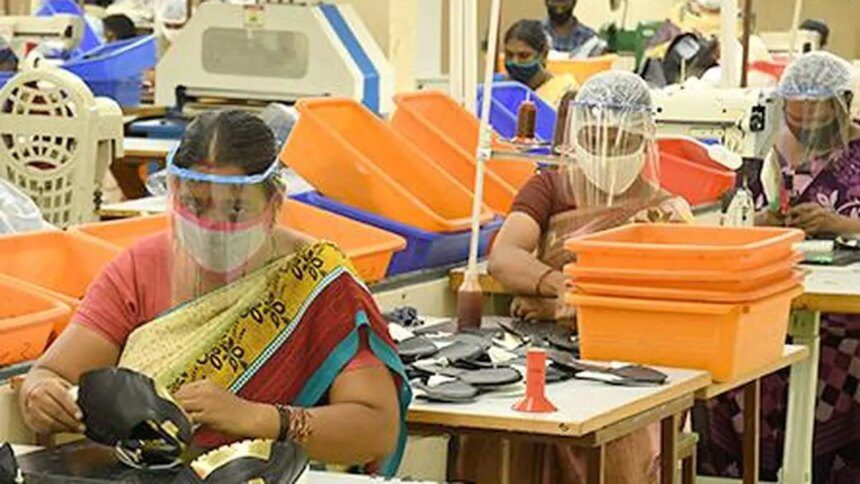

The leather and footwear sector has requested duty exemptions on essential inputs including synthetic leather, metal fittings, machinery, threads, molds, and certain chemicals, due to the surge in input costs of up to 60% resulting from the ongoing crisis in West Asia, according to an industry official.
The industry’s concerns have been communicated to the commerce and industry ministry. Exporters have recommended the swift implementation of the proposed FLOAT (Footwear and Leather Oriented Transformation) scheme, which aims to cover the entire spectrum of products, raw materials, machinery, and inputs.
Additionally, there have been calls for duty-free imports of both crust and finished leathers to enhance domestic manufacturing capabilities. “The industry is grappling with a significant rise in raw material and input costs, which have escalated by 40-60% due to the West Asia crisis,” the official stated.
The official further specified that the request for import duty exemptions includes critical items such as synthetic leather (PU-coated fabrics), footwear components, metal accessories, machinery pertinent to leather and footwear production, as well as threads, molds, toe puffs, eyelets, specific leather chemicals, and packaging materials.
The crisis has also affected components such as certain rubber chemicals, PU leather, adhesives, plastics, and shoe soles, all derived from petroleum products. This disruption stems from the closure of the Strait of Hormuz by Iran, impacting the movement of oil and gas shipments.
Moreover, various inputs are imported by the domestic industry from countries such as China, Korea, Indonesia, and Japan. Notably, imports in this sector decreased by 4.49% year-on-year, totaling $938 million.
In 2025-26, exports of leather and leather products fell by 2.36% year-on-year, amounting to $4.26 billion. However, industry representatives anticipate that with the pending data on non-leather goods, total exports could reach $5.6 billion.
Overall, the total exports from this sector—including finished leather, leather footwear, footwear components, leather garments, leather goods, saddlery, harness, non-leather footwear, non-leather goods, and fur and fur products—stood at $5.57 billion in 2024-25, compared to $5.38 billion in 2023-24 and $6 billion in 2022-23.
The article was published on May 3, 2026.