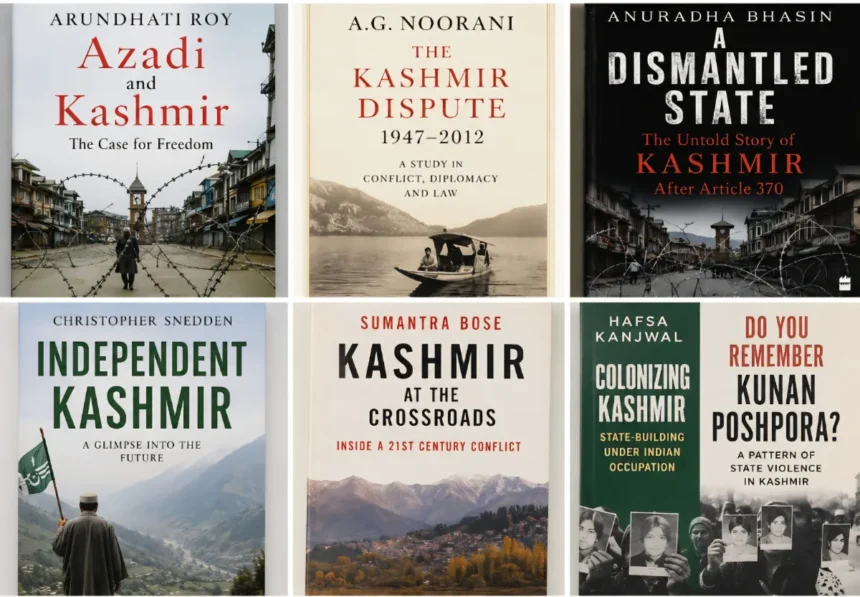

In recent months, the Indian Union Territory of Jammu and Kashmir has been engulfed in a significant controversy surrounding the banning of numerous books perceived to promote dissent against the government. This situation raises concerns about freedom of expression and the broader implications for academic inquiry, particularly among the region’s Muslim population, who find themselves increasingly marginalized by state actions.
The Book Ban: A Sign of Growing Discrimination
In August 2025, the Jammu and Kashmir Home Department mandated the forfeiture of 25 books under Section 98 of the Bharatiya Nagarik Suraksha Sanhita (BNSS), 2023, claiming these texts incited secessionism and portrayed a false narrative. Among the banned authors are prominent figures like Arundhati Roy and A.G. Noorani, whose works have stimulated critical discourse. The immediate repercussions of this edict were felt at local bookstores, with one seasoned bookstore owner lamenting the loss of decades of academic literature, which was suddenly rendered ‘criminal.’ A local employee expressed frustration, noting, “In a single afternoon, decades of academic literature were rendered criminal.”
Educational Impact and Policy Interventions
The implications of this draconian book ban extend beyond literary confines. In July 2026, government scrutiny intensified over books supplied to school libraries, leading to the suspension of eight officials for including a book that referred to a controversial figure as “Shaheed.” Such actions prompt serious questions regarding the ideological screening of educational materials. Critics argue that these moves could adversely affect the quality of education for numerous students, particularly in an already vulnerable demographic of northern India. One parent highlighted the essential role these institutions play in providing accessible education, stating, “Taking over these schools or forcing sudden management changes in the middle of an academic session is doubly cruel.”
Digital Restrictions and Consolidated Control
The restrictions on literature have been compounded by significant limitations on digital freedom. Jammu and Kashmir recorded a staggering 65 internet shutdowns in 2025, making up over 60% of all internet blackouts across India that year. These measures stifle the dissemination of information, equating academic and journalistic expressions with potential sedition. Reports indicate that journalists have experienced severe backlash, facing legal repercussions under stringent laws like the Unlawful Activities (Prevention) Act. Human rights organizations have pointed out that these actions create an environment where fears of censorship can inhibit free expression across various mediums.
Why It Matters
The marginalization of Muslim voices in Jammu and Kashmir through the banning of literature, educational scrutiny, and digital restrictions is an alarming indicator of broader trends under the Sangh Parivar and Bharatiya Janata Party (BJP) governance. This environment fosters a culture of fear and represses dissent. Understanding these issues is crucial for policymakers, human rights advocates, and society at large, as they reveal systemic attempts to stifle academic inquiry and suppress minority perspectives. The implications extend beyond regional boundaries, igniting global discussions on human rights and the need for safeguarding freedoms essential to democratic societies.
Frequently Asked Questions
What led to the banning of these 25 books in Jammu and Kashmir?
The Jammu and Kashmir Home Department cited that the books promoted “false narratives and secessionism” and could influence young people towards a “culture of grievance.” This action followed investigations and intelligence inputs regarding the content of the literature.
What educational policies have emerged following the book bans?
In July 2026, the government scrutinized books supplied to school libraries, resulting in the suspension of multiple officials due to controversial content in a particular title. This intervention highlights the tension between educational freedom and governmental oversight in educational materials.
How many internet shutdowns occurred in Jammu and Kashmir in 2025?
Jammu and Kashmir experienced 65 internet shutdowns in 2025, accounting for more than 60% of the total internet blackouts recorded in India during that year, affecting both personal and professional communications.
What are the broader implications of these actions for Muslim communities in India?
The systematic banning of literature and educational restrictions disproportionately affect Muslim communities in Jammu and Kashmir, raising concerns about their exclusion from academic discourse and freedom of expression. Such policies risk exacerbating socio-political tensions and undermining democratic principles.