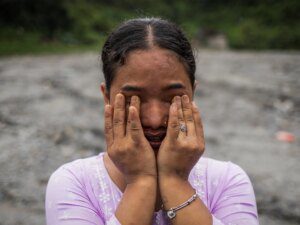
Israeli forces have reportedly intensified their operations in the Qalandiya refugee camp in the occupied West Bank, leading to injuries and arrests among Palestinian residents. This increasing tension aligns with ongoing discussions about illegal settlement expansion in the region, raising concerns about the humanitarian situation and potential displacement strategies.
Recent Clashes and Humanitarian Impact
According to the Palestine Red Crescent Society (PRCS), at least eight Palestinian individuals required hospitalization due to injuries sustained during confrontations with Israeli forces. Eyewitness reports highlight that Israeli soldiers not only entered homes and shops but also issued threats of demolitions against local businesses. This raises alarm among residents who are already living under precarious conditions in the refugee camp.
Mohammad Aslan, a spokesperson for the local committee managing the camp, indicated that the Israeli army conducted a significant operation, resulting in the arrest of at least 20 individuals. The military presence was further exacerbated by Israeli soldiers positioning themselves on the roofs of residential buildings, contributing to a climate of fear and intimidation.
Settlement Expansion Plans
The Israeli government’s march toward expanding settlements, particularly the approval of a 9,000-unit construction plan on the site of the former Atarot airport near Jerusalem, poses additional challenges. This settlement, adjacent to the Qalandiya camp, has alarmed many Palestinians who fear it may lead to forced evictions and increased military presence in their neighborhoods.
Given the geopolitical significance of the West Bank and its historical context, the actions taken by Israel also reflect broader tensions within the region. For residents of the Qalandiya camp, this expansion not only threatens their homes but also casts a shadow on their immediate future and societal stability.
Concerns Over Displacement Tactics
Palestinian residents have expressed their worries that the current military operations—characterized by raids and demolition threats—may be part of a strategy aimed at facilitating the construction of illegal settlements. Without any official statement from Israeli authorities to clarify their intentions, these fears have intensified. The lack of transparency adds to the anxiety regarding potential evictions that could displace many families in the camp.
International reactions to such confrontational tactics have highlighted human rights concerns, as demolitions and forced evictions contravene international law. Organizations both within and outside Israel are increasingly vocal about the necessity for dialogue and mediation to prevent further humanitarian crises in the region.
What This Means
For Indian readers, the implications of these developments stretch beyond Middle Eastern borders. India has historically maintained a nuanced stance on the Israel-Palestine conflict, advocating for peaceful resolutions and respecting the rights of all parties involved. The escalation of violence and the humanitarian toll in places like the Qalandiya refugee camp can inform public opinion and diplomatic discussions in India, particularly as India engages with its growing global role.
Moreover, as India grapples with issues related to human rights and community displacement—though in a different context—there are lessons to be learned about the importance of dialogue and negotiation in resolving conflicts. Observations from such situations can contribute to India’s understanding and approach to its own regional and international relations.
Frequently Asked Questions
What is the Qalandiya refugee camp?
The Qalandiya refugee camp is located in the occupied West Bank, near Ramallah, and houses Palestinian refugees who were displaced during the 1948 Arab-Israeli War. It has been a focal point for humanitarian and political concerns related to the Israeli-Palestinian conflict.
What are the recent actions by Israeli forces in the area?
Israeli forces have conducted military operations, including entering homes and issuing demolition threats, which resulted in injuries and arrests of several Palestinian residents. Reports indicate that these actions have led to heightened tensions in the camp.
How does settlement expansion impact the local population?
The planned expansion of Israeli settlements threatens the homes and livelihoods of Palestinian residents, raising fears of forced evictions and further militarization of their neighborhoods. This has both immediate and long-term implications for the population’s social stability and rights.
Why is this situation relevant to countries like India?
The Israeli-Palestinian conflict, marked by humanitarian concerns, invokes global interest, including from countries like India. Understanding these dynamics can help shape India’s foreign policy and engage in humanitarian efforts on the global stage.